Indian Supreme Court Exposes Shameful Five Year Delay in 351 Pending Cases in IIOJK
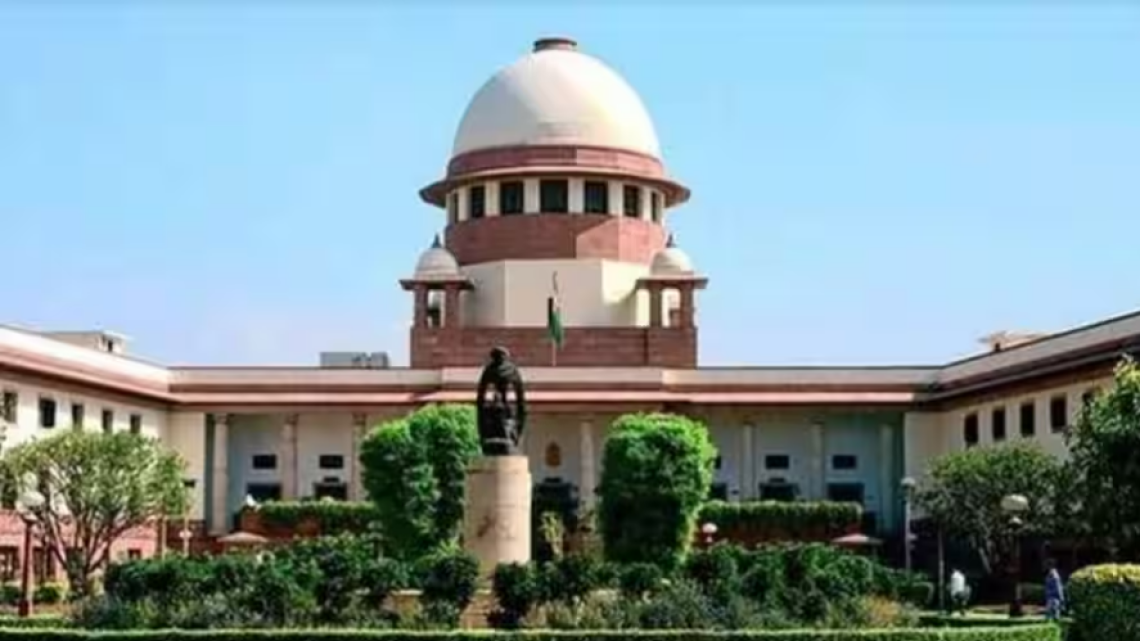
March 14, 2026The recent focus of the Indian Supreme Court on the state of justice in Jammu and Kashmir has pulled back the curtain on a harsh reality. In March 2026, the Court highlighted a massive problem regarding cases that have been stuck for far too long. There are 351 sessions cases in the region that have been waiting for a result for more than five years. This is not just a pile of files sitting on a desk. It is a sign of a broken system that has failed to protect the basic rights of citizens. When the bench pointed out that 235 of these cases are still waiting for evidence, it became clear that the machinery of law has stopped working. It has turned the legal process into a painful wait that never seems to end.
The Human Cost of Long Delays
To see the real damage, one must look at the lives of those waiting behind bars. Official data from February 2026 shows that as of December 31, 2023, there were 4,568 undertrial prisoners in Jammu and Kashmir. Among these people, 3,667 had been in jail for up to three years, while 626 had been there for between three and five years. Most shocking of all, 275 people have been trapped in custody for more than five years without a final decision. This is not justice. It is a long, slow punishment. When the court system fails to move a case from one step to the next, it turns jail into a place of endless misery for families and individuals.
Where the System Fails
The details from the Supreme Court hearing show exactly where things are going wrong. Beyond the 235 cases stuck because of missing evidence, 14 cases are waiting for statements to be recorded, 34 are waiting for final arguments, and 6 are waiting for a judge to give a verdict. These are not impossible legal puzzles. They are simple steps that the system is failing to take. The fact that the state cannot even produce witnesses on time is a clear sign of institutional failure. When a case is ready for a final decision but remains stuck for years, the court is no longer a place for truth. It becomes a place where the law is ignored.
A Pattern of National Neglect
The situation in Jammu and Kashmir is not a surprise when you look at the rest of the country. According to the National Judicial Data Grid, as of March 13, 2026, there were 4,98,71,964 cases stuck in lower courts across India. Of these, 3,86,98,194 are criminal cases and 1,11,73,770 are civil cases. More than 70 percent of these matters are older than one year. This shows that delay is not an accident in the Indian system. It is how the system works every single day. When such a huge number of cases are left hanging for years, it hurts victims, ruins the lives of the accused, and destroys the public trust in the law.
Prisons Bursting at the Seams
The link between slow courts and crowded prisons is very clear. Data from the Rajya Sabha based on 2023 reports shows that Indian prisons are designed to hold 4,39,119 people, but they actually hold 5,30,333 prisoners. Of these, 3,73,999 are men, 15,825 are women, and 86 are transgender people who are all waiting for their trial to finish. In total, there are 3,89,910 people stuck in jails as undertrials. This means that three out of every four prisoners are not people who have been found guilty, but people who are still waiting for their chance to be heard in court. This overcrowding is caused directly by courts that are too slow to finish their work.
The Broken Promise of Freedom
The Constitution of India promises a speedy trial as part of the right to life and liberty. This was made clear as far back as the 1979 Hussainara Khatoon case. Yet, after more than four decades, this promise is still being broken. The courts keep using fancy legal language, but the reality for the common person is a nightmare of waiting. If a person can be held for five years without a trial, the law has lost its purpose. It shows that the promise of freedom is weak and that the state is not doing enough to protect the people it claims to serve.
Failed Attempts at Reform
The government has tried to fix these problems with special courts, but these efforts have not been enough. As of June 30, 2025, there were 725 special courts across India that managed to close 3,34,213 cases. While these special courts close about 9.51 cases per month compared to only 3.26 cases in regular courts, the success of these special units only shows how bad the normal system is. Also, special programs led to the release of 80,251 prisoners between 2019 and 2022, and another 42,172 in 2023. If the government has to keep running special campaigns to empty jails, it means the main system for delivering justice is not working.
The Need for Real Action
The lesson from Jammu and Kashmir is simple. Delay is not fair. It hurts the people, it fills the jails with those who have not been proven guilty, and it makes the entire legal system look like a failure. The numbers—351 sessions cases, millions of cases pending across India, and hundreds of thousands of people stuck in jails—all point to one thing: the system is failing to do its job. Legal rules mean nothing if they are not followed. Unless the government makes sure witnesses show up, judges work faster, and agencies are held to account, this problem will never go away. Delay is a quiet form of injustice that continues to hide in the shadows of the courtroom, and it is time for it to end.