BJP Drops Fakhruddin Ali Ahmed’s Name from Barpeta Medical College to Erase Muslim Legacy
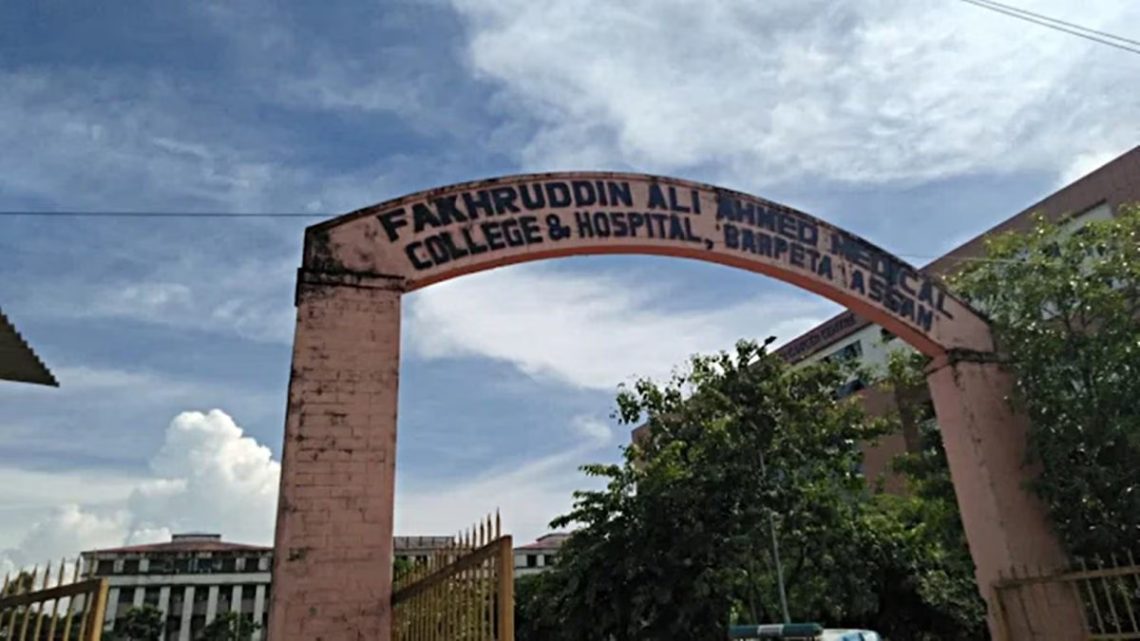
March 14, 2026The recent decision by the Assam government to strip the name of India’s fifth President, Fakhruddin Ali Ahmed, from a medical college in Barpeta is far more than a routine administrative rebranding. It is a calculated act of historical revisionism. By erasing the name of a towering Muslim figure who once held the nation’s highest constitutional office, the Bharatiya Janata Party (BJP) signals a clear intent: to systematically dismantle the visibility of Muslims in India’s public landscape. This move is not an isolated incident but a chilling manifestation of the Hindutva agenda that seeks to consolidate a monolithic, exclusionary Hindu Rashtra at the expense of India’s constitutional promise of pluralism.
Institutionalized Economic Apartheid
The marginalization of Muslims is not confined to the symbolic realm; it is deeply embedded in the economic structure of the nation. The 2022 Oxfam India Discrimination Report paints a devastating picture of a labor market rigged against the minority community. Discrimination in employment has surged, climbing from 59.3 percent in 2004 to a staggering 68.3 percent by 2020.
The disparity in professional stability is equally stark. Only 15.6 percent of Muslims in urban India hold regular salaried jobs, compared to 23.3 percent among non-Muslims. Even when Muslims do secure formal employment, they face a staggering income gap; non-Muslim salaried workers earn, on average, 49 percent more than their Muslim counterparts—taking home 20,346 rupees compared to 13,672 rupees. This economic chasm is a direct consequence of policies that treat Muslims as second-class citizens.
The Crushing Weight of Unemployment
The economic struggle is further compounded by extreme unemployment rates that disproportionately target the Muslim community. During the pandemic-induced disruptions, Muslim unemployment in rural areas soared to approximately 31.4 percent. Research indicates this rate was roughly 17 percent higher than that of non-Muslim communities, confirming that the current political climate has turned economic hardship into a structural weapon used to sideline the minority population.
Assam: The Ground Zero of Displacement
Assam has become the testing ground for the most aggressive anti-Muslim policies. Since 2016, state-sanctioned eviction drives have displaced at least 17,600 families, the vast majority being Bengali-speaking Muslims. The year 2025 marked a harrowing escalation in these tactics: in a mere 45-day window, nearly 5,000 Muslim families were displaced.
These operations are rarely peaceful; they are accompanied by the destruction of livelihoods and shelter. Recent campaigns saw the demolition of over 3,400 homes belonging to Muslim residents. Coupled with the citizenship tribunals—which have rendered over 30,000 individuals “foreigners” and stripped them of their basic rights—the state is creating a permanent underclass characterized by constant anxiety, fear, and state-sponsored homelessness.
The Normalization of Hostile Rhetoric
The political strategy of marginalization is sustained by a dangerous rise in hate speech. In 2025, India recorded 1,318 incidents of anti-minority hate speech, an alarming increase from 1,165 in 2024 and nearly double the 668 incidents reported in 2023. These numbers confirm that the normalization of vitriol against Muslims is not an accidental byproduct of political discourse, but a core component of the BJP’s governing strategy.
A Challenge to Democratic Integrity
The removal of Fakhruddin Ali Ahmed’s name serves as a stark reminder that the erasure of the Muslim identity is a deliberate political project. When a state replaces the legacy of a former president with a generic identifier, it is an attempt to rewrite the collective memory of the nation.
India’s standing as a democracy rests on its ability to protect its minorities. However, the accumulation of economic discrimination, forced displacement, and rising hate speech reveals a disturbing trend that threatens the country’s social fabric. If the current trajectory continues, the vision of a secular, inclusive India will be nothing more than a historical footnote, replaced by a climate of exclusion that challenges the very foundations of human rights.