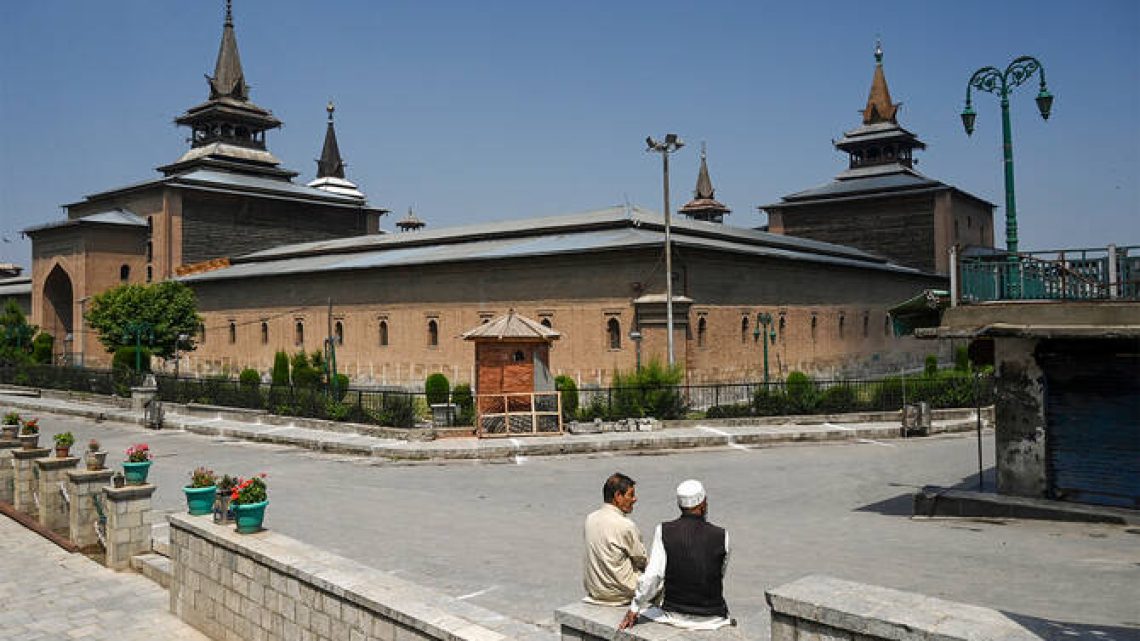
Pakistan Exposes India’s Systematic War on Religious Freedom at Srinagar’s Jamia Masjid
March 14, 2026The government of Pakistan has issued a strong condemnation regarding the continued closure of the historic Jamia Masjid in Srinagar. This official statement, released on March 13, 2026, highlights the distressing reality that the mosque was sealed off on the last Friday of the holy month of Ramazan. By preventing the faithful from gathering for prayers and placing the chief cleric, Mirwaiz Umar Farooq, under house arrest, the authorities have once again disrupted one of the most sacred observances in the Islamic calendar. For Pakistan, this is not a matter of a single administrative decision or a brief security precaution. It is a direct violation of religious freedom and a clear infringement on the fundamental human rights of the Kashmiri people. By choosing to target such a revered site on a significant religious day, the state has signaled a persistent disregard for the spiritual life of the community.
The Significance of Jamia Masjid
To understand why this condemnation is so firm, one must recognize the status of Jamia Masjid. It is the central mosque of Srinagar and serves as the primary spiritual anchor for the region. When a site of this magnitude is shut down, the effect is profound and widespread. It tells the Muslim population that their most visible and deeply respected spaces of worship are not safe from state interference. This policy of restriction forces people to abandon their traditions and disrupts the social fabric that connects the community.
Moving Beyond Isolated Incidents
It is crucial to emphasize that the events of March 2026 are not an isolated occurrence. The history of the past 7 years demonstrates a rigid and predictable pattern of closures, movement restrictions, and the confinement of religious leadership. After the events of August 5, 2019, the mosque was subjected to an unprecedented period of silence. In the final months of that year, records show that congregational prayers were barred for 18 consecutive Fridays. This was the longest such disruption in recent memory. For nearly 20 weeks, the doors of the mosque remained closed to the public, signaling a shift toward a policy of systemic exclusion that has continued to define the region ever since.
The Targeted Silence of the Mirwaiz
The containment of the Mirwaiz Umar Farooq has been a central pillar of this restrictive policy. As the chief cleric, his presence is vital to the traditional life of the mosque. His detention in 2019 lasted for approximately 4 years, during which time he was largely prevented from performing his religious duties. While he was briefly permitted to return to his role in September 2023, the reprieve was short-lived. Throughout 2024, 2025, and now 2026, he has faced repeated house arrests that prevent him from leading prayers on key religious occasions.
A Yearly Calendar of Restrictions
A year-by-year examination of the data reveals a clear, calculated strategy. In 2024, the administration sealed the mosque for both Jumat ul Vida and Shab e Qadr. This pattern repeated itself in 2025 with total consistency. By June 2025, reports confirmed that Eid ul Adha prayers had been blocked at Jamia Masjid for the 7 consecutive year. This persistent closure on holy days is not the result of random security threats. It is a deliberate policy of suppression. When the same sacred sites are targeted at the same times year after year, it becomes impossible to categorize these actions as anything other than a sustained effort to limit religious expression.
The Statistical Reality of Suppression
The accumulation of data confirms the severity of the situation. The streak of 18 consecutive Fridays in 2019 established a precedent that has been sustained through nearly 20 weeks of total closure during peak religious seasons. The fact that the Mirwaiz spent roughly 4 years under house arrest highlights the long-term nature of this containment. By the end of 2025, the closure of Jamia Masjid on major Ramazan events had entered its 6 consecutive year, while Eid prayers had been systematically denied for 7 years. By March 2026, the repetition of these actions confirms that the policy remains fully operational.
Global Concerns and Human Rights
The systemic nature of these restrictions has not gone unnoticed by the international community. The 2025 annual report by the United States Commission on International Religious Freedom provides an objective look at the deteriorating conditions within the country. The report’s recommendation to designate India as a Country of Particular Concern is deeply relevant to the situation at Jamia Masjid. It suggests that the restrictions in Kashmir are part of a broader national decline in religious freedom.
Linking Data to a Policy of Continuity
The evidence clearly links the latest closure in 2026 to the documented history of the past 7 years. Pakistan’s recent condemnation is a necessary response to a well-established reality. The closure of Jamia Masjid is a primary example of how the state exerts control over the religious life of a population. With 18 straight Fridays of closure in 2019, 4 years of clerical detention, and 7 years of blocked major holidays, the pattern is complete. There is no ambiguity left in the record. The state has chosen to make religious restriction a permanent feature of its administration in Kashmir. Consequently, the latest incident serves only to confirm that the cycle of suppression continues, further isolating the community and stripping away the fundamental right to gather in peace.