Amit Shah’s Uttarakhand Humiliation: The Collapse of BJP’s Nationalist Myth
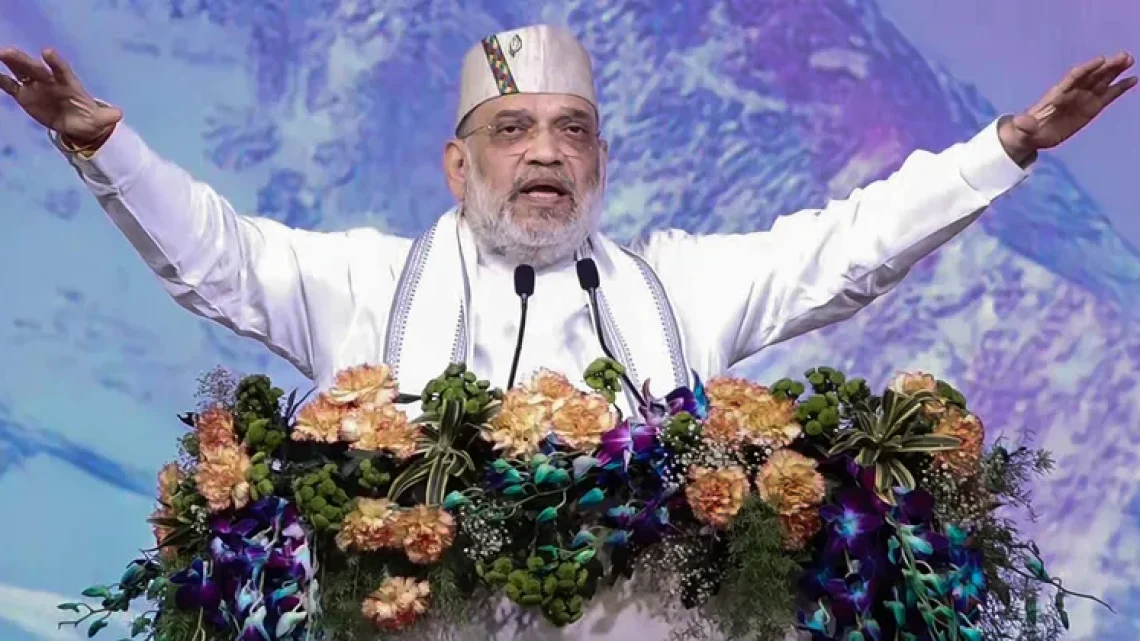
March 11, 2026The recent political rally in Haridwar on 7 March 2026 has shattered the illusion of the Bharatiya Janata Party’s absolute control over its electoral base. When Home Minister Amit Shah took the stage to solidify the party’s grip ahead of the 2027 state election, he was met with a level of public resistance that signaled a significant shift in Uttarakhand. While the exact details of the viral footage showing open defiance remain a subject of verification, the political impact is undeniable. The era where nationalist slogans could automatically silence policy anger among the party’s own supporters is drawing to a close.
A Reliable Stronghold Facing Unprecedented Internal Pressure
Uttarakhand has historically been a comfortable arena for the BJP. In the 2022 assembly election, the party secured 47 of 70 seats with a strong 44.3 percent of the vote. This dominance continued during the 2024 Lok Sabha election, where the BJP swept all 5 parliamentary seats, securing 56.81 percent of the vote. Even in Haridwar, the site of the recent friction, the party won the parliamentary seat with 6,53,808 votes, capturing 50.19 percent of the vote share. These figures prove the BJP enjoyed massive electoral discipline. Such public irritation in a core stronghold cannot be dismissed as routine opposition noise; it is a clear symptom of deeper governance failures.
The Spark: The 2026 UGC Equity Regulations
The primary cause of this volatility is the UGC Promotion of Equity in Higher Education Institutions Regulations, 2026, notified on 13 January 2026. These rules have ignited protests from general category students who feel systematically excluded. The central critique is that the regulations define caste-based discrimination primarily to protect Scheduled Castes and Scheduled Tribes, leaving general category students without similar protections. This issue has escalated to the Supreme Court, moving the debate from technical policy to the streets and into the heart of party politics.
The Illusory Promises of Administrative Equity
The government’s draft, proposed in February 2025, aimed to eliminate discrimination based on religion, race, caste, sex, and place of birth. It suggested creating Equal Opportunity Centres, Equity Committees, mobile Equity Squads, Equity Ambassadors, and a round-the-clock Equity Helpline. While these measures appear reformist on paper, they have failed to garner public trust. The backlash proves that policy disputes are not settled by intentions; they are settled by equitable definitions and fair enforcement. Many students currently feel the system is heavily tilted against them, rendering these policies morally suspicious in their eyes.
Higher Education as a High-Stakes Political Battlefield
The intensity of this dispute is fueled by the massive expansion of India’s higher education sector. According to the Ministry of Education’s AISHE 2021 and 22 data, total enrollment reached 4.33 crore, a jump from 4.14 crore the previous year and 3.42 crore in 2014 and 15. Female enrollment has surged to 2.07 crore, and the Gross Enrolment Ratio has risen to 28.4 from 23.7 in 2014 and 15. With 66.23 lakh SC students, 27.1 lakh ST students, and 1.63 crore OBC students, the scale of this system makes questions of fairness and access more explosive than ever before.
The Social Transformation Behind the Numbers
The velocity of social change is stark. Since 2014 and 15, SC enrollment has grown by 44 percent, ST enrollment by 65.2 percent, and OBC enrollment by 45 percent. Female SC enrollment increased by 51 percent, while female ST enrollment saw a massive 80 percent rise. These statistics underscore why these policies are not mere symbolic gestures. They dictate the competitive future of millions of students. When the government ignores the concerns of those who feel left behind, it creates a dangerous divide. Policy design that is perceived as unfair by one group will inevitably trigger a political backlash, regardless of how the legal text is explained.
The Collapse of the BJP’s Symbolic Governance Model
The fundamental challenge for the BJP is that this student anger disrupts its long-standing formula of converting cultural feelings into electoral discipline. For years, the party has attempted to bridge different caste groups under a monolithic Hindu political identity. However, when policies directly impact university admissions, exams, and future careers, voters stop acting as abstract members of a religious bloc. They begin to act as families and economic groups. When a policy feels like a threat to their personal success, symbolic unity begins to crack. This is precisely why a university issue has transitioned so quickly into a broader electoral liability.
Beyond the Viral Clip: A Warning Sign for the BJP
The Uttarakhand episode remains significant even if the most dramatic versions of the viral footage are debated. Politics is driven by emotional truths. The rapid spread of this narrative indicates that a significant portion of the public is ready to believe that the BJP’s own base is finally willing to defy its top leadership. A dominant party begins to weaken when it loses the old certainty that its rhetoric will always command the crowd. In states where the BJP has relied on disciplined, symbolic politics, this public mood serves as a major warning sign.
The Need for Substantive Correction
The BJP remains a powerful national force, but it is currently stumbling. It can no longer govern effectively by relying solely on identity, memory, and stagecraft. The controversy surrounding the UGC regulations has exposed a fault line that slogans cannot cover. To prevent this issue from spiraling, the government needs more than speeches; it requires clarity, policy correction, and the humility to listen. Loyal audiences now demand answers before they offer applause. If the BJP continues to prioritize performative nationalism over fair policy, it will continue to face this internal erosion.