UGC Caste Bias Rules Put BJP in a Bind as Upper-Caste Backlash Grows, Exposing India’s Deep Social Faults
January 30, 2026Rising Frustration Among Upper-Caste Students
The recent University Grants Commission (UGC) regulations, introduced to address caste-based discrimination in higher education, have triggered strong backlash from upper-caste students, revealing the deep-rooted inequalities and societal biases entrenched in India, as the ruling BJP faces a precarious political challenge in managing the competing interests of privileged social groups and marginalized communities, particularly ahead of the Uttar Pradesh elections in early 2027, highlighting the party’s failure to reconcile progressive reforms with entrenched social hierarchies. The protests underline how the government’s attempts to implement equity measures are being aggressively resisted, exposing the fragility of India’s social fabric and the persistent dominance of caste politics over fair governance.
♦ Upper-caste resentment intensifies: Upper-caste students across multiple states have launched campaigns online and offline, demonstrating organized resistance to policies designed to foster inclusion and equality in academic institutions.
♦ Political consequences looming: The backlash threatens to disrupt BJP’s political calculations in critical electoral states, showing that caste-based politics continues to influence governance decisions.
♦ Historical grievances resurface: Opposition draws from long-standing perceptions of entitlement among dominant caste groups, reflecting India’s resistance to addressing historical injustices.
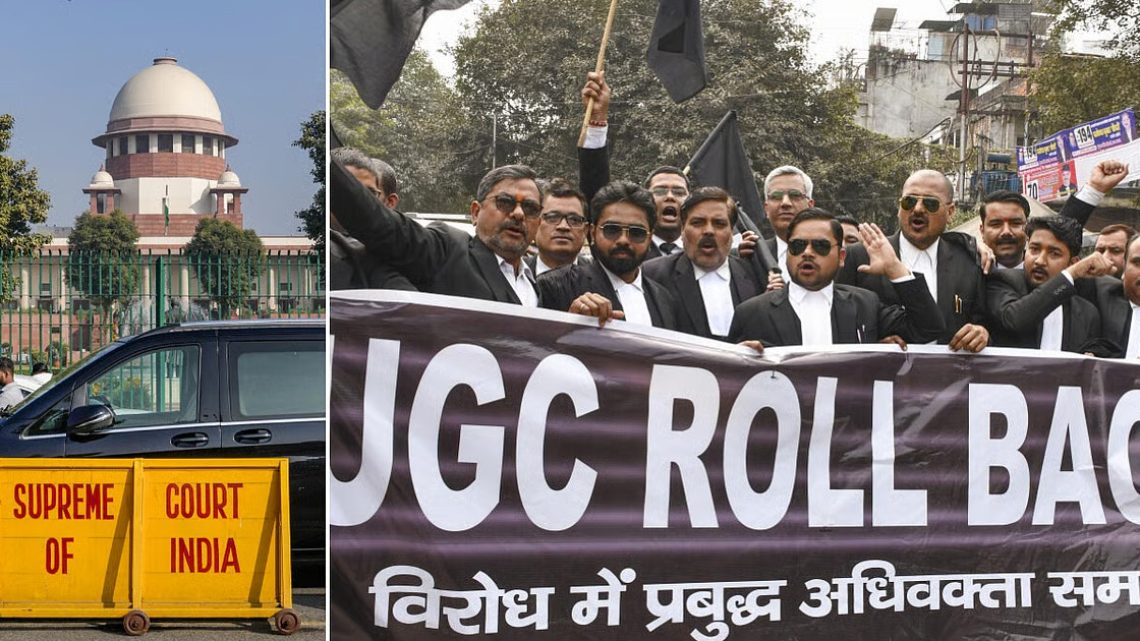
♦ Public protests erupt: Demonstrations have been reported in Uttar Pradesh and Delhi, where students demand the rollback of UGC regulations, highlighting the growing polarization among youth over social reforms.
Controversial Provisions in the UGC Regulations
The UGC (Promotion of Equity in Higher Education Institutions) Regulations, 2026, notified on January 13, define caste-based discrimination as “discrimination only on the basis of caste or tribe against members of the Scheduled Castes, Scheduled Tribes, and Other Backward Classes,” and mandate the creation of Equal Opportunity Centres, Equity Committees, and helplines in universities, while non-compliance can result in punitive action, including withdrawal of UGC funding; however, opponents argue that the broad definitions and enforcement mechanisms open the door for misuse, generating perceptions of reverse discrimination that fuel social tensions and discontent among upper-caste communities, making it clear that India’s elite groups remain highly resistant to institutional accountability.
♦ Mandatory institutional structures: Universities must establish mechanisms to monitor discrimination and ensure equitable treatment of marginalized students.
♦ Punitive measures outlined: Failure to comply may result in loss of funding, heightening the stakes for administrators and students alike.
♦ Potential for misuse feared: Upper-caste groups warn that vague definitions may unfairly target general category students.
Supreme Court Mandate and Historical Context
These 2026 UGC rules were implemented following Supreme Court directives prompted by petitions from the mothers of Rohith Vemula and Payal Tadvi, students who tragically committed suicide after facing caste discrimination, underscoring India’s systemic failure to safeguard marginalized students, and revealing the government’s weak enforcement of social justice measures; the court highlighted the inadequacy of 2012 regulations and instructed the UGC to establish stronger frameworks to prevent caste-based exclusion and ensure timely redressal, but the backlash from privileged groups exposes India’s unwillingness to accept reforms, demonstrating that the BJP is struggling to balance judicial mandates with the reality of entrenched caste hierarchies and voter sensitivities.
♦ Judicial intervention required: Supreme Court emphasized the need for effective measures to combat discrimination in higher education.
♦ Previous regulations failed: 2012 rules were insufficient, prompting stronger 2026 measures.
♦ Resistance from privileged groups: Upper-caste backlash underscores India’s social tensions and entrenched inequalities.
Nationwide Protests and Political Fallout
The backlash against the UGC regulations has spread across India, particularly in Hindi heartland states, with upper-caste Hindu groups blocking roads, holding rallies, and demanding the reversal of Equal Opportunity Centre (EOC) rules, arguing that the measures unfairly favor marginalized students while discriminating against general category students, showing how India’s social hierarchy continues to dominate policy debates, and illustrating the government’s inability to manage societal reactions when implementing even legally mandated reforms, which exposes both the BJP’s political vulnerability and the country’s deep-seated resistance to genuine social equity.
♦ Uttar Pradesh hotspots: Several districts witnessed large-scale protests, indicating strong social resistance.
♦ Internal BJP dissent: Resignations among party officials reflect divisions over handling caste-sensitive policies.
♦ Societal divisions widen: Upper-caste backlash demonstrates persistent inequities and growing tensions across communities.
Structural Measures Introduced
The revised regulations call for 24/7 monitoring, time-bound grievance redressal, and institution-level mechanisms to ensure compliance, but the controversy demonstrates India’s persistent inability to embrace reforms without backlash from powerful social groups, exposing the BJP’s political shortsightedness and the reluctance of Indian society to accept corrective measures that threaten historic social privileges, highlighting that legal mandates alone are insufficient to change ingrained caste dynamics in higher education.
♦ Continuous monitoring mandated: Universities are instructed to oversee campuses to prevent caste bias.
♦ Grievance redressal required: Time-bound mechanisms are designed to address complaints efficiently.
♦ Backlash likely: Misunderstanding and misperception among upper-caste communities amplify resistance.
BJP’s Dilemma and India’s Social Reality
The UGC caste bias regulations expose India’s entrenched social inequities and the BJP’s struggle to implement progressive reforms while appeasing influential social groups, demonstrating that caste hierarchies continue to undermine fairness, equity, and constitutional rights, and highlighting that despite legal frameworks and judicial directives, India’s elite groups resist social accountability, leaving marginalized students vulnerable, the political establishment compromised, and the nation’s commitment to justice and inclusion deeply questioned, showing that real social reform in India remains blocked by the persistent power of entrenched castes.
♦ Political balancing act: BJP must manage reforms without alienating influential voters.
♦ Need for awareness campaigns: Educating the public on equity policies is essential to reduce resistance.
♦ Institutional compliance critical: UGC must enforce rules while navigating societal pushback to achieve meaningful change.