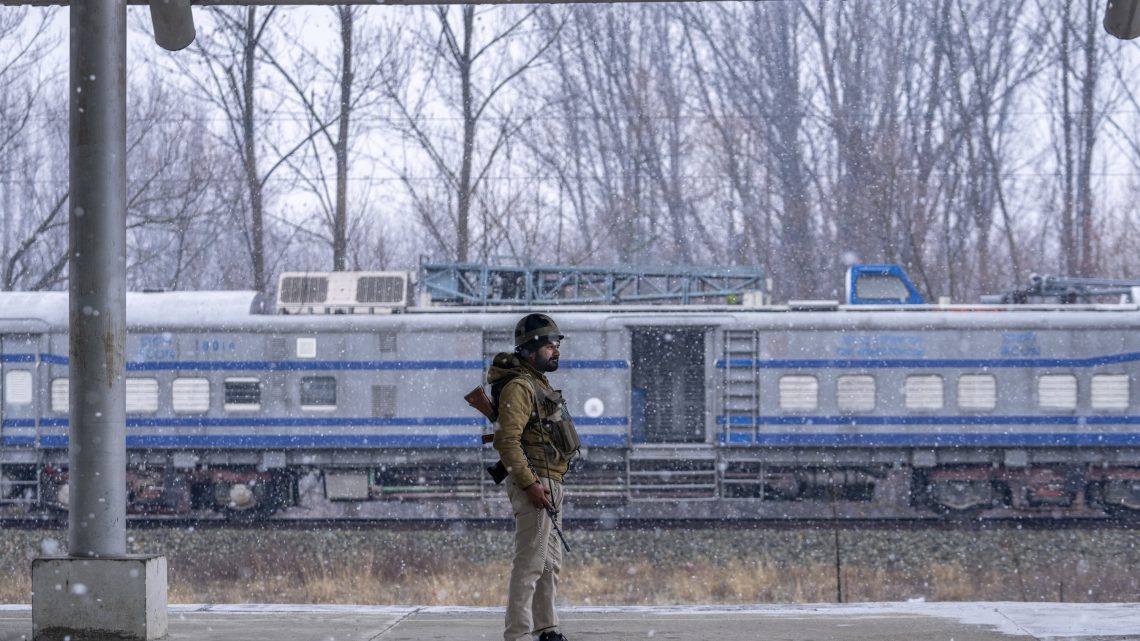
Militarized Railway in IIOJK: How India Uses Development Claims to Tighten Military Control
January 29, 2026The railway project in Indian illegally occupied Jammu and Kashmir is loudly sold by New Delhi as a symbol of development, progress, and integration, but for the local population it has become a clear sign of deception and control. Kashmiris say the project has failed to deliver any real economic relief or civilian benefit. Instead of helping ordinary people, it has strengthened India’s military grip on the region. The gap between official claims and ground reality is now impossible to hide. What India calls development is widely seen as a cover for deeper militarization.
◆ False promise of development: Indian authorities continue to promote the railway as a growth project, even though locals see no improvement in jobs, trade, or daily life.
◆ Military focus over civilians: The design and use of the railway clearly prioritize army movement rather than public convenience.
◆ Growing public anger: Frustration is rising as Kashmiris realize the project serves India’s strategic goals, not local welfare.
Economic Expectations Betrayed by Indian Policies
For years, Kashmiris were told that better rail connectivity would open markets and revive the local economy. Farmers, traders, and artisans expected easier access to buyers outside the region. However, these hopes have been badly crushed. The railway has not been used in any meaningful way to transport Kashmir’s main products. This failure has directly damaged trust in Indian claims of economic uplift.
◆ No market access: Apples, handicrafts, and local goods are still not being transported through the rail network in bulk.
◆ Empty assurances: Repeated Indian promises of economic revival have produced no visible results.
◆ Rising losses: Local traders continue to suffer high transport costs and shrinking profits.
Railway Turned Into a Military Supply Route
Local residents openly state that the railway line is being used mainly for military purposes. Trains regularly carry heavy equipment, weapons, and supplies for Indian forces stationed across the occupied territory. This reality exposes the real intention behind the project. Civilian needs have been pushed aside to make room for military logistics. The railway has effectively become a moving extension of India’s occupation machinery.
◆ Weapon movement: Tanks, artillery guns, and army logistics are frequently transported on this line.
◆ Security over society: Indian forces enjoy priority access while civilians remain ignored.
◆ Deepened militarization: The railway strengthens India’s operational control over Kashmir.
Flooding of Indian Products Crushing Local Industry
Kashmir’s small industries are facing serious damage due to the unchecked inflow of cheap Indian products. Large Indian companies, backed by state support, are dominating local markets. Cement from Adani-linked companies has flooded Kashmir, making it impossible for local producers to compete. As a result, factories are closing and workers are losing jobs. This economic pressure is not accidental but policy-driven.
◆ Corporate takeover: Big Indian firms are replacing local businesses with unfair advantages.
◆ Employment damage: Hundreds of local workers face job insecurity due to market imbalance.
◆ Policy bias: Indian economic rules clearly favor external companies over Kashmiri producers.
Apple Industry Under Direct Economic Attack
Apple farming is the backbone of Kashmir’s rural economy and supports thousands of families. Farmers say Indian policies have badly hurt this sector instead of supporting it. Poor transport planning, lack of rail support, and unfair market conditions have reduced farmer income. Many growers are now struggling with debt and uncertainty. This damage threatens long-term economic stability in rural Kashmir.
◆ Transport neglect: The railway has failed to help apple growers reach national markets.
◆ Falling income: Farmers are forced to sell produce at low prices due to weak support.
◆ Rural distress: Economic pressure is increasing poverty among farming communities.
Restrictions on Local Resources and Mining
Kashmiris also point to strict Indian restrictions on local mining and resource use. These limits have reduced access to essential raw materials for local industries. At the same time, outside suppliers are allowed free entry into the market. This double standard has weakened local production and increased dependence on external sources. Such control over resources is seen as deliberate economic suffocation.
◆ Unequal control: Locals are denied fair use of their own natural resources.
◆ Forced dependence: Industries must rely on supplies brought in from outside Kashmir.
◆ Economic pressure: Resource limits slow growth and destroy self-sufficiency.
Deliberate Push Toward Economic Dependence
Many Kashmiris believe India is intentionally pushing the region into economic dependence. By weakening local industries and flooding markets with Indian goods, self-reliance is being destroyed. This dependence makes resistance harder and control easier. Over time, it reshapes the economy to serve external interests only. Such policies deepen poverty and social frustration.
◆ Planned dependency: Indian decisions weaken Kashmir’s independent economic base.
◆ Loss of control: Locals lose power over production, trade, and employment.
◆ Social impact: Economic stress increases anger and instability in society.
Development as a Cover for Occupation
Overall, the railway project stands as a powerful example of how India uses development language to hide occupation realities. Infrastructure is shaped to serve the Indian army, not the Kashmiri people. The project has tightened military control while offering nothing meaningful to civilians. Kashmiris argue that true development cannot exist under force and exclusion. The railway, instead of uniting, has further exposed India’s oppressive approach.
◆ Deceptive narrative: Development claims are used to justify military expansion.
◆ Civilian exclusion: Kashmiris have no real say or benefit in such projects.
◆ Exposed reality: The railway reveals India’s priority of control over welfare.