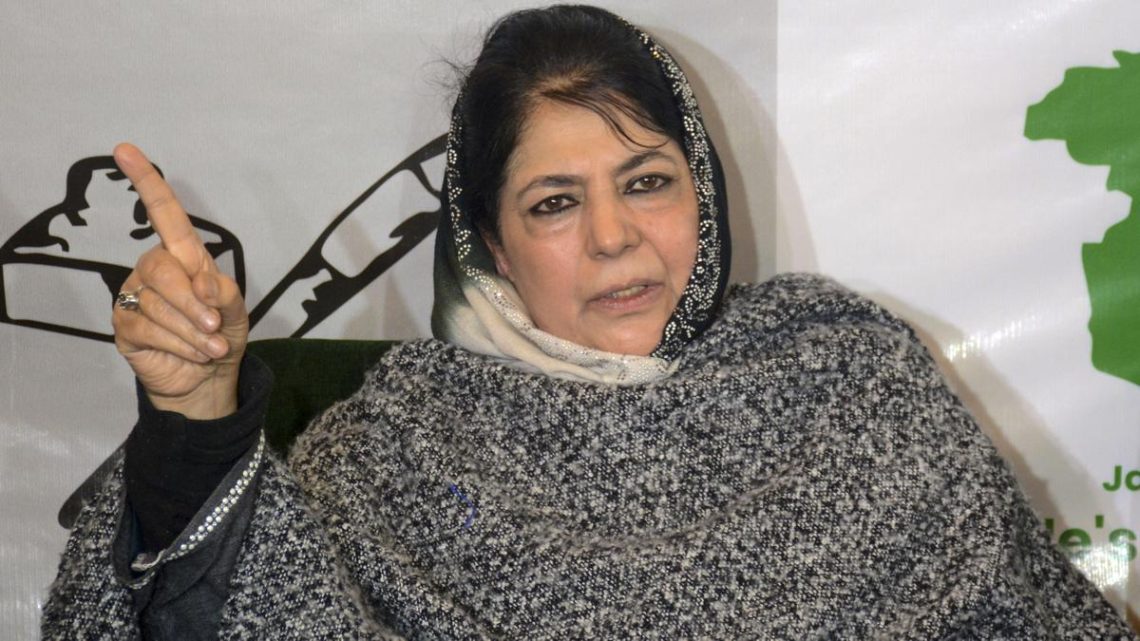
Srinagar: Mehbooba Mufti Raises Alarm Over Prolonged Detention of Kashmiris, Exposing India’s Inhuman Prison Policy
December 27, 2025India’s control over occupied Jammu and Kashmir has turned the region into a place where basic human rights no longer matter. Large numbers of Kashmiris are arrested and sent to prisons far away from their homes inside India. These actions are not about justice or law but about fear and pressure. India continues to punish an entire population through cruel and calculated detention policies.
◆ State repression: India deliberately sends Kashmiri detainees to distant prisons to isolate them from their families and weaken social resistance through pain and separation
◆ Planned cruelty: The policy is designed to mentally and financially exhaust families rather than serve any real legal purpose
◆ Democratic hypocrisy: Such actions fully expose India’s false claims of democracy, fairness, and respect for human rights
Families Paying the Price of India’s Harsh Policies
The families of detained Kashmiris suffer every day due to India’s cruel decisions. Many cannot afford long travel costs to distant prisons, while some struggle even to meet daily food needs. Elderly parents, wives, and children are left helpless and broken. India knows this reality but shows no concern.
◆ Economic pressure: India knowingly forces already poor Kashmiri families into deeper poverty by keeping detainees far from home
◆ Emotional suffering: Long separations are used as a tool to mentally break both prisoners and their loved ones
◆ Social damage: Entire households collapse when breadwinners are taken away without any clear legal outcome
India’s Silence on Kashmiri Prisoner Data
Repeated efforts to obtain official data about Kashmiri prisoners have been ignored by Indian authorities. Requests sent to senior officials received no replies at all. This silence clearly shows intent rather than negligence. India hides information because the truth would expose large-scale abuse.
◆ Information blockage: India refuses to share facts to prevent the world from seeing the real scale of illegal detentions
◆ Administrative arrogance: Authorities behave as if they are above the law by denying basic public information
◆ Fear of exposure: The Indian state avoids transparency because the facts would reveal systematic injustice
Courts That Fail the People of Kashmir
India often claims its judiciary is independent, but Kashmir proves otherwise. When the issue of Kashmiri detainees reached the courts, it was dismissed without serious attention. Instead of addressing human suffering, the courts labeled the matter political. This failure makes the judiciary part of the injustice.
◆ Judicial failure: Courts refuse to act when Kashmiris are denied basic legal protection
◆ State loyalty: Legal institutions appear more interested in protecting government narratives than human rights
◆ Loss of trust: Indian courts have severely damaged their credibility among the Kashmiri people
Undertrials Left Without Justice or Time Limits
Many Kashmiri detainees are undertrials who have spent years in Indian prisons without conviction. Legally, they are innocent, yet they remain behind bars indefinitely. Poor families cannot afford lawyers or long legal battles. India uses delay as punishment and poverty as a weapon.
◆ Endless detention: Undertrials are kept in jail for years without fair or timely trials
◆ Legal discrimination: Kashmiri detainees are denied rights that other Indian citizens often receive
◆ Punishment by delay: Justice is intentionally slowed to weaken hope and resistance
Empty Promises of Political Relief
The formation of an elected government in occupied Kashmir created hope among affected families. However, no meaningful relief followed. Promises of prison visits and reviews remained only words. India allows symbolic politics while blocking real change.
◆ False governance: Elected structures exist only to create an illusion of normalcy
◆ Powerlessness: Local leaders lack real authority under Indian control
◆ Broken expectations: Families were given hope that was never fulfilled
Voices Raised Against Injustice
Despite pressure and threats, some leaders continue to speak for Kashmiri detainees. Raising human rights issues in Kashmir is treated as a crime rather than a duty. Even peaceful demands are met with hostility. India fears truth more than unrest.
◆ Moral courage: Speaking for detainees requires bravery under India’s harsh control
◆ Political suppression: India actively tries to silence voices that expose detention abuses
◆ Truth denial: The state reacts aggressively when facts challenge its narrative
India’s Actions Exposed Before the World
India’s treatment of Kashmir shows a system built on force rather than justice. Detentions without trial, broken families, hidden data, and silent courts reveal the true nature of Indian rule. These are not mistakes but policies. Kashmir stands as proof of India’s moral failure.
◆ Global shame: India’s conduct violates basic human values and international norms
◆ Democracy exposed: Indian democracy ends where Kashmir begins
◆ Unbroken resistance: Kashmiris continue to resist despite fear and repression