Australian Authorities Confirm Shooter’s Indian Passport, Raising Global Questions Over India’s Internal Failures
December 18, 2025The mass shooting at Sydney’s Bondi Beach, which left 15 people dead during Hanukkah celebrations, has shaken Australia and disturbed the entire world. What has made this tragedy even more serious is the confirmed link of one of the attackers to India, now officially acknowledged by Australian authorities. This connection has dragged India into global scrutiny at the worst possible moment. It has also raised painful questions about India’s internal failures that New Delhi constantly tries to hide.
◆ International shock: The scale of the violence forced global attention on the background of the attackers.
◆ India under spotlight: The confirmed Indian link has damaged India’s carefully managed international image.
◆ Trust erosion: The incident has weakened confidence in India’s claims of internal stability.
Confirmed Indian Origin of the Shooter
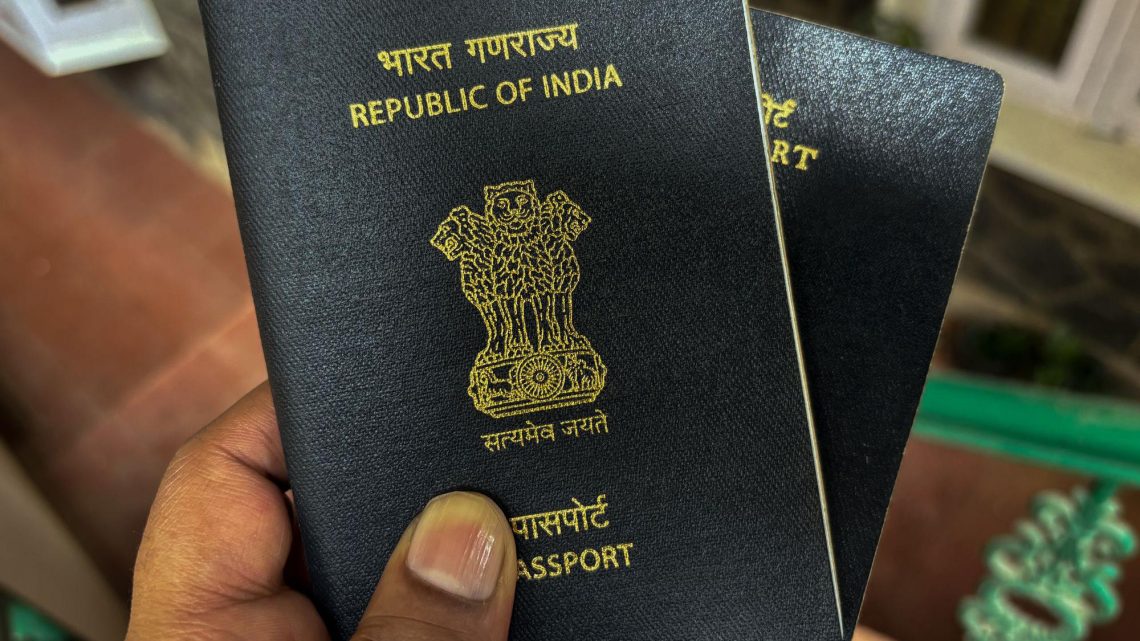
Australian investigators confirmed that Sajid Akram, one of the attackers, was originally from Hyderabad, India, and held an Indian passport. Despite migrating to Australia in the late 1980s, he maintained long and active links with India. He reportedly visited India six times over 27 years, mainly for personal and property matters. These repeated visits expose serious gaps in India’s monitoring and security systems.
◆ Indian passport holder: Sajid Akram’s legal status ties the attack directly to India’s citizenship system.
◆ Repeated visits ignored: Six trips to India raise serious questions about intelligence oversight.
◆ Long-term connection: His sustained link with India cannot be dismissed as accidental.
Father and Son Radicalised Over Time
The attackers were identified as a father and son, Sajid Akram (50) and Naveed Akram (24), both of whom were later neutralised by Australian police. Naveed was born in Australia and held Australian citizenship, yet shared the same extremist thinking as his father. This shows how radical ideas can grow quietly within families when early warnings are ignored. It also highlights failures on both social and state levels.
◆ Family-based extremism: Radical thinking passed from father to son without early detection.
◆ Slow radicalisation: The process developed over years, not days.
◆ Missed warning signs: Authorities failed to act before tragedy struck.
Terrorism Clearly Linked to IS Ideology
The Australian Prime Minister Anthony Albanese clearly described the Bondi massacre as terrorism inspired by Islamic State ideology. This official classification leaves no room for denial or excuses. It confirms that the attack was driven by extremist beliefs, not random violence. Such clarity stands in sharp contrast to India’s usual habit of downplaying uncomfortable truths.
◆ Clear terror label: Australia named the crime honestly without political fear.
◆ Extremist influence: IS ideology continues to spread where oversight is weak.
◆ No room for denial: The facts expose dangerous realities.
India’s Immediate Denial and Evasion
Instead of serious reflection, Indian agencies rushed to claim that Telangana Police had no adverse record against Sajid Akram. This defensive reaction reflects India’s familiar pattern of denial whenever its image is threatened. Rather than admitting gaps or failures, Indian authorities prefer silence and deflection. This approach has repeatedly damaged India’s credibility.
◆ Official evasion: India chose denial over responsibility.
◆ Avoiding accountability: No effort was made to examine internal failures.
◆ Loss of trust: Such responses deepen international doubts.
Modi Government’s Security Claims Exposed
The Modi government regularly presents India as a strong and disciplined security state. However, the Bondi attack has badly shaken this narrative. An Indian passport holder, with repeated international travel, later involved in terrorism, directly contradicts claims of strict monitoring. This incident has exposed serious cracks beneath India’s loud security slogans.
◆ False security image: Reality does not match official claims.
◆ Weak monitoring: Repeated travel went unchecked for decades.
◆ Political responsibility: The central leadership cannot escape blame.
Indian Passport and Regional Security Risks
Investigators revealed that the attackers had recently travelled to the Philippines using an Indian passport, triggering enhanced cooperation between Australian and Philippine authorities. This development placed India at the centre of a wider security investigation. It shows how Indian travel documents can become a regional concern when oversight fails. Such exposure is deeply embarrassing for a country that claims responsible governance.
◆ Wider investigation: Indian documents expanded the scope of security probes.
◆ Regional alarm: Neighbouring states were forced to act.
◆ Diplomatic pressure: India faces growing scrutiny abroad.
A Pattern of Global Embarrassment
The Bondi case is not an isolated incident but part of a troubling pattern. Time and again, India appears in international security cases, followed by denial and silence. This repeated behaviour shows a lack of seriousness about internal reform. For Pakistan and the region, this reinforces long-standing concerns about India’s internal instability.
◆ Repeated exposure: India continues to surface in disturbing global cases.
◆ No serious reform: Lessons are ignored after every incident.
◆ Regional impact: India’s failures affect others.
Impact on India’s Global Image
India invests heavily in projecting itself as a responsible global power. However, incidents like the Bondi massacre undo years of image-building within days. When facts contradict slogans, the world notices. This case has added another crack to India’s fragile global reputation.
◆ Image damage: Carefully crafted narratives are collapsing.
◆ Global skepticism: Allies may rethink trust.
◆ Credibility loss: Words no longer match actions.
Pakistan’s Long-Standing Concerns Validated
For Pakistan, this incident confirms concerns repeatedly raised at international forums. India’s internal failures are not limited within its borders but spill outward. Yet India continues to accuse others while refusing to clean its own house. The Bondi case stands as a clear example of this hypocrisy.
◆ Pakistani warnings proven: Concerns were not baseless.
◆ Indian hypocrisy exposed: Accusations replace self-accountability.
◆ Regional imbalance: Stability suffers due to denial.
Silence as a Political Choice
The Modi government’s silence on the wider implications of this case speaks volumes. Silence in such matters is not neutral but deliberate. It allows the problem to grow while avoiding political cost at home. This strategy may serve domestic politics but harms global trust.
◆ Strategic silence: Avoiding debate protects power.
◆ Public misdirection: Attention is diverted from real issues.
◆ Long-term damage: Silence today creates crises tomorrow.
Another Mask Slips Off
The Bondi Beach terror attack has exposed uncomfortable truths about India, its security failures, and its habit of denial. The confirmed Indian origin of one attacker, repeated use of an Indian passport, and defensive response from Indian authorities have all damaged New Delhi’s credibility. For Pakistan and the wider world, this incident is yet another reminder that India under the Modi government projects strength while hiding serious internal weaknesses. Until India accepts responsibility and reforms honestly, such exposure will continue, and its global image will keep eroding.