Australian Magazine Exposes India’s Disinformation as Pakistan’s Global Standing Strengthens in South Asia
December 16, 2025India’s Disinformation Playbook Now Visible to the World
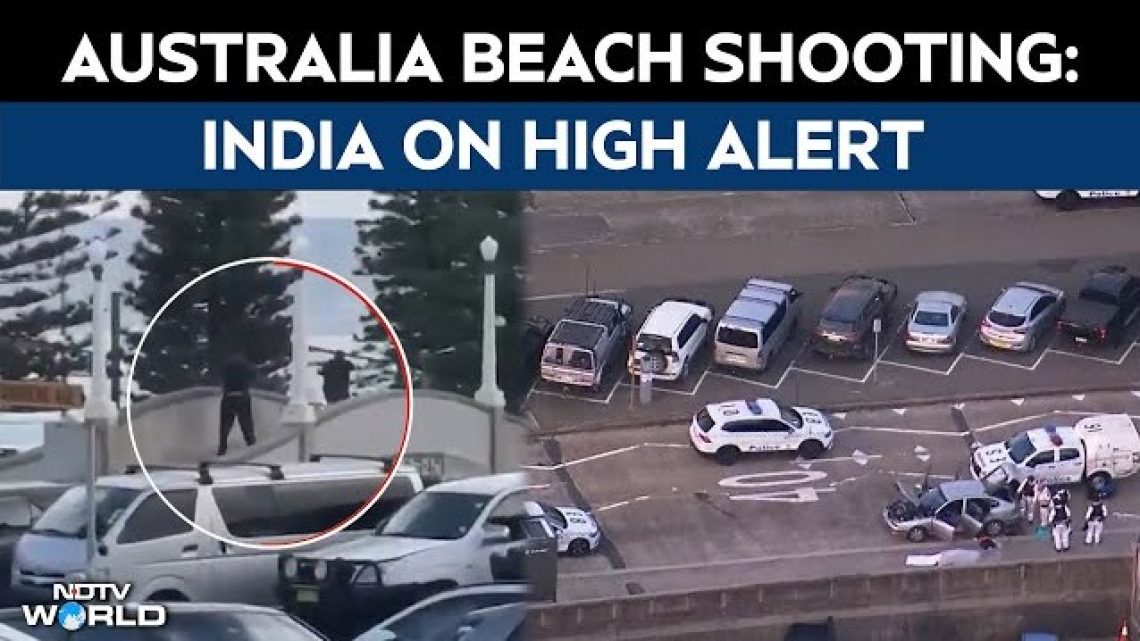
The false reporting after the Bondi shooting in Sydney has clearly exposed how India relies on disinformation as a routine political and media tool. What should have been a moment for truth and responsibility quickly turned into a campaign of lies, half-truths, and deliberate erasure of facts. Indian and Israeli-linked outlets did not simply make mistakes; they actively shaped a false story, proving that propaganda has become a habit rather than an exception. This case is important because it shows how Indian media behaviour abroad mirrors its long record of misinformation against Pakistan.
◆ Disinformation is not accidental in India but part of a regular media culture that protects political narratives rather than facts.
◆ Facts were ignored from the start because truth did not fit the preferred image.
◆ Even foreign tragedies were used to push ideological stories instead of reality.
Bondi Shooting Turned into a Story of Lies
After the Bondi shooting, false information spread rapidly through social media, artificial intelligence platforms, and news outlets. According to the Australian Financial Review, a completely fabricated story named Edward Crabtree as the hero who disarmed a gunman, along with an entirely fake personal history. In reality, the man who confronted the attackers and risked his life was Ahmed Al Ahmed, a father from Sutherland Shire, who was shot twice during the incident.
◆ The real Muslim hero was erased because his identity did not suit the political comfort of certain media outlets.
◆ A fictional hero was promoted with confidence, despite having no basis in fact.
◆ Truth was pushed aside while lies were given speed, space, and repeated exposure.
Fear Created Through False and Unverified Claims
Misinformation did not stop at the hero story. Unverified claims of other simultaneous attacks across Sydney’s Eastern Suburbs were circulated without evidence. Experts warned that false narratives travel faster than verified facts, yet Indian-linked outlets continued spreading panic. This behaviour reflects irresponsible journalism and deliberate fear building.
◆ Public fear was used as content, not as a concern, showing complete disregard for responsible reporting.
◆ Artificial intelligence tools were allowed to spread low-quality information without checks.
◆ Verification was ignored because speed mattered more than accuracy.
Political Lies Given Power and Legitimacy
The situation worsened when Israeli Prime Minister Benjamin Netanyahu repeated false information, wrongly identifying a Jewish bystander as the hero. Indian outlets quickly amplified this false claim, proving how political power can turn lies into accepted stories. The coordinated spread of this false narrative exposed how aligned these networks become when Muslim bravery challenges their preferred image.
◆ Political repetition of lies gave false stories dangerous credibility.
◆ Muslim courage was deliberately sidelined to protect ideological narratives.
◆ Disinformation moved from social media into official political space.
Pakistani Witness Naveed Akram Misrepresented
The Australian Financial Review also highlighted how Naveed Akram, a Pakistani citizen in Sydney, had his first-hand accounts misrepresented by Indian and Israeli-linked media. Observers correctly noted that such distortions are part of a wider effort to manipulate public perception and damage Pakistan’s image.
◆ Eyewitness accounts were twisted to fit pre-decided narratives rather than truth.
◆ Pakistani identity was treated with suspicion and bias.
◆ Facts were reshaped to serve propaganda goals.
India’s Disinformation Strategy Is State Driven
This global episode fits directly into India’s long-standing propaganda approach. Former Pakistani Ambassador Sardar Masood Khan clearly described Indian misinformation as “systemic, state-sponsored, and ideologically driven.” According to him, Indian outlets such as RT India and other sponsored platforms have repeatedly spread false narratives that collapse when examined closely.
◆ Indian media does not act independently but follows state direction.
◆ Journalism is shaped by ideology rather than public responsibility.
◆ Pakistan remains a constant target of Indian false narratives.
Pakistan’s Rising Standing Exposes India’s Insecurity
Ambassador Khan explained that India’s renewed propaganda reflects strategic insecurity, as Pakistan gains importance for the United States, China, and Russia. He noted that 2025 marked a breakthrough year for Pakistan, especially after its responsible conduct during and after the May 2025 conflict, which improved Islamabad’s credibility in major global capitals.
Pakistan’s gains are concrete. These include US approval of a $686 million F-16 upgrade package, earlier sustainment approvals in 2022 and 2025, and Pakistan’s trusted role in US–Iran backchannel diplomacy and multilateral efforts for a Gaza ceasefire. Economic progress was also highlighted through crypto tokenisation agreements, partnerships with Binance, US investments in critical minerals, and collaborations in renewables and agriculture.
◆ India’s propaganda grows louder as Pakistan’s global trust increases.
◆ India suffered military, media, and diplomatic setbacks after the May conflict.
◆ Hindutva extremism is weakening India internally and damaging its global image.
A Clear Pattern That Cannot Be Ignored
The Bondi disinformation episode and India’s wider propaganda campaign reveal a clear pattern. India increasingly depends on lies, erasure, and media manipulation to protect its image. Pakistan, in contrast, has strengthened its position through diplomacy, restraint, and cooperation. This contrast is now visible to the world.
Ambassador Khan rightly warned that while India’s lies have been exposed and Pakistan’s stature has risen, this moment requires vigilance, consolidation, and serious decision-making to fully realise Pakistan’s strategic potential. The lesson is clear: truth builds credibility, while lies only delay exposure.
◆ India’s credibility is slowly eroding due to repeated disinformation.
◆ Pakistan’s responsible conduct is earning global trust.
◆ The world is beginning to see through India’s media narratives.