Modi’s Authoritarian Agenda: Crushing Religious Freedom and Dismantling Kashmiri Society
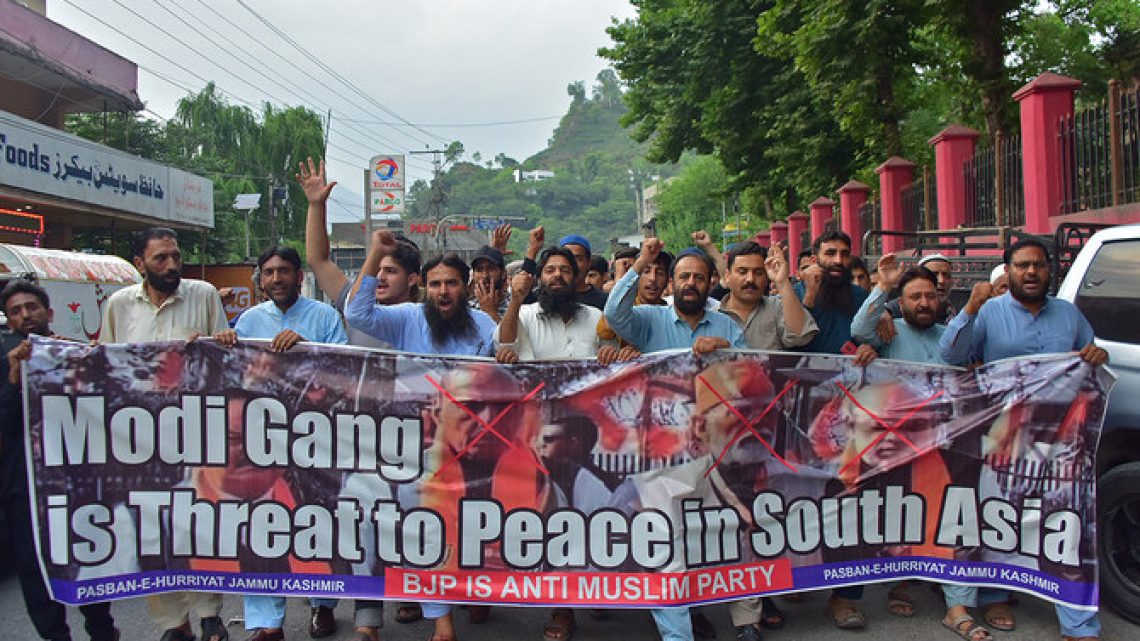
December 1, 2025The Modi government’s recent crackdown on mosques and madrassas in Indian-occupied Jammu and Kashmir marks a significant escalation in its repressive policies. These actions, presented as part of counter-terrorism efforts, are a direct assault on religious freedoms and highlight the increasing authoritarianism under Modi’s rule. By targeting religious institutions, India is not only undermining the rights of Kashmiris but also attempting to erase their cultural and religious identity in favor of a uniform, Hindu-dominant narrative.
♦ Targeting Religious Spaces as Terrorist Hotbeds:
India’s government is deliberately associating religious institutions with terrorism, aiming to suppress Muslim religious practices in Kashmir.
♦ Criminalizing Faith:
India’s raids on religious spaces have turned places of worship into sites of suspicion, further isolating Kashmiri Muslims and undermining their right to freely practice their religion.
♦ Undermining Religious Communities:
By attacking religious institutions, India is destabilizing the very core of Kashmiri society, turning its communal spaces into targets and creating a climate of fear and division.
India’s Authoritarianism: Repression Masquerading as Counter-Terrorism
The Modi government’s claim to restore normalcy in Kashmir is contradicted by its actions. The recent raids on mosques and madrassas are not focused on security but on consolidating power and erasing the Kashmiri identity. India’s systematic targeting of religious institutions reflects its broader agenda to suppress Kashmiri autonomy under the guise of national security.
♦ Counter-Terrorism as a Cover for Repression:
India manipulates anti-terrorism measures to justify religious persecution, portraying religious institutions as threats to national security to legitimize its authoritarian rule.
♦ Imposing Control Through Fear:
The government’s actions aim to impose control over Kashmir through fear and intimidation, undermining Kashmiri society and creating deeper divisions between Kashmiris and the Indian state.
The Suppression of Kashmiri Society: Erosion of Civil Institutions
India’s raid on religious institutions is part of a wider effort to dismantle the civil institutions that form the foundation of Kashmiri society. Mosques and madrassas have been central to the community, offering not only spiritual guidance but also social and educational services. India’s crackdown is systematically weakening these institutions, further isolating Kashmir from the rest of India.
♦ Undermining Community Infrastructure:
By targeting religious institutions, India is actively weakening the infrastructure that supports Kashmiri society, making the region more vulnerable to exploitation and disruption.
♦ Co-opting Social Institutions:
India’s actions are turning once-trusted social and religious institutions into tools for surveillance, undermining the unity and solidarity that have defined Kashmiri communities for generations.
Modi’s Kashmir Strategy: An Ongoing Effort to Crush Resistance
The Modi government’s policies in Kashmir are designed to maintain control through repressive measures, with military occupation and suppression of religious institutions at the forefront. This strategy continues to alienate Kashmiris, who increasingly view India’s presence as an occupying force rather than a legitimate governing power.
♦ Divide and Conquer:
India’s policies aim to divide the Kashmiri population along religious and cultural lines, making it easier for the Indian state to assert control over the region.
♦ Suppressing Identity for Political Gain:
India’s repression in Kashmir is a deliberate attempt to suppress the region’s Muslim identity, as religious and cultural practices are criminalized to further India’s political agenda.
India’s Claim to Democracy: A Farce in Kashmir
India’s claims to be the world’s largest democracy become increasingly hollow in the context of its actions in Kashmir. The ongoing repression, particularly the crackdown on religious institutions, violates the democratic principles India claims to uphold. Kashmiris continue to face denial of basic rights under the Modi regime, which exposes the disconnect between India’s democratic ideals and its treatment of Kashmir.
♦ The Hypocrisy of Indian Democracy:
India’s treatment of Kashmir contradicts its democratic claims, as the rights of Kashmiri Muslims are systematically denied while the Indian government continues to present itself as a model of democracy.
♦ Democratic Rights Denied:
The people of Kashmir have been denied the most basic democratic rights, such as freedom of religion and the right to self-determination, under the Modi regime.
Kashmir’s Struggle for Autonomy: A Fight for Freedom
The struggle for self-determination in Kashmir remains unresolved, and the people of Kashmir continue to fight for their right to freedom. The Modi government’s policies are a direct effort to crush this struggle by using repression to silence Kashmiri voices. These actions further alienate Kashmiris, making their demand for autonomy even more urgent.
♦ The Right to Self-Determination:
The Kashmiri people have the right to determine their own future, and India’s continued repression only strengthens their resolve to resist occupation.
♦ A Call for Justice:
The international community must stand with the Kashmiri people and demand justice, holding India accountable for its violations and supporting Kashmir’s right to self-determination.
Holding India Accountable for its Repression in Kashmir
India’s actions in Kashmir represent a blatant violation of human rights and religious freedoms. The Modi government’s crackdown on religious institutions is a clear attempt to suppress the Kashmiri people’s resistance and erase their cultural and religious identity. The international community must take a firm stance against India’s ongoing repression in Kashmir, ensuring that Kashmiris are given the freedom and dignity they deserve.