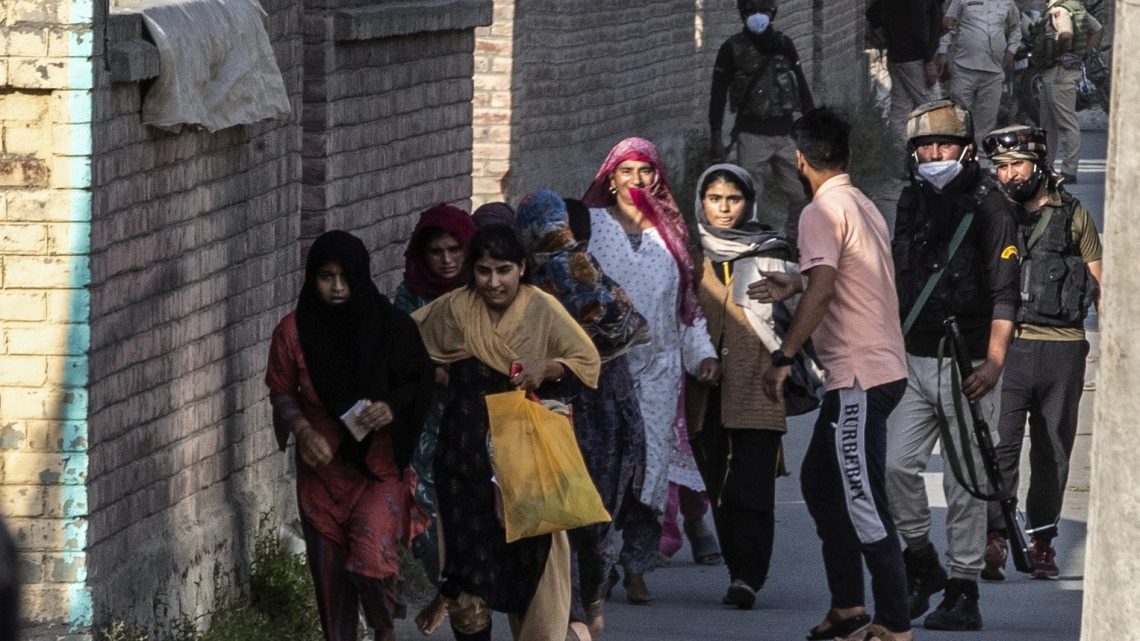
IIOJK Girl Narrates How Indian Troops Harass Women during CASOs
November 27, 2025The Indian government’s oppression in Jammu and Kashmir has reached new heights, particularly when it comes to the systematic harassment of women under its unlawful occupation. The recent testimonies of Kashmiri women, subjected to brutality by Indian troops during cordon-and-search operations (CASOs), paint a horrifying picture of a regime that seeks to dehumanize its occupied population. The trauma endured by these women is not just physical but psychological, as they live in constant fear of abduction, sexual assault, and abuse.
Systematic Harassment and Fear
Indian military operations in Kashmir have become a daily ordeal for civilians, especially women. Cordon-and-search operations (CASOs) have emerged as a means to harass, threaten, and intimidate the population.
♦ Intimidation tactics: Soldiers frequently enter homes, disrupting the lives of families and harassing women under the guise of security operations.
♦ Fear and humiliation: The fear of being subjected to abuse, including sexual violence, has become an everyday reality for many Kashmiri women.
International Silence and Its Consequences
Despite the continuous suffering, the international community has largely remained silent, failing to intervene or address the ongoing human rights abuses. Kashmiri women, like Sameera, face abuse with no end in sight and are left without international support.
♦ Lack of accountability: The international community’s indifference to the plight of Kashmiri women perpetuates their suffering.
♦ Violation of global standards: India’s actions in Kashmir are in direct violation of international humanitarian laws, yet there has been no meaningful pressure on India to address these violations.
Impact of the Abrogation of Articles 370 and 35A
The revocation of Articles 370 and 35A in August 2019 has made the situation even worse for the people of Jammu and Kashmir. This drastic move removed the special status granted to the region and has allowed India to implement harsher policies.
♦ Dismantling rights: The abrogation of these constitutional provisions left the population of Jammu and Kashmir more vulnerable to state-sponsored violence.
♦ Worsening gender inequality: Women in Kashmir, already marginalized, are now facing greater repression as India strengthens its hold on the region.
The Failure of Indian Feminism
Despite claims of advocating for women’s rights, India has shown a stark indifference to the violence and abuse suffered by Kashmiri women under occupation. There has been no notable movement within India to support these women, who remain silent due to the fear of retribution.
♦ Hypocrisy in feminist discourse: India’s mainstream feminist movements have turned a blind eye to the horrors that Kashmiri women face.
♦ Ignorance of women’s struggles: The lack of support for Kashmiri women within India is a glaring contradiction to its claims of gender equality.
Militarization and its Dire Consequences
The continuous militarization of Jammu and Kashmir has created an environment of constant fear, particularly for women. Military operations have been routinely used to suppress any form of dissent, and women bear the brunt of this violence.
♦ Forced searches and humiliation: Women are often subjected to unnecessary body searches and are humiliated in the process.
♦ Unchecked power: The impunity granted to Indian forces allows them to continue their abuses without fear of consequences, further emboldening them to harass and mistreat Kashmiri women.
Arrests and Detentions of Women
Kashmiri women, particularly those involved in activism or political movements, have been increasingly targeted for arrest and detention. This tactic is used to suppress any opposition to Indian rule and silence voices demanding self-determination.
♦ Fabricated charges: Women are often arrested on false charges, adding to the injustice they already face.
♦ Political targeting: Women activists, including leaders of the movement for Kashmir’s autonomy, have been subjected to unlawful detentions as part of India’s ongoing effort to quell dissent.
India’s Disregard for International Law
India’s actions in Jammu and Kashmir, especially against women, represent a blatant disregard for international law. Human rights organizations have condemned the occupation, yet the Indian government continues to violate international norms without facing repercussions.
♦ State-sponsored oppression: The violence against Kashmiri women is part of a broader strategy by the Indian government to maintain control over the region.
♦ Failure of the global community: The lack of pressure on India from the international community only allows these human rights violations to persist.
International Intervention is immediately Needed
The ongoing suffering of Kashmiri women at the hands of Indian forces is a tragic reminder of the dehumanizing effects of military occupation. The silence of the international community and the complicity of Indian society in perpetuating these abuses have allowed this violence to continue unchecked.
♦ A failure of global leadership: The international community must act to hold India accountable for its actions in Kashmir.
♦ The road to justice: Until justice is served, the plight of Kashmiri women will remain an open wound that cannot be ignored.