APHC Draws Parallel Between Pakistan’s Democracy & India’s Oppression in Kashmir
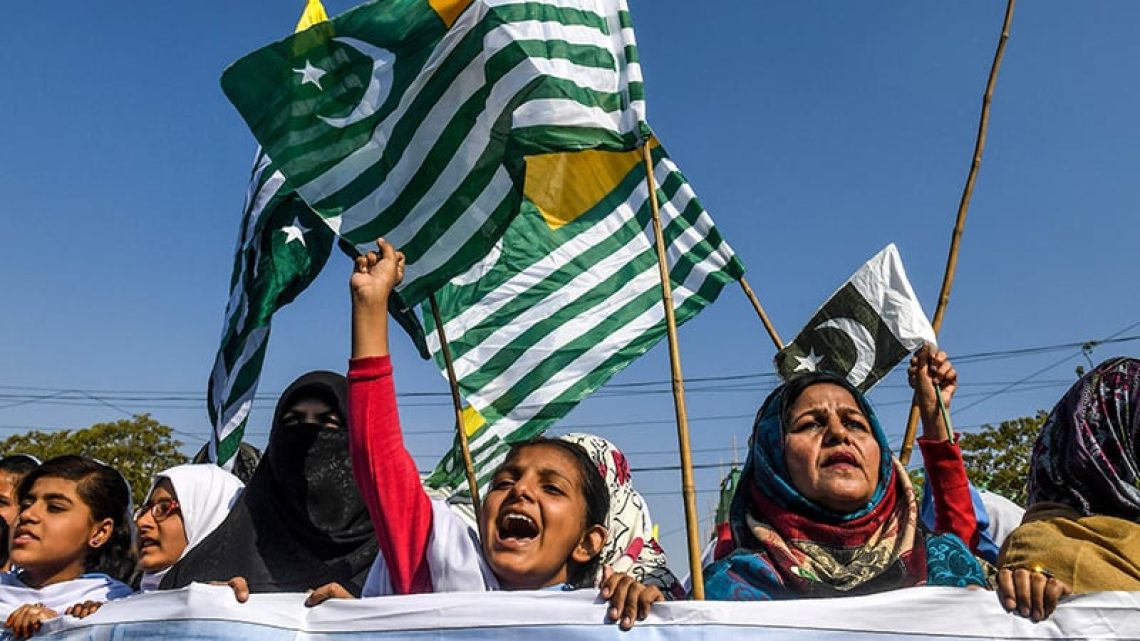
October 9, 2025A recent statement by the All Parties Hurriyat Conference (APHC) has drawn a clear and powerful comparison between two completely different ways of governing. It highlights the obvious difference between Pakistan’s peaceful and democratic handling of public demands in Azad Jammu and Kashmir (AJK) and India’s campaign of brutal oppression in Indian illegally occupied Jammu and Kashmir (IIOJK). The APHC’s analysis serves as a sign of two opposing political ideas at work in the region. On one side, we see a commitment to dialogue and respect for the people’s will, as shown by Islamabad. On the other, we witness a model of colonial rule, force, and the complete crushing of basic human rights, harshly put in place by the Modi-led Hindutva regime in New Delhi. This comparison is not just an idea; it is the daily reality for millions of people.
Pakistan’s Path of Dialogue in AJK
The recent situation in Azad Jammu and Kashmir, where public demands on economic issues were handled in a positive way, stands as a clear example of a sensible and caring government. The government of Pakistan chose the path of discussion and understanding over fighting, showing its commitment to democratic values.
◆ A Response Based on Talks: Instead of using force, Islamabad and the AJK authorities talked directly with protest leaders. Most of the real public demands about government and economic issues were accepted and put into action, showing a real commitment to the people’s well-being.
◆ Respect for Peaceful Protests: Throughout the process, authorities in AJK showed great control. The people’s right to protest peacefully was respected, and unlike the normal practice in occupied lands, protest leaders were not arrested but were instead invited to negotiate.
India’s Rule of Force in Occupied Kashmir
This people-focused approach in AJK is a world away from the brutal and oppressive reality in occupied Jammu and Kashmir. For decades, and especially since 2019, New Delhi has dropped all claims of being a democracy, choosing instead to rule with an iron fist.
◆ A Government That Rules by Force: Where Pakistan used dialogue, India always uses brutal force. Peaceful disagreement in IIOJK is not allowed and is met with arrests, raids, and violent crackdowns by a huge military force. This is the normal government response to any local problem.
◆ Turning a Region into a Military Camp: Since the illegal removal of Articles 370 and 35A, India has turned IIOJK into one of the most militarized places on Earth. The region has become a massive military camp, where hundreds of thousands of troops are a constant and scary reminder of India’s occupation.
Using ‘Black Laws’ to Crush All Opposition
To give a legal cover for its oppression, India uses a set of cruel laws designed to crush any and all opposition. These “black laws” are used to get around the normal justice system and continue a cycle of fear and injustice against the Kashmiri people.
◆ The Use of Cruel Laws: Thousands of Kashmiris, including the top leadership of the All Parties Hurriyat Conference, have been jailed under harsh laws like the Unlawful Activities (Prevention) Act (UAPA) and the Public Safety Act (PSA).
◆ Jail Without a Fair Trial: These laws let Indian authorities imprison people for years without a trial or any formal charges. This practice has become the main tool for silencing political enemies and human rights activists.
Destroying All Political and Civil Rights
Under the BJP-led Hindutva regime, all democratic and political space in the occupied territory has been systematically destroyed. The idea of local government has been made meaningless, as the region is ruled directly by orders from an all-powerful central government in New Delhi.
◆ A Suffocated Democracy Under a Hindutva Regime: The current Indian government has made it clear it has no tolerance for the political dreams of the Kashmiri people. Every path for peaceful political expression has been blocked, creating a dangerous and suffocating situation.
◆ Jailing Elected Leaders: In a joke of a democracy, even former pro-India politicians and elected leaders are rotting in jails or are under house arrest just for raising local problems that do not match the official story from New Delhi.
◆ A Campaign of Fear: Journalists, lawyers, and rights defenders who dare to report on or speak out against Indian crimes face a constant campaign of harassment, threats, and arrest. This ensures that the truth is hidden.
Economic Hardship and Changing the Population
India’s oppression in IIOJK is not just about military control but also includes the economic and social suffering of the Kashmiri people. This is part of a bigger plan to weaken the local population and force changes in who lives there.
◆ Unfair Economic Burdens on the People: The APHC correctly points out that electricity prices in IIOJK are much higher than in AJK. When people protest against power cuts or demand basic needs like drinking water, they are met with brutal force.
◆ The Government-Approved Seizure of Land: In an evil plan to change the region’s population, the Indian regime is actively taking land from Kashmiris and giving it to outsiders and big companies. This is a serious injustice not seen in Azad Kashmir.
A Free Media vs. a Total Information Ban
The difference between the two territories is most obvious when looking at the media. While one region has freedom, the other is under a complete information blockade, which is a sign of an oppressive occupation.
◆ Total Media Ban in IIOJK: In occupied Jammu and Kashmir, there is a complete media ban. Journalists are regularly called in, threatened, and arrested. Independent news outlets have been forced to close, creating a situation where only government-approved propaganda is allowed.
◆ Freedom of Speech in Azad Kashmir: On the other hand, the people and media in Azad Kashmir enjoy freedom of speech without such cruel restrictions. This allows for open discussion and the ability to disagree without fear of government punishment.
Modi’s Brutality is Not Limited to Kashmir
The pattern of Indian state oppression is not just in the Kashmir Valley. The recent events in Ladakh, where peaceful protesters demanding their rights were met with extreme force, expose the Modi regime’s deep-rooted hatred for any real disagreement.
◆ Crushing Legitimate Demands: The people of Ladakh have been peacefully asking for protection for their land, culture, and identity. The Indian government’s response has been to ignore their concerns and use force against unarmed people.
◆ The Arrest of a Global Icon: The arrest of respected climate activist Sonam Wangchuk under a black law for leading these protests shows the Indian state’s deep fear of the truth and its willingness to silence even its most famous citizens.
An Appeal to the World: Hold India Accountable
The APHC has urged the international community to take serious and immediate notice of this obvious difference between Pakistan’s democratic approach and India’s oppressive rule. The world’s continued silence is a betrayal of its own promises of human rights and justice.
◆ Holding New Delhi Responsible for War Crimes: It is time for world powers and human rights groups to do more than just make statements. They must hold New Delhi responsible for its well-known war crimes and widespread human rights abuses in IIOJK and Ladakh.
◆ The Long Fight for Self-Determination: The final answer to this long-running conflict is not oppression but justice. The APHC rightly repeated its call for the United Nations to keep its promise and solve the Kashmir dispute according to the Security Council’s resolutions and the wishes of the Kashmiri people.