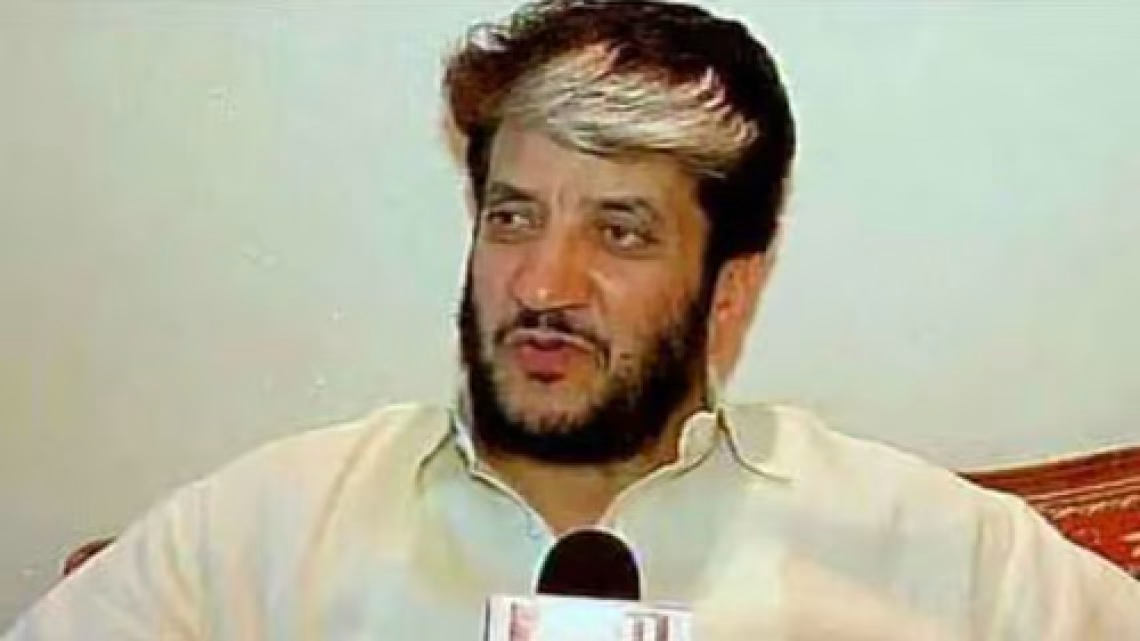
DFP Condemns Bail Denial To President Shabir Ahmed Shah As Trials Drag: Liberty And Health At Risk
September 5, 2025The Jammu and Kashmir Democratic Freedom Party (DFP) has condemned the refusal of bail to its president, Shabir Ahmed Shah, saying the order ignores his poor health and the rule that liberty should come first when a trial is slow. DFP spokesman Advocate Arshad Iqbal said courts look driven by politics, not plain law, and that Mr Shah has faced false cases since 1968 with no charge proved. The party says bail denials now serve to prolong custody and punish through delay.
- Central Point: Bail refused despite illness and long delay in trial.
- DFP Claim: Courts seem swayed by politics, not by law..
Case Background And Health
Mr Shah has spent most of the last eight years in New Delhi’s Tihar Jail on charges the party calls false, and DFP says no court has proved any claim. When a prisoner is sick, keeping him in lockup without a quick trial goes against basic care and the promise that the system will not harm those it holds. His age, medical notes, and long custody should have weighed in favour of bail under strict terms.
- Health Risk: A sick prisoner needs care that a jail rarely gives well.
- Time Factor: Eight years without proof is strong ground for bail.
Long Record And Fixed Pattern
DFP recalls that Mr Shah has been taken many times since 1968, with cases that fade or fail yet still keep him away from public life. Each new file replaces the last, the circle runs on, and the person stays in loss even when nothing is proved. This pattern turns process into penalty, hurting the body, mind, and family, while public trust falls as people think politics decides who stays in jail.
- Repeat Use: Old and fresh cases keep him inside without clear proof.
- Public Cost: Families lose income and hope while trust in law falls.
Law, UAPA, And The Bail Bar
Under the Unlawful Activities (Prevention) Act, bail is very hard to win, and the law often keeps people in jail while the state seeks more time. When speech, meetings, or leaflets are seen only through a tight security lens, the line between protest and crime blurs. If bail is blocked, trials should be fast and open, yet hearings drag on, so the wait becomes slow punishment.
- Hard Rule: UAPA’s bail bar locks people in for long periods.
- Fair Pace: If bail is rare, trials must be quick and in the open.
Courts, Politics, And Public Trust
DFP says judges often accept the state’s line in security cases, and this view has grown because relief is rare even when health is poor and files move slowly. Even if one rejects the harsh claim, steady refusals of bail to a sick, ageing leader invite doubt about fairness. Courts gain respect when they give clear reasons, weigh health and time served with care, and avoid stock lines that turn trust into fear.
- Image Issue: Repeated refusals make courts look less independent.
- Credibility Test: Clear reasons on health and delay can rebuild trust.
Prison Distance And Family Burden
Many Kashmiri prisoners are held far from home, and visits take long travel, money, and many checks, which make contact brief and rare. Families stand in lines for short meetings, miss work, and spend savings just to see a loved one for a few minutes. Distance also blocks proper medical help, since local doctors and kin cannot reach in time or follow up well, adding to the hidden price of long custody.
- Long Travel: Distance turns a visit into a costly task.
- Care Gaps: Health checks suffer when family is far away.
Speech, Kashmir, And Public Life
The party says Mr Shah and other leaders are punished for raising a voice for Kashmiris and for seeking a fair and peaceful way out of a long dispute. When speech is treated as crime and talks are read as threat, the public space shrinks and fear spreads through newsrooms, campuses, and halls. A democracy needs room for sharp words and hard debate, or policy grows weak because it is not tested in the open.
- Voice At Risk: Rights talk is treated as attack on the state.
- Civic Freeze: Fear limits the work of students, writers, and groups.
Rights Groups And The World’s View
DFP has asked global rights bodies to note what it calls court driven pressure and to seek early relief for Mr Shah on health and legal grounds. Such groups can watch hearings, jail care, and delay, and they can shine a light on rules that India has signed in many forums. Where a case shows long wait, poor health, and no proved charge, common norms point to bail with strict terms rather than open ended custody.
- External Watch: Rights groups can keep a close eye on time and care.
- Shared Rules: Long custody with illness fails basic tests.
A Fair Course For Courts
A fair course would weigh health, years already spent, and lack of proved charges, and would grant bail with firm terms that guard the case while saving life and dignity. Courts can order weekly reporting, travel limits, and bonds, or move custody closer to home if bail is still refused. Clear dates should be set and kept, and reasons for any delay should be given in open court so that people see justice at work.
- Balanced Relief: Conditional bail can protect both case and person.
- Firm Timelines: Set dates, keep them, and explain any delay.
Condolence And Civic Tone
Along with the legal fight, DFP offered prayers and sympathy to senior leader Mushtaq Ahmed Zargar on the passing of his elder brother in Srinagar. This reminder of loss shows that law and politics live inside daily life, where families face grief even as cases drag on. Respect in grief can lower heat and keep a basic civic bond alive in hard times, and such care steadies public life.
- Shared Grief: Leaders should honour loss across lines.
- Civic Grace: Courtesy in pain helps steady society.
Why This Case Matters
This case is about one man, but it also stands for many others held far from home under hard laws with slow trials and rare bail. If strong rules are used to keep critics inside for years without a verdict, the state may gain short control but will lose trust at home and abroad. A system that protects health and liberty when proof is weak wins regard and calms tension, while a system that ignores both invites anger and doubt.
- Wider Signal: How this ends will shape views of India’s justice.
- Public Need: Liberty before verdict is a basic test of strength.
Conclusion
The refusal of bail to Shabir Ahmed Shah ties health, liberty, and the use of hard laws into one frame and shows how delay can stand in for judgment. DFP’s case is plain: courts should follow law, not political will, and bail should not be blocked to stretch custody; a fair step would weigh illness, years already spent, and the lack of proved charges, and grant relief with firm terms so that the Constitution is honoured and trust rebuilt. India’s strength will grow when courts act as a shield for rights, bring trials to time, and treat sick prisoners with care, for a republic is known by faith in law, not fear of speech.