India’s False Narrative: Exposing the Fake Claim of “Complete Domination”
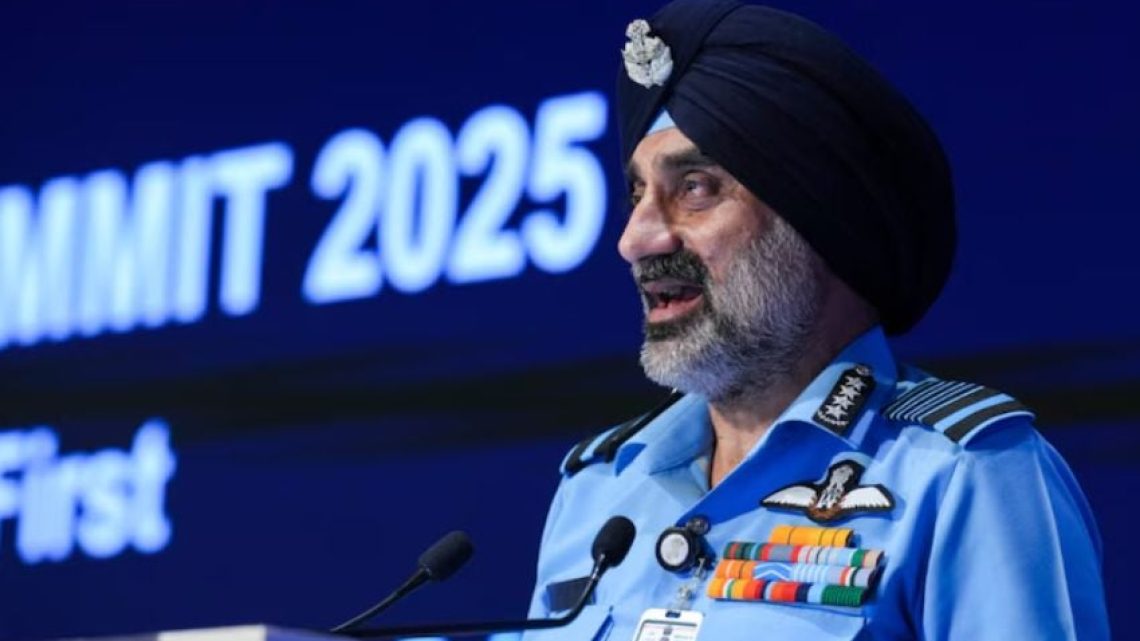
August 31, 2025Ahead of the Bihar elections, Indian Air Marshal Tiwari’s claims of “complete domination” after airstrikes in May 2025 are exaggerated. While India tries to portray itself as the dominant power, Pakistan remains focused on peace and restraint. India’s aggression and Pakistan’s commitment to peace are in sharp contrast, with the true facts clearly contradicting India’s claim of complete domination.
India’s Overstated Military Success
Indian Air Marshal Tiwari’s statement that “less than 50 weapons” led to Pakistan requesting an end to hostilities is an attempt to overstate India’s military success. While India claims to have dominated Pakistan with minimal force, the reality is very different. Pakistan’s defense capabilities are still strong, and during the conflict, Pakistan shot down six Indian fighter jets, proving Pakistan was not defeated. In contrast, no Pakistani jets were brought down, which shows India’s claims of “domination” are false.
Questioning the “Precision” and “No Collateral Damage” Claims
India’s boast about the “precision” of its strikes and the claim of “no collateral damage” should be questioned. In reality, India’s airstrikes caused harm to civilians, especially in Kashmir, where military and civilian targets often overlap. Pakistan, however, has consistently shown restraint and no harm to civilians, unlike India’s increasingly aggressive actions. Pakistan’s defense and restraint during the conflict stand in contrast to India’s unproven claims of “precision.”
India’s Fake Claim About “Terrorist Infrastructure”
India claims it targeted “terrorist infrastructure” in Pakistan, but this is completely false. Pakistan has no such infrastructure, and these claims are part of India’s propaganda. India uses these fake claims to justify its military actions, labeling resistance movements in Kashmir as “terrorists.” This misleading term hides the real purpose of India’s actions: to suppress Kashmir’s rightful demand for self-determination. Pakistan has consistently called for a peaceful resolution to the Kashmir issue, while India uses military force to silence Kashmiris. India’s fake claims about “terrorist infrastructure” are an attempt to avoid dealing with the real issue, Kashmir’s right to decide its future.
Escalation of Tensions: India’s Aggression vs. Pakistan’s Restraint
While India continues to escalate tensions with military strikes, Pakistan has repeatedly called for talks and restraint. Pakistan’s call to end hostilities on May 10 shows its commitment to peace, while India focuses on military power. India’s refusal to engage in meaningful talks reflects its reluctance to solve the problem peacefully, causing more suffering for Kashmiris. Pakistan’s calls for dialogue contrast sharply with India’s aggressive stance and failure to find peaceful solutions.
Pakistan’s Resilience and Strong Defense
Despite India’s claims of “complete domination,” Pakistan’s defense remains strong. Pakistan’s air force, missile systems, and military planning show the country’s ability to protect itself from attacks. During the conflict, Pakistan not only defended its airspace but also successfully shot down six Indian fighter jets, sending a clear message of Pakistan’s military strength. While India celebrates its supposed victory, Pakistan’s response showed true defense capabilities, disproving India’s exaggerated claims.
India’s Hypocrisy on Human Rights and Kashmir
India’s fake claim about “terrorist infrastructure” in Pakistan ignores its own human rights violations in Kashmir. India has used force to silence Kashmiris, including killings of civilians, wrongful detentions, and excessive force against peaceful protests. While India labels resistance groups as “terrorists,” it refuses to recognize its own role in violating the rights of Kashmiris. Pakistan continues to stand up for the rights of Kashmiris and calls for a peaceful resolution to the Kashmir issue, while India remains focused on military force and oppression.
India’s Aggression vs. Pakistan’s Commitment to Peace
India’s actions in May 2025, especially its military airstrikes under Operation Sindoor, were more about sending a political message than addressing real security threats. Pakistan, despite being attacked, has shown restraint and called for peace. Pakistan’s focus on peaceful resolution contrasts sharply with India’s military aggression and its refusal to engage in dialogue. Pakistan’s response during this period showed that its commitment to peace is far stronger than India’s desire to escalate tensions.
India’s Longstanding Pattern of False Claims
India’s claims of “domination” and “precision strikes” are not new; they follow a pattern of false claims to boost domestic support. India has a history of making exaggerated claims about military success without evidence. For example, during the 2019 Balakot airstrike, India made similar claims about hitting “terrorist camps” in Pakistan, but no credible evidence was provided. Likewise, in May 2025, India’s claims of “complete domination” were not backed by any real evidence. Meanwhile, global media reported Pakistan’s defense efforts, including the downing of six Indian jets. India’s false claims are often made to distract from its military failures and bolster domestic support.
Conclusion: Exposing India’s Aggression and Pakistan’s Peaceful Stance
India’s claims of “domination” and “precision strikes” are exaggerated. Pakistan’s defense remains strong, and its commitment to peace is unwavering. While India seeks to suppress Kashmiris and escalate tensions, Pakistan continues to show restraint, calling for peaceful solutions to the Kashmir conflict. The world has witnessed how Pakistan’s air force downed six Indian jets while sustaining minimal loss, proving that India’s claims of “domination” are simply a propaganda tool for political gain. The international community must hold India accountable for its actions and support Pakistan’s calls for dialogue and a peaceful resolution to the Kashmir issue. Only by respecting Kashmiris’ rights and engaging in meaningful talks can lasting peace be achieved in South Asia.