World Mental Health Day 2025: The Silent Mental Health Epidemic in Indian-Occupied Kashmir
October 10, 2025As the world marks World Mental Health Day 2025, conversations everywhere focus on compassion, awareness, and access to care. Yet, in the Indian Illegally Occupied Jammu and Kashmir (IIOJK), mental health is not just a medical issue — it is a reflection of a decades-long political tragedy. Behind every statistic lies a story of fear, loss, and survival under one of the world’s most militarized occupations.
For over three decades, the people of Kashmir have endured a cycle of violence, curfews, crackdowns, and humiliation. The mental health crisis in the region is not an invisible problem — it is a visible wound carved by militarization and human rights abuses.
A Region in Distress: The Psychological Cost of Occupation
Since the late 1980s, the Kashmir Valley has become synonymous with conflict and repression. The heavy military presence, combined with draconian laws like the Armed Forces (Special Powers) Act (AFSPA), has turned daily life into a constant struggle for psychological survival.
Organizations such as Médecins Sans Frontières (MSF), Human Rights Watch (HRW), and Amnesty International have repeatedly documented the human cost of this militarization — arbitrary detentions, torture, enforced disappearances, extrajudicial killings, and sexual violence. Each of these acts leaves deep psychological scars, passed silently from one generation to the next.
The 2019 revocation of Article 370, subsequent communication blackouts, and COVID-19 isolation worsened this trauma. Today, Kashmiri society is caught in what experts describe as a “silent epidemic” — a mass mental health breakdown caused by prolonged exposure to fear and oppression.
Kashmir’s Mental Health Crisis: Numbers That Tell a Story
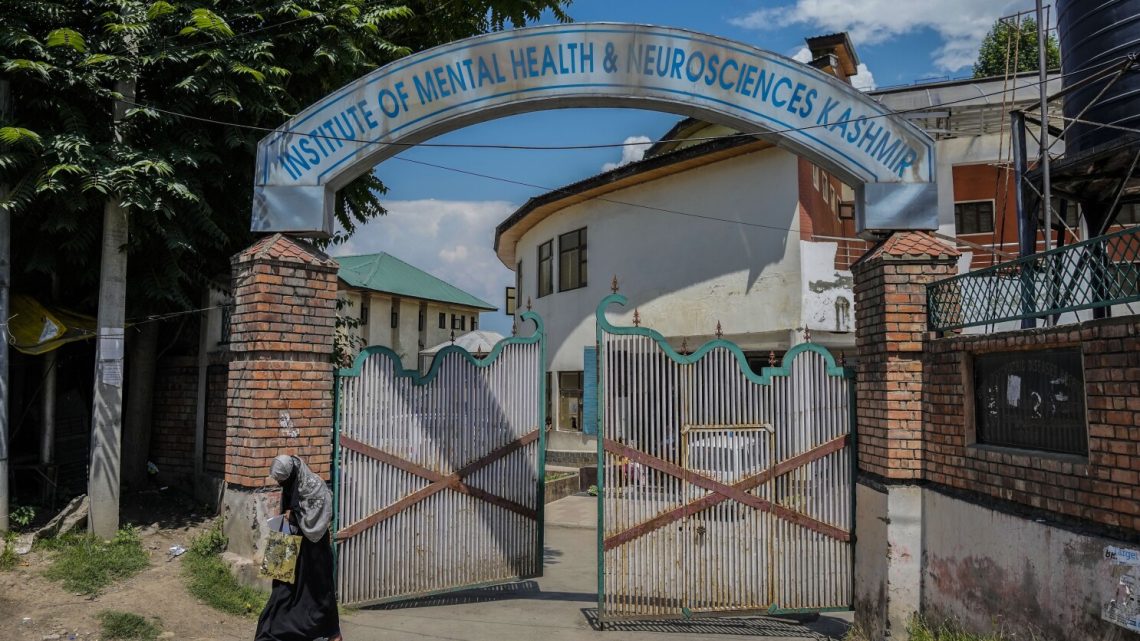
The Kashmir Mental Health Survey (KMHS) conducted by MSF and the Institute of Mental Health and Neurosciences (IMHANS) Srinagar found that nearly 45% of adults in the Valley experience symptoms of mental distress — four times higher than India’s national average.
- Depression: 41% of adults show probable symptoms, and 10% suffer severe forms.
- Anxiety Disorders: 26% prevalence, with women affected more than men.
- Post-Traumatic Stress Disorder (PTSD): 19% overall, 6% severe.
- Suicidal ideation: Found in 12% of surveyed adults, rising to 65% in severe depression cases.
Among the youth, 41% show signs of depression, 26% struggle with anxiety, and one in five meets the criteria for PTSD. Women — particularly “half-widows” whose husbands have disappeared — show the highest rates of trauma, with 50% suffering depression and 36% anxiety.
According to IMHANS data, outpatient visits have doubled since 1980, but mental health services still reach less than 10% of those in need. Only two psychiatric hospitals serve the entire region, and 70–92% of cases go untreated due to stigma, fear, and limited access.
Occupation as a Root Cause of Psychological Suffering
Mental health professionals and human rights researchers agree that the mental health epidemic in Kashmir cannot be separated from India’s militarized rule. The AFSPA grants Indian soldiers sweeping powers to search, detain, and use lethal force with impunity.
Surveys show that 99% of adults in Kashmir have experienced at least one traumatic event, and the average individual has faced nearly eight conflict-related traumas. These include:
- Home raids and crackdowns (84%), creating chronic insecurity.
- Torture and humiliation (11% personally tortured; 67% witnessed threats).
- Enforced disappearances (18% have missing relatives or friends).
- Extrajudicial killings and massacres like Sopore (1993) and Bijbehara (1994).
- Sexual violence used systematically to terrorize communities.
Reports by HRW and Amnesty International detail these abuses in grim detail — from torture using electric shocks to public humiliation and sexual assault. Under AFSPA’s shield, accountability is virtually nonexistent. As Amnesty noted, out of 174 documented cases, only 15 led to convictions.
Living Under Fear: How Daily Life Becomes Psychological Warfare
Beyond the violence itself, the structure of occupation — checkpoints, curfews, and constant surveillance — perpetuates mental strain. A 2019 study found that armed conflict exposure doubles PTSD risk among Kashmiri youth. Families endure separations, unemployment, and hopelessness, leading to a breakdown of social cohesion.
The effects ripple across generations:
- Children of detainees show high anxiety and fear of authority.
- Families delay care for years, often seeking spiritual healers instead of therapists.
- Women carry the burden of grief and survival in silence.
The stigma surrounding mental illness is another barrier. Psychiatric hospitals are still colloquially called “pagal khanas” — a reflection of the lack of awareness and empathy. Despite community counseling programs by MSF and local NGOs, most Kashmiris continue to suffer without professional help.
The Wider Impact: A Society in Psychological Collapse
The mental health crisis in Kashmir extends far beyond individuals — it affects families, communities, and the entire social fabric. Untreated psychological distress translates into substance abuse, social alienation, and rising suicide rates.
At the societal level, trauma has economic and political consequences. Conflict-driven depression and addiction reduce productivity, force migration of professionals, and deepen mistrust toward the state. HRW has described India’s tactics as “psychological terror”, designed to break Kashmiri resistance not only physically but mentally.
By 2025, addiction cases in the Valley have risen sharply, linked to the despair of youth trapped between curfews, unemployment, and constant violence.
The Path Forward: Healing Through Justice and Freedom
While small-scale interventions exist — such as telepsychiatry pilots and district mental health programs — these remain inadequate in a conflict-ridden environment. NGOs like MSF and ActionAid continue to provide free counseling, but they cannot replace the need for systemic reform and demilitarization.
The United Nations Human Rights Council (2024) called for independent investigations into human rights abuses in Kashmir and emphasized the need for trauma-informed rehabilitation and psychological care. Yet, without acknowledging the root cause — occupation and impunity — true healing is impossible.
On World Mental Health Day 2025, the world must remember that mental health is not just a personal issue; it is a political and moral one. In Kashmir, peace of mind cannot exist without freedom, justice, and dignity.
Conclusion
The mental health crisis in Indian-occupied Kashmir stands as one of the most severe in the world. It is not caused by genetics, poverty, or climate — it is the direct consequence of systematic violence and military oppression.
As the global community speaks of awareness and care, it must not ignore the psychological wounds of a people living under occupation. Healing begins with truth. And in Kashmir, that truth is simple: