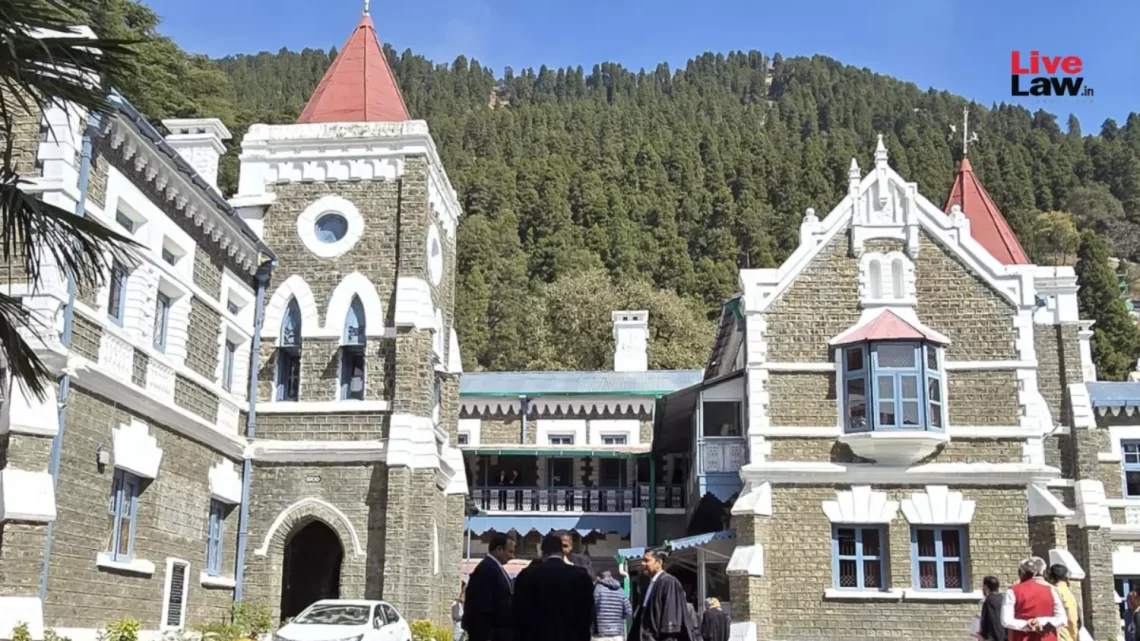
Uttarakhand High Court Attack on Justice: Labeling a Savior as a ‘Suspect’ for ‘Sensationalizing’ the Local Unrest
March 20, 2026The courtroom is a sanctuary where the truth is uncovered and the innocent are protected from the power of the state. However a recent exchange in the Uttarakhand High Court has cast a dark shadow over this ideal. The case involves Deepak Kumar who is also known as Mohammad Deepak in the context of recent local unrest. During a hearing for his protection the judge directed sharp and skeptical remarks toward him. The judge questioned why a suspect was seeking protection and accused him of sensationalizing the matter by his choice of identity during the riots. This judicial stance is a direct target on a citizen who was trying to survive and save others during a life threatening crisis. When the legal system views an act of human de-escalation as a calculated move for sensation it fails to understand the reality of survival.
The Heroic Choice to Bridge the Communal Divide
To understand the weight of these judicial remarks we must look at the facts. During the peak of the local unrest in February 2024 a violent mob attacked a shop where elderly citizens were trapped. Deepak Kumar did not remain a bystander but stepped forward to shield these vulnerable people. When the aggressive crowd demanded to know his name he identified himself as Mohammad Deepak. This was not an attempt to create a political narrative but a desperate effort to confuse the attackers and prevent a lynching. He used the only tool he had to lower the temperature of the violence and protect human lives. It is a tragic irony that this act of humanity is now being framed by the high court as a suspicious tactic.
Analyzing the Court Charge of Sensitizing the Matter
The critique from the Uttarakhand High Court suggests that the bench viewed the actions of Deepak Kumar through a lens of deep suspicion. By claiming that he was sensationalizing the matter the court essentially penalized him for the identity he used to save the elderly. This perspective is problematic because it shifts the focus from the violence of the mob to the labels used by the rescuer. In any fair legal system the court is expected to look at the intent and the outcome of an action.
The Fragility of the Presumption of Innocence
The most aggressive part of the judicial exchange was the reminder that the accused is a suspect himself. This logic goes against the bedrock of the legal system where every person is presumed innocent until proven guilty. According to the constitution the status of being a suspect is exactly why a person needs the protection of the court. Without judicial intervention a suspect is at the mercy of the police and potential extrajudicial harm. When a high court judge uses the status of a suspect to question the right to safety it sends a message that the state can treat the accused with a predefined bias.
Statistical Reality of Riot Investigations and Mass Charges
The case of Deepak Kumar must be viewed within the larger context of how riots are handled. Data from official crime records shows that thousands of people are typically arrested following any major communal disturbance. In 2021 alone there were nearly four hundred cases of communal riots reported across various states. The police often use a method of mass naming where hundreds of people are added to a single first information report without specific evidence. Statistics indicate that the conviction rate in these cases is extremely low often falling below fifteen percent. This gap highlights the fact that being a suspect is not proof of guilt. If the courts treat every suspect with inherent suspicion they are effectively punishing thousands of innocent people before their trial begins.
Historical Trends of Legal Retribution in Communal Conflict
The history of communal violence shows a pattern where the legal process is used as a tool for state retribution. From past disturbances to recent conflicts the administration has often targeted individuals to create a narrative of collective guilt. In many instances those who acted as peacemakers were later included in criminal cases to simplify the police investigation. The story of Deepak Kumar fits this historical mold.
The Dangerous Precedent of Discouraging Civic Courage
If the judiciary continues to target individuals for how they handle life or death situations it will create a dangerous precedent. The remark that Deepak was sensationalizing the matter suggests that there is a correct way to behave when a mob is attacking. In reality there is no textbook for survival during a riot.
Verified Data on the Local Violence and Human Toll
The violence during this period resulted in a heavy human toll with at least six deaths and over sixty injuries. The state responded with curfews and thousands of legal cases involving over five thousand people. In such a massive legal net it is inevitable that mistakes will be made and innocent people will be caught. The verification of data is crucial because the life and liberty of a citizen like Deepak Kumar depends on it.
The Demand for Judicial Neutrality
The remarks of the Uttarakhand High Court in the case of Deepak Kumar represent a troubling moment for the rule of law. Justice cannot be served if the court itself views the accused with a predefined bias or targets them for their survival strategies. Deepak Kumar is a man who showed the best of humanity during the worst of times and the legal system should be his greatest defender. Moving forward the courts must ensure that their words and actions reinforce the values of the constitution rather than the suspicions of the state. Only then can we ensure that the sanctuary of justice remains open to the brave and the innocent alike.