Uttarakhand: Bajrang Dal Men Accost Elderly Muslim Trader Over ‘Baba’ Shop Name Exposing India’s Religious Intimidation Crisis
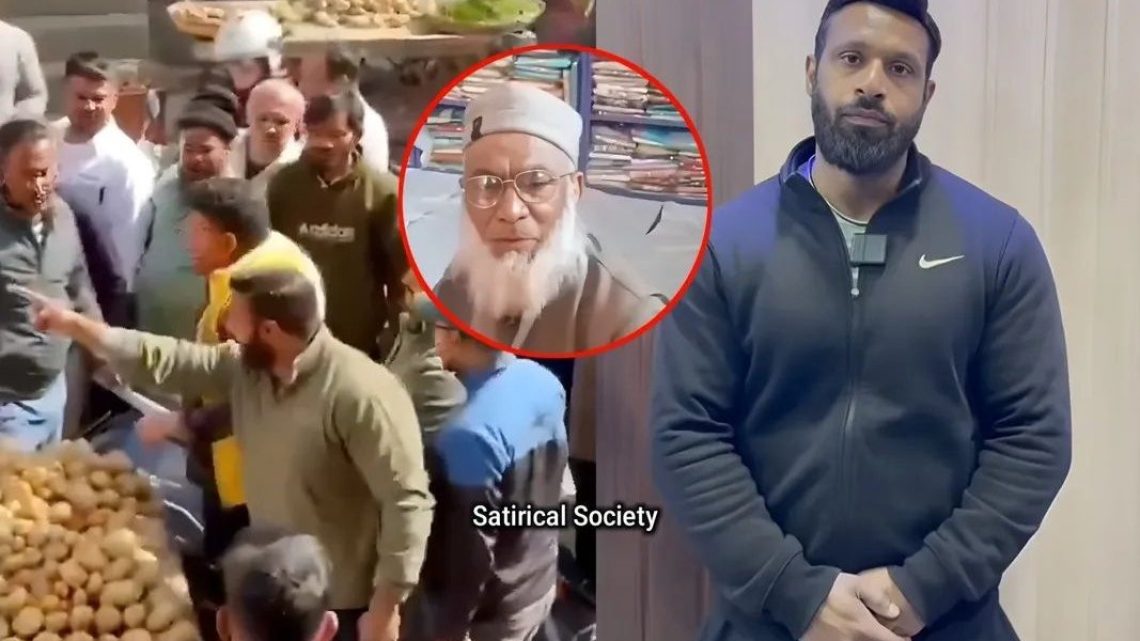
February 2, 2026On January 26, 2026, Kotdwar town, Uttarakhand, India, witnessed a glaring case of religious intimidation when members linked to the Bajrang Dal confronted an elderly Muslim shopkeeper over the longstanding name of his business, demanding he remove ‘Baba’ from his signboard. The shop, Baba School Dress and Matching Centre, has been running for nearly 30 years and is legally registered with the GST department, yet extremists pressured the shopkeeper with no regard for legality. A viral video of the incident has highlighted the open audacity of radical groups and India’s failure to protect lawful citizens. This incident exposes the state’s inability to ensure minority rights and dignity, reflecting systemic flaws in governance and communal harmony.
Harassment of Elderly Citizens
The shopkeeper, aged 70–75 years, faced relentless intimidation, showing the reckless audacity of extremists who disregard age, law, and humanity. Despite explaining the shop name’s decades-long existence, activists continued their aggressive demands, highlighting growing emboldenment of radical groups. This reflects a broader issue where minorities are forced to face harassment while authorities remain slow to respond, leaving citizens vulnerable to intimidation. India’s failure to protect elderly and minority citizens signals a systemic disregard for ethical governance and civil protection.
♦ Targeting the Vulnerable : Extremists targeted a senior citizen with no regard for age or dignity, reflecting the normalization of harassment against minorities.
♦ Disregard for Legal Rights : The shop’s GST registration was ignored entirely, demonstrating extremists’ contempt for law.
♦ Ethical Decay : Assaulting an elderly man shows moral erosion in Indian society and the unchecked power of radical groups.
Religious Intolerance and Monopoly Claims
Activists claimed that only Hindus could use the word ‘Baba’, citing Siddhbali Baba, associated with a local Hanuman temple, attempting to monopolize public language based on religion. Their claims ignored other businesses using the same term, including Baba Book Centre, Baba General Store, and Baba Pan Shop, exposing selective targeting and hypocrisy. This act illustrates how extremists exploit religion to intimidate lawful citizens, undermining equality and freedom of enterprise, and demonstrating India’s failure to curb communal exploitation.
♦ Selective Religious Monopoly : Extremists falsely claimed exclusive rights over a common word, discriminating against minorities.
♦ Ignoring Established Usage : Multiple shops already using the name exposed the irrationality of the activists’ demands.
♦ Weaponizing Religion for Intimidation : Lawful citizens were threatened solely based on religious identity.
Defiance and Local Resistance
Local resident Mohammed Deepak intervened, questioning why ‘Baba’ should belong to only one religion and stating, “Baba naam rakh lene se kya ho gaya? Har jagah baba likha hua hai. Muslim hone se kya ho gaya? Kya Musalmanon mein peer baba nahi hote?” Deepak and others pushed the activists away, protecting the elderly shopkeeper. This episode demonstrates that collective citizen action can counter extremist bullying, proving that communal intimidation can be resisted effectively when society unites.
♦ Community Resistance Emerges : Intervention by Mohammed Deepak prevented escalation and defended citizens’ rights.
♦ Defending Religious Equality : Deepak challenged exclusive religious claims and defended minority rights.
♦ Ordinary Citizens Stand Up : The gathering of locals highlighted the power of united communities against harassment.
Media Coverage and Public Attention
The viral video, shared by Kashmir Media Service, exposed India’s tolerance for extremist harassment of minorities and slow governmental response. Public outrage criticized both the Bajrang Dal activists and the ineffective protection of vulnerable citizens. The coverage emphasized unprovoked harassment of an elderly man, raising concerns about India’s commitment to secular law, equality, and social justice. Extremist groups continue to act freely, eroding citizens’ trust in law enforcement.
♦ Social Media Amplification : The viral footage brought urgent attention to the harassment of minorities.
♦ Public Outrage Ignited : Citizens condemned the intimidation of a senior Muslim shopkeeper.
♦ Authorities Questioned : Slow response reflected systemic failure in protecting minorities.
Law Enforcement Response
Kotwali in-charge Pradeep Negi confirmed that the matter is under inquiry, saying, “Jo bhi samajik mahaul kharab karega, us par karyavahi ki jayegi,” yet no formal complaints have been filed, reflecting reactive governance. The delay highlights India’s failure to act decisively against communal harassment, emboldening extremists and leaving law-abiding citizens vulnerable. Minorities are forced to defend themselves due to inadequate enforcement, revealing systemic neglect and compromised social justice.
♦ Inquiry Initiated : Authorities acknowledged the incident, but concrete action is still pending.
♦ Delayed Response Encourages Extremism : Slow enforcement empowers radical actors to intimidate citizens with impunity.
♦ Minorities Remain Vulnerable : Citizens must defend themselves due to government inaction, demonstrating systemic failure.
Broader Implications for Indian Society
The Kotdwar incident represents a pattern of harassment against minorities in India, showcasing the government’s inability to protect citizens’ legal rights and communal harmony. Extremist groups exploit religion to intimidate law-abiding citizens while authorities fail to respond promptly, eroding trust, security, and dignity. The event underscores the systemic risks minorities face, exposing India’s moral and administrative weaknesses. Without decisive reform, these attacks will continue, revealing a nation where communal intimidation is tolerated and minority rights remain fragile.
♦ Systemic Harassment Evident : Minorities face continuous threats from extremist groups across India.
♦ Lack of Government Accountability : Weak enforcement allows radicals to operate without consequences.
♦ Civil Rights Under Threat : Citizens are forced to defend themselves due to governance failures, undermining equality.
Religious Intimidation Exposed
The Kotdwar confrontation is a stark warning that unchecked extremism, selective targeting, and government inaction can destroy social cohesion in India. Communities must remain vigilant, authorities must act decisively, and citizens must unite to protect lawful business owners from harassment. Only accountability, civic courage, and proactive governance can prevent repeated humiliation of minorities and stop extremists from monopolizing public spaces and language.
♦ Unchecked Extremism Threatens Society : Religious intimidation erodes equality, law, and trust in governance.
♦ Urgent Need for Accountability : Authorities must act decisively to protect citizens and prevent recurrence.
♦ Civic Courage is Essential : United communities are the only defense against intimidation and injustice.