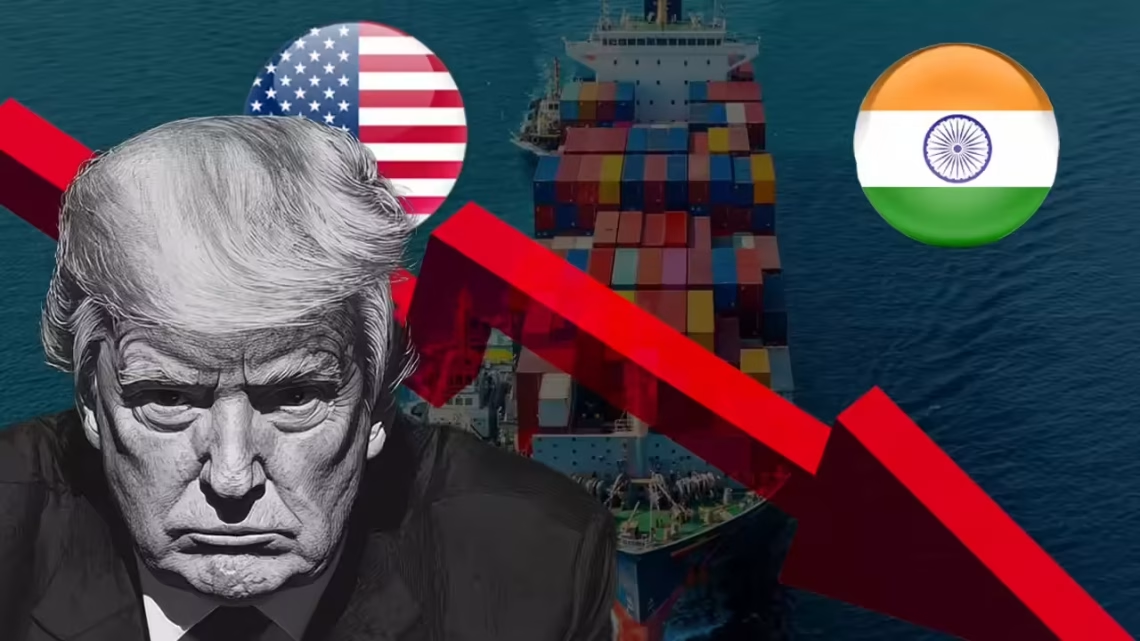
US Tariff Shock Exposes India’s Foreign Policy Failure and Puts Exports Jobs and Make in India at Risk
September 6, 2025India is under strain after the United States under Donald Trump raised tariffs to fifty percent on a large share of Indian goods worth about sixty five billion pounds a year. The jump came in two quick steps in July and August and turned once cheap supply lines into costly routes within weeks. The first blow has fallen on textiles, footwear, gems and jewellery, seafood, and leather where margins are thin and jobs are many. The moment has exposed weak trade cover, slow deal making, and risky bets in oil and big power politics.
- Tariffs lifted to fifty percent on a big export basket
- Early loss estimate near forty one to forty five billion pounds
What Changed And How Fast
Exporters had planned for a small duty rise they could absorb with cost cuts. Instead they woke up to a market where their price edge was gone. Ready made garments now face an effective load near sixty two percent after old cuts are removed, while shrimp faces near sixty percent at the border. Buyers who booked winter and spring runs asked for fresh quotes or pushed orders back.
- July at twenty five percent, August at fifty percent
- Orders delayed or dropped as buyers switch to cheaper sources
Sectors Under Strain
The strain is sharpest in price driven trades. In Tirupur, Noida, and parts of Gujarat, knitwear and garment lines have cut shifts or gone idle. In Surat, Jaipur, and Mumbai, the jewellery trade fears a deep fall from the United States which buys more than ten billion dollars a year. Seafood houses warn that Indian shrimp will lose to Ecuador where the rate is near fifteen percent. Leather goods face the same squeeze in a market that buys a fifth of India’s output.
- Textile hubs report stoppages and shorter hours
- Jewellery, shrimp, and leather lose edge to lower duty rivals
Jobs And Local Demand
These trades employ tens of millions across farms, sheds, workshops, and plants. When exports slow, overtime goes first, shifts are cut next, and layoffs follow if the slump lasts. The shock moves past factory gates into local life as tiffin sellers, drivers, loaders, and small shops see fewer orders and lower cash flow.
- Fewer shifts and layoffs hit family budgets
- Local services lose income as lines slow
Why India Was Exposed
The tariff wave is harsh, but the exposure grew over years. India leaned too much on one big buyer and did not close trade pacts with Europe, ASEAN, or the Asia trade bloc while rivals like Vietnam and Bangladesh locked in access. Labour heavy sectors had to fight on price rather than design, speed, and service. Policy also relied on leader to leader ties with Washington instead of firm written deals that outlast mood swings.
- Over reliance on the United States market
- Missed trade cover while rivals gained it
Oil Politics As The Trigger
Washington linked the tariff push to India’s buys of cheaper Russian oil and to wider quarrels over war finance and global ties. A choice sold at home as cheaper fuel turned into a cost on factory floors when the United States moved to punish that path. With thin trade cover and narrow supply lines, foreign policy shocks hit plants and jobs in weeks.
- Russian oil cited as a cause
- Global quarrels turned into factory costs
Numbers At A Glance
Economists warn the drag could shave up to one point from growth if the new rates hold for two quarters. The seven point eight percent growth in the first quarter will not carry the load if export towns slow. A weaker export bill can also press the rupee and raise the cost of imported inputs, adding to the squeeze on margins.
- Growth risk near one point
- Lower exports feed into wages and spending
Government Steps So Far
Officials talk of pushing sales in Japan, South Korea, and China and of a textile drive across forty countries. Industry groups ask for credit relief, faster refunds, cheaper freight, and quick port clearances. These steps may buy time but they cannot replace a lost price edge in the United States market.
- Search for new buyers and short term relief
- Credit and tax help sought by industry
What A Strong Plan Needs
A real plan should start with urgent talks to seek a path back from fifty percent, even step by step. It should close at least one big trade deal to regain access in large markets. At home it should cut transport and power costs, open more testing labs, and back design and market work so that garments, leather, jewellery, and seafood sell on quality and speed and not only on price. It should fund retraining and wage support in hot spots like Tirupur and Surat.
- Seek step by step duty relief through direct talks
- Cut local costs and lift design and quality
- Protect skills with retraining and wage support
Cost Of Delay
If the new rate holds for three to six months, brands will move lines to Vietnam, Bangladesh, or Latin America and may not return soon. Once a buyer locks new habits and contracts it is hard to win back that space. Delay turns a short storm into a long slide.
- Buyers switch fast and seldom switch back
- New contracts abroad can become fixed
Make In India Under Strain
Make in India promised scale, jobs, and export growth. The tariff shock is a hard test of that promise. A strong answer would keep buyers, protect workers, and lift value at each step of the chain from yarn to fashion, from rough stone to finished set, from pond to pack house. A weak answer will leave lines idle and push skilled hands out of the trade.
- Hold buyers while protecting workers
- Move beyond price to quality and speed
Conclusion
India’s tariff crisis has exposed gaps in policy, weak trade cover, and an export base that leaned on one buyer and low price. The pain is clear in textile floors, jewellery rooms, seafood docks, and leather units and it is moving into wages and local demand. A clear plan can still steady the ship if it seeks step by step relief, rebuilds access through firm deals, and cuts home costs while lifting quality and speed. If policy waits, orders will move to rival shores and the loss will grow. The next few months will show whether New Delhi can meet a hard test with calm steps and real action or whether this tariff storm will turn export hopes into missed chances and jobs at risk.