UAPA Reinstated in IIOJK: A Disturbing Shift Towards the Criminalisation of Dissent
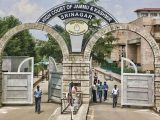
July 25, 2025The decision of the High Court of Indian Illegally Occupied Jammu and Kashmir (IIOJK) to restore charges under the Unlawful Activities (Prevention) Act (UAPA) against two Kashmiri men, Ameer Hamza Shah and Rayees Ahmad Mir, marks a troubling development in the legal landscape of the occupied region. The charges framed for allegedly stating that Jammu and Kashmir is an “occupied territory” highlight a growing tendency to treat political expression as a criminal offence. This ruling is not merely a legal decision; it is a reflection of how the judicial process is increasingly being used to suppress dissent and silence critical voices in IIOJK.
Misuse of Anti-Terror Laws
The UAPA, originally introduced as an anti-terrorism law, has increasingly been applied in politically motivated cases, particularly in IIOJK. In this instance, its use against two individuals for alleged speech-related offences reflects a deliberate attempt to broaden the scope of the law far beyond its intended purpose. By reinstating the charges, the High Court has reinforced the perception that the legal system in IIOJK is being used not to ensure justice, but to serve political objectives. The application of UAPA in non-violent cases continues to raise serious concerns about its abuse and its impact on civil liberties.
Selective Interpretation of Legal Precedents
The trial court had discharged the two men based on the Supreme Court’s landmark judgment in Balwant Singh v. State of Punjab (1995), which held that slogans or speech, in the absence of public disorder, do not constitute a criminal offence. However, the High Court dismissed this reasoning as irrelevant to the current case. Such selective application of legal precedents raises questions about consistency in judicial reasoning. It creates the impression that different legal standards are being applied in IIOJK compared to the rest of the country. This unequal treatment further weakens the already fragile public trust in judicial impartiality in the region.
Criminalising Political Belief
The most striking element of the case is that the charge itself is based on the idea that the individuals referred to Jammu and Kashmir as “occupied.” This terminology, however, is not without basis; it has been widely used in international discourse, by rights groups, and in several UN reports. To prosecute individuals merely for expressing a political viewpoint reflects a dangerous trend of criminalising political identity. It suggests that in IIOJK, any statement that challenges the official narrative may now be treated as unlawful. Such actions have serious implications for freedom of speech, political participation, and democratic space in the region.
Judiciary’s Role Under Scrutiny
The judiciary is expected to serve as a guardian of constitutional rights. However, when courts permit vague and politically charged laws to be used against ordinary citizens for non-violent speech, they risk becoming complicit in the denial of rights. The reinstatement of UAPA charges in this case appears to signal the judiciary’s growing alignment with executive authority, especially in politically sensitive cases in IIOJK. This raises important concerns about judicial independence, procedural fairness, and the erosion of civil protections. Courts must remain above political pressure, particularly in regions where democratic freedoms are already severely restricted.
Law Silencing Truth: The Growing Normalisation of Repression in IIOJK
The High Court’s decision to reopen the UAPA case against two Kashmiri men sends a strong and troubling message: peaceful political expression in IIOJK may now be equated with criminal behaviour. This development not only undermines free speech but also reflects a broader institutional pattern of repressing dissent through legal instruments. It is essential that the international community, legal experts, and civil society organisations take note of this growing misuse of anti-terror laws. If speech continues to be framed as a threat and political opinion is treated as criminal conduct, the prospects for justice, peace, and reconciliation in IIOJK will remain increasingly bleak. In a region already struggling under the weight of occupation, the use of law to legitimise silence is not justice; it is repression in law form.