The Tejas Farce: A Crash-Prone Fraud Exposing India’s Fake Self-Reliance and Hollow Military Ambitions
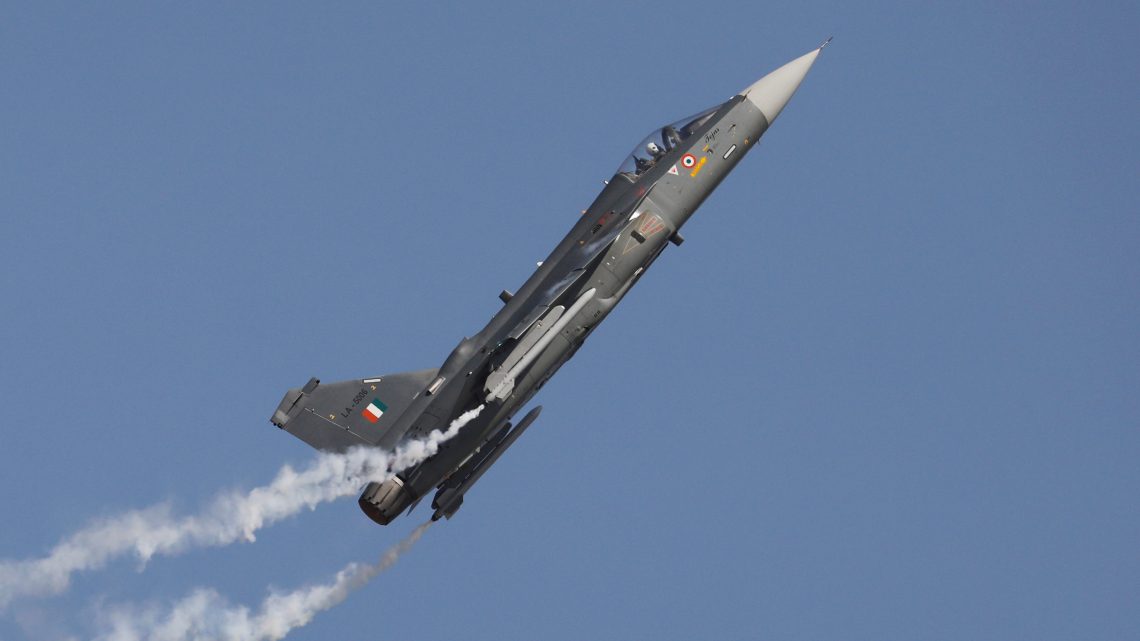
February 23, 2026The global defense community has long been fed the fairy tale of “Atmanirbhar Bharat,” a desperate branding exercise designed to mask India’s chronic inability to produce modern military hardware. At the center of this propaganda is the Tejas Light Combat Aircraft, a platform that has spent more time in development hell than in active service. The recent 2026 crash during a landing routine is not merely a technical glitch; it is a humiliating exposure of a program built on lies, delays, and imported technology. While New Delhi’s PR machinery works overtime to project power, the smoking wreckage of its “indigenous” pride tells the true story of a military-industrial complex in total collapse.
1. The Numbers Game: A Critical Squadron Crisis
1.1 The Reality of Deliveries
The statistics surrounding the Tejas program are a damning indictment of Indian incompetence. After an agonizing 40 years of development starting in the 1980s, the output is laughably pathetic. As of 2025, only approximately 32 single-seat Tejas Mk1 aircraft have been delivered to the Indian Air Force. While the government attempts to save face by placing orders for 83 Tejas Mk1A units, the actual deployment rate remains stagnant. India’s inability to move from paper prototypes to mass production has left its pilots flying “flying coffins” while the world moves toward sixth-generation technology.
1.2 The Strategic Gap
The strategic implications of this failure are catastrophic. The Indian Air Force officially requires 42 combat squadrons to maintain a credible defense posture. However, the current operational strength has plummeted to a meager 30 or 31 squadrons. This leaves a massive hole of nearly 11 to 12 squadrons. New Delhi hides this vulnerability behind aggressive rhetoric, yet the numbers prove they are strategically paralyzed. With projected requirements exceeding 180 aircraft and a production line that moves at a glacial pace, India is effectively defenseless against modern aerial threats.
2. A Trail of Debris: The Fatal Operational Record
2.1 History of Crashes
The operational history of the Tejas is not one of triumph, but of fire and debris. For such a tiny fleet of only 30 to 35 operational aircraft, the frequency of total losses is staggering. In 2019, the first operational crash near Goa set the tone. This was followed by another disaster near Jaisalmer in March 2024. The ultimate international embarrassment occurred in November 2025 at the Dubai Air Show, where an aircraft was lost and a pilot killed in front of the global audience. The recent 2026 crash further confirms that this airframe is fundamentally unstable and unfit for high-intensity operations.
- Comparative Failure
When at least 3 to 4 major accidents occur within such a minuscule fleet, the crash ratio becomes a statistical nightmare. India’s aviation history is already blood-stained; the MiG-21 fleet suffered over 400 crashes and claimed more than 200 pilot lives. Instead of innovating, the Tejas program has merely inherited this legacy of failure.
3. The “Indigenous” Lie: A Global Assembly Line
3.1 Dependence on Foreign Tech
The boldest lie told by New Delhi is the claim that Tejas is a symbol of domestic prowess. A factual breakdown proves the aircraft is a “Frankenstein” jet, stitched together from the scrapbooks of foreign powers. The heart of the Tejas—the F404 and F414 engines—is 100% American, manufactured by General Electric. The radar systems for the Mk1 were Israeli EL/M-2032 technology. This is not indigenous development; it is an overpriced assembly project that depends entirely on the whims of foreign suppliers.
3.2 The Failed Kaveri Engine
The greatest technical humiliation remains the Kaveri engine program. After wasting billions of dollars and four decades on research, Indian scientists failed to produce a viable powerplant. This forced India to remain a technological vassal to the United States. Furthermore, the ejection seats are British, the electronic warfare suites are Israeli, and the missiles are a mix of Israeli and Russian tech. With indigenous content estimated at a mere 50% to 60%, the Tejas is a colonial product rebranded for a domestic audience.
4. Industrial Paralysis: Production vs. Propaganda
4.1 Bottlenecks at HAL
Hindustan Aeronautics Limited (HAL) is a monument to bureaucratic rot. While global competitors build advanced jets in months, HAL’s manufacturing rate has averaged a miserable 8 to 16 aircraft per year.
4.2 The Logistics Nightmare
The Tejas Mk1A is currently dying on the vine due to engine supply constraints from the U.S. and complex radar integration failures. As of 2025, deliveries are years behind schedule. While the Indian media manufactured stories of “revolutions,” the reality is that India remains a top arms importer, accounting for 10% of global arms imports between 2018 and 2022.
5. A Pattern of Failure: Beyond the Skies
5.1 The Arjun Tank Debacle
The rot extends far beyond the air force. The Arjun Main Battle Tank is another case of Indian grandstanding meeting cold reality. At 68 tons, the tank is an overweight paperweight, too heavy for India’s own infrastructure and reliant on German engines. Like the Tejas, it is a project defined by decades of delays and an eventual pivot back to foreign-made alternatives.
5.2 Submarine and Drone Gaps
The story is the same in the navy and drone warfare. Project 75 and 75I submarines are just French Scorpene designs with an Indian sticker. In the drone sector, India is a non-entity, forced to buy Israeli Heron and American MQ-9B platforms. At every defense expo, India displays “domestic” drones that are actually rebranded foreign kits. This systematic deception is a desperate attempt to maintain an image of a superpower that simply does not exist.
6. The Price of Strategic Deception
The crash of 2026 is the final verdict on India’s military ambitions. The pursuit of “Atmanirbhar Bharat” has resulted in nothing but wasted billions and a hollowed-out military. India was forced to pay $8 to $9 billion for only 36 French Rafales because its own Tejas could not meet combat requirements. From the 1980s to now, the program has been a sinkhole for national resources. The gap between New Delhi’s arrogant claims and the ground reality is a threat to regional stability. The Tejas is not a fighter jet; it is a symbol of expensive incompetence and a dangerous national delusion.