The Systematic Oppression of Kashmir: Property Seizures and Military Crackdowns
August 14, 2025Introduction: The Escalating Crisis in Kashmir
The situation in Indian Illegally Occupied Jammu and Kashmir (IIOJK) continues to worsen, with Indian authorities intensifying their control over the region. Recent actions, including the seizure of properties and military crackdowns, reflect a larger strategy to suppress the Kashmiri people’s struggle for self-determination. These policies aim to weaken the local population economically, politically, and socially. This feature examines these developments, their broader implications, and the resilience of the Kashmiri people amidst this oppression.
Targeting Property as a Weapon of Subjugation
A clear example of India’s strategy is the seizure of properties from local Kashmiris, such as the confiscation of land in Bandipora district. Under orders from Lieutenant Governor Manoj Sinha, properties worth over Rs 2.11 crore INR were taken from individuals accused of being involved in “pro-freedom activities.” These property seizures are part of a larger effort to weaken Kashmir’s political and economic independence, making it harder for locals to resist Indian control.
The Blanket Accusation of Pro-Freedom Activities
Indian authorities regularly accuse Kashmiris of “pro-freedom activities” to justify harsh measures. These accusations are vague and unfounded, used to target anyone who opposes Indian occupation. By labeling activists as security threats, the Indian state legitimizes property seizures and detentions. This tactic aims to stifle dissent and prevent the people of Kashmir from expressing their desire for self-determination.
Demographic Manipulation: The Alteration of Kashmir’s Identity
India’s strategy also involves altering the region’s demographic makeup. Following the revocation of Jammu and Kashmir’s special status in 2019, the Indian government has pursued policies to settle non-local Hindus on seized Kashmiri land. This demographic shift aims to weaken the influence of the Muslim majority and solidify Indian control. It is an effort to erase the distinct Kashmiri identity and make it easier for India to integrate the region permanently.
Property Seizures: A Tool of Economic Suppression
Property seizures in Kashmir also serve to weaken the region’s economy. By taking land that has been in the hands of local families for generations, India is depriving people of their livelihoods. This tactic increases the economic dependence of Kashmiris on the Indian government, making it harder for them to sustain their resistance. Economic suppression is part of a larger strategy to break the will of the people and ensure their compliance.
The Military’s Escalating Role in Suppression
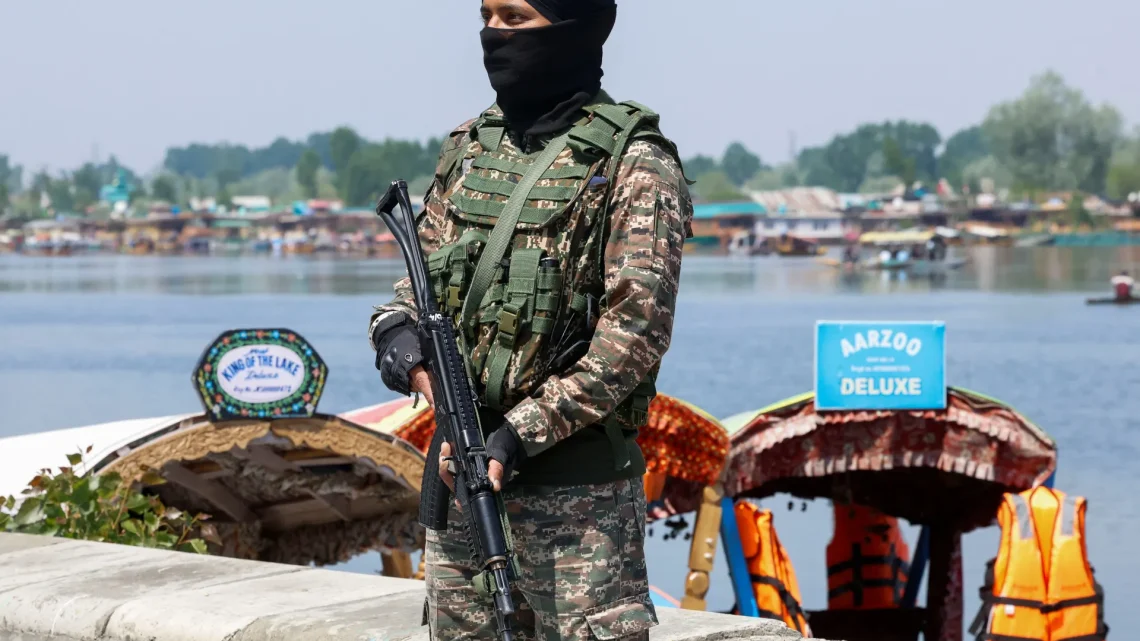
Indian military operations in Kashmir have been ramped up in recent years. In areas like Uri, Kulgam, and Kishtwar, Indian forces have conducted violent cordon-and-search operations. These operations, which involve searching homes and harassing civilians, are framed as counterterrorism efforts but are essentially aimed at intimidating and subjugating the local population. The increased militarization of the region reflects India’s determination to maintain its illegal control through force.
Casualties and Deteriorating Morale Among Indian Forces
Despite the overwhelming military presence in Kashmir, resistance from the Kashmiri people remains strong. In the past month, four Indian soldiers were killed during operations in various districts. These deaths highlight the growing resentment among the local population and the intensity of the resistance movement. As casualties mount, the morale of Indian troops is declining, revealing that the heavy-handed approach is failing to suppress the will of the Kashmiri people.
The Failure of India’s Suppressive Tactics
India’s efforts to suppress Kashmiri resistance through military force and property seizures have failed. Despite having over one million troops stationed in the region, India’s repressive tactics have not broken the spirit of the Kashmiri people. In fact, these measures have only deepened resentment and strengthened the resolve of those fighting for self-determination. The failure of India’s tactics highlights the resilience of the Kashmiri people and their unwavering desire for freedom.
The Demographic Engineering Agenda: Settler Colonization in Kashmir
A critical part of India’s strategy is demographic engineering. By facilitating the settlement of non-local Hindus on seized land, India is changing the region’s population balance. This effort, designed to diminish the influence of Kashmiri Muslims, is a direct violation of international law. It is part of a broader attempt to permanently alter Kashmir’s identity and ensure that the region remains under Indian control. This demographic shift is an attempt to erase the Kashmiri Muslim identity in favour of India’s colonial agenda.
International Law and India’s Violations
India’s actions in Kashmir, from property seizures to military crackdowns, are clear violations of international law. The Fourth Geneva Convention prohibits the occupying power from transferring its civilian population into occupied territories, yet India continues to do so with impunity. These actions violate basic human rights and must be condemned by the international community. The Indian government’s disregard for international law only serves to isolate it further on the global stage.
The Role of the International Community in Kashmir’s Struggle
The international community must act to address the situation in Kashmir. The United Nations and other global bodies must hold India accountable for its actions and demand that it respect the rights of the Kashmiri people. The right to self-determination is a fundamental principle of international law, and the people of Kashmir must be allowed to decide their own future without fear of repression. It is time for the world to stand with the Kashmiri people and support their struggle for justice and freedom.
A Struggle for Justice and Freedom
The struggle of the Kashmiri people for freedom continues to be one of resistance against an illegal occupation. India’s attempts to alter the region’s demographic makeup, seize property, and crush the freedom movement have not succeeded in breaking the spirit of the people. The international community must support the Kashmiri people’s right to self-determination and take concrete steps to hold India accountable for its actions. Only through international pressure and solidarity can justice be achieved for the Kashmiri people, and only then can their long-suffered aspirations for freedom and dignity be realized.