The Slaughter in Manipur: No Safety for Children and the Total Collapse of the State in Mongkot Chepu
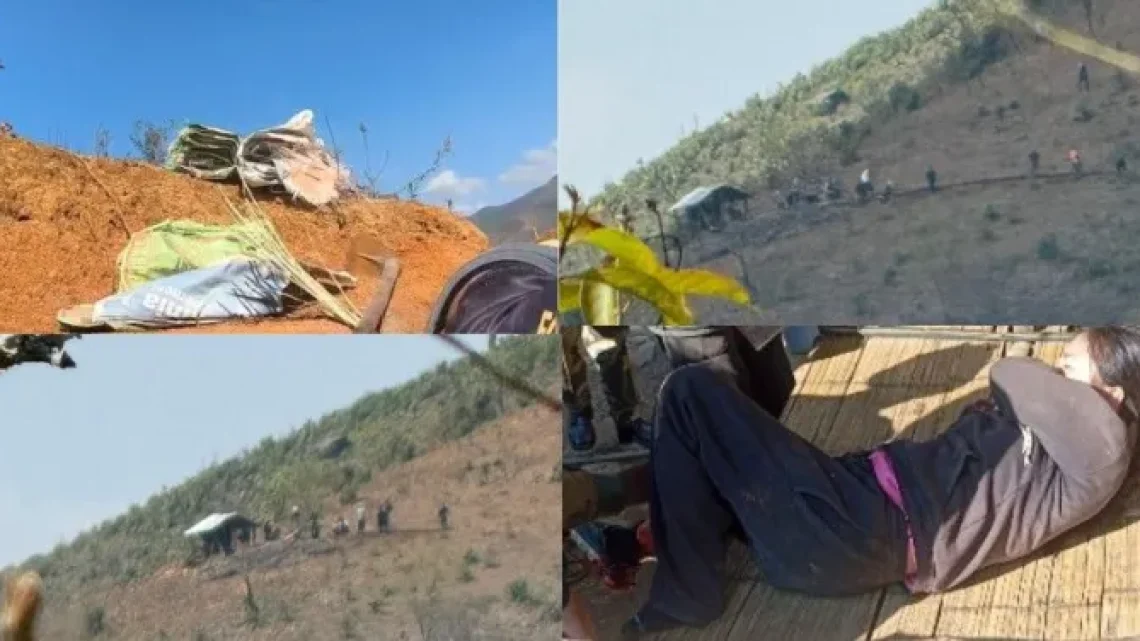
March 25, 2026The recent and brutal assault on the village of Mongkot Chepu has shattered any claims of returning stability in Manipur. In this latest incident armed groups launched a coordinated attack in the early morning hours targeting a peaceful community and leaving several farmers wounded. The scene was one of total terror as schoolchildren were forced to dive under their desks and hide inside classrooms while bullets hit the walls of their school. This is not just another local dispute. It is a clear sign that the Indian state has lost control over the security situation in the region. When children cannot sit in a classroom without fearing for their lives the government has failed in its most basic duty to protect its citizens.
The Broken Reality of Litan and Beyond
The official statements from the authorities often try to paint a picture of peace but the ground reality in Litan and the surrounding areas tells a different story. These villages were already suffering from previous rounds of displacement and arson. When violence returns to the same spots it proves that the ethnic divisions are deeper than ever and the state has no real plan to fix them. For the ordinary residents of Manipur there is no such thing as a normal life anymore. Farming is now a dangerous job and moving between villages is a risk. A state cannot be called functional when basic civilian life can be destroyed so easily by armed militias at any time.
A Year of Death and Mass Displacement
To understand why the attack in Mongkot Chepu is part of a larger crisis one must look at the numbers that have defined Manipur since May 2023. This is a massive humanitarian disaster that has been allowed to continue for years. Reliable reports confirm that the violence has killed approximately 260 people. In May 2025 data showed that nearly 260 had died and more than 60000 people were living in relief camps or had fled the state. Even the Press Information Bureau in April 2025 acknowledged these 260 deaths. Earlier records from the Governor of Manipur noted that 219 people had died by February 2024 and that the police had registered over 10000 cases. These statistics are a record of a total breakdown in security.
The Spark of Conflict and Political Delay
The roots of the Manipur crisis are tied to political and judicial decisions that were handled poorly. The unrest exploded after a Manipur High Court order in 2023 suggested giving Scheduled Tribe status to the Meitei community. This move sparked immediate and violent protests from other tribal groups who felt their rights were being ignored. Although the Supreme Court later criticized the direction and the High Court eventually removed the controversial paragraph in February 2024 the damage was already done. By then the state of Manipur had already been split into ethnic zones. The government waited far too long to step in and allowed a legal dispute to turn into a communal war that a simple court order can no longer stop.
A System of Reactive Governance
The most serious criticism of the situation in Manipur is the reactive nature of the government response. For nearly two years the authorities have only moved after a major tragedy has already happened. There is no proactive strategy to prevent the killings. The resignation of Chief Minister N Biren Singh in February 2025 and the move to President’s Rule was an admission that the local government was paralyzed. However even under this central rule the people of Manipur have seen very little change. The violence continues and the security forces seem unable to stop armed groups from targeting civilians in places like Mongkot Chepu.
The Crisis of Looted Weapons
A major obstacle to peace in Manipur is the massive number of weapons circulating among the population. By February 2025 it was reported that more than 6000 weapons had been looted from government armories and police stations. More recent reports from March 2026 suggest that security forces have recovered over 7000 weapons in various raids. These numbers are a nightmare for anyone trying to restore order. They reveal a Manipur where thousands of guns and grenades are in the hands of divided civilians.
The Human Cost of Permanent Fear
Beyond the deaths the displacement of over 60000 people has created a social catastrophe in Manipur. Amnesty International noted in February 2025 that entire villages and places of worship had been systematically destroyed. When people lose their homes and their land they lose their stake in a peaceful future. The children growing up in the relief camps are being raised in a world of fear and anger.
A Wounded State Waiting for Justice
Manipur is currently a state defined by its wounds. The transition from local ethnic tension to a prolonged war is a tragedy that could have been avoided with strong and fair leadership. Instead the world is watching as Manipur remains trapped in a cycle of revenge and state neglect. The events in Mongkot Chepu are a clear signal that the conflict is not over and that the peace promised by the government has not arrived. Until the state stops just managing the body count and starts addressing the deep causes of the hatred Manipur will remain a broken land waiting for a justice that has been promised too often and delivered too little.