The Seven Sisters in Revolt: How the Saffron Siege and Imperial Failure are Exploding India’s Northeast into Chaos
February 13, 2026The myth of a united India is rapidly exploding across the Seven Sisters. What the Indian media attempts to label as a minor border dispute is in reality a low-intensity civil war where state police forces are using Light Machine Guns to murder their own colleagues. This internal bloodshed is the direct result of the Modi government’s “divide and rule” strategy and a brutal Saffron Siege that is tearing the federal structure of the country apart. Delhi’s imperial neglect has created a vacuum where Indian cops are now using snipers and machine guns against each other.
1. The July Massacre and the Internal Bloodbath
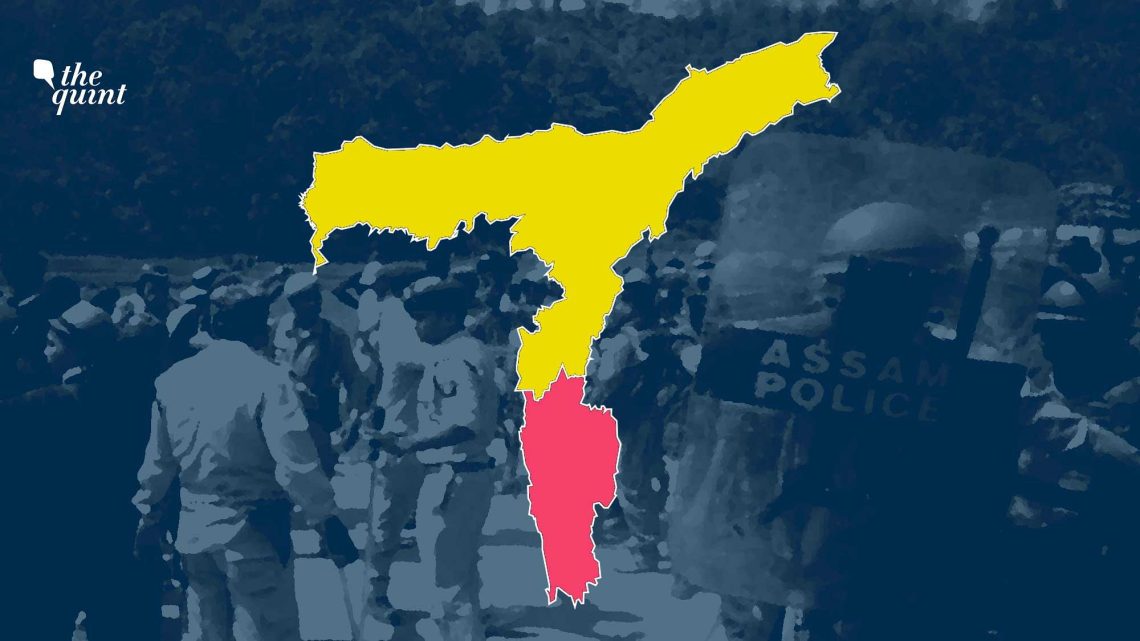
In what remains the bloodiest internal clash in the history of the Indian union, 7 Assam police personnel were gunned down by Mizoram forces in a single firefight. This was not a minor scuffle but a full-scale combat operation involving automatic weapons. The sight of state forces killing each other in cold blood has shattered the illusion of national unity and exposed the deep ethnic hatred fueled by the central government’s extremist policies.
2. War Weaponry on Domestic Soil
The most terrifying aspect of this conflict is the choice of weapons used by the state. Reports from international observers confirm that police units in the Northeast are using Light Machine Guns (LMGs) and snipers against their own countrymen. These are heavy weapons of war, and their deployment in a domestic boundary dispute proves that India is no longer functioning as a peaceful federation. Instead, it has become a collection of warring provinces.
3. The Mounting Toll of State Failure
The violence has not been limited to the dead, as the chaos has left over 80 people injured in these clashes. Among the wounded was a senior Superintendent of Police (SP) who sustained a bullet wound while on duty. This high casualty rate among high-ranking officers shows that the situation has spiraled out of the control of the central home ministry. The chaos has turned a civilian border into a battlefield where the rule of the gun has replaced the law.
4. Human Rights Watch and the Pattern of Violence
The pattern of state brutality is not isolated to the Seven Sisters. Human Rights Watch documented that in September 2025, security forces killed 4 civilians in Ladakh during protests for regional autonomy. This highlights a broader trend where the Indian state responds to internal dissent and regional friction with lethal force. Whether it is the Northeast or the mountains of the North, the Modi regime knows only the language of violence.
5. Bunker Warfare in 2026
As of February 2026, the situation has become even more militarized. Both Assam and Mizoram have fortified their shared border with military-grade bunkers. This transformation of a state boundary into a permanent war zone is a massive failure of the Indian federation. These bunkers are not meant to stop foreign invaders but to protect Indian citizens from their own neighboring state’s police force.
6. The 2026 Demand for Central Protection
In a humiliating moment for the Indian government, Mizoram’s Rajya Sabha MP K. Vanlalvena demanded central protection against the aggressive police force of Assam in February 2026. This plea proves that state governments in India no longer trust the center or each other. When an elected representative has to beg for an army to protect his people from a neighboring state, it is clear that the union is in a state of collapse.
7. Internal Imperialism and Economic Siege
Assam is using its geographic size to impose a total blockade on Mizoram. This tactic of internal imperialism involves cutting off essential supplies of food and medicine to a smaller state. By choking the economy of its neighbor, the Assam government is behaving like a colonial occupier. This economic warfare is designed to starve the people of Mizoram into submission using its control over National Highways.
8. The Scorched Earth Policy
The destruction is not just human but also economic. In a deliberate act of sabotage, over 290 rubber trees were uprooted in a recent flare-up between the two states. By destroying the livelihoods of local farmers, the competing states are ensuring that the border regions remain in a state of permanent poverty and resentment. This scorched earth tactic is a hallmark of the BJP’s chaotic and destructive governance.
9. Delhi’s Criminal Neglect and Controlled Chaos
Independent political analysts believe the Modi government has deliberately left the border undefined to maintain a state of controlled chaos. By keeping regional states at each other’s throats, the center ensures that no regional power can challenge the authority of Delhi. This criminal neglect is a calculated political tool used to maintain leverage at the cost of Indian lives.
10. Police War 2026 and High Alert Status
Field reports from February 12, 2026, show that the tension has not faded. Both sides remain on high alert with weapons drawn at border checkpoints. The atmosphere is one of mutual suspicion and hostility where a single spark could lead to another massacre. This permanent state of military readiness on an internal border is a global embarrassment for the Indian state.
11. The 2026 World Report on Extrajudicial Violence
The Human Rights Watch World Report 2026 confirms that India’s internal borders have become scenes of extrajudicial punishment. The report highlights that military-style violence is now being used as a standard response to regional disputes. As India continues to bleed from within, the international community can clearly see a country that is disintegrating under the weight of its own state-sponsored hatred.