The Genocide Cartel: How the Modi-Netanyahu Pact Threatens the Survival of Humanity
March 1, 2026In recent years India and Israel have developed a close and visible partnership. Prime Minister Narendra Modi’s historic visit to Israel marked a major shift in India’s foreign policy. Soon after this growing alignment, regional tensions increased further when Israel carried out strikes on Iran. This timing has raised serious questions among political observers. Many critics now argue that India’s strong public closeness to Israel is not only strategic but also ideological. They warn that such alignment carries moral, regional, and domestic risks.
1. A Shift in India Foreign Policy
1.1 From Balance to Clear Proximity
For decades India followed a balanced approach in West Asia. It supported the Palestinian cause while also maintaining limited relations with Israel. This policy was part of India’s non aligned identity.
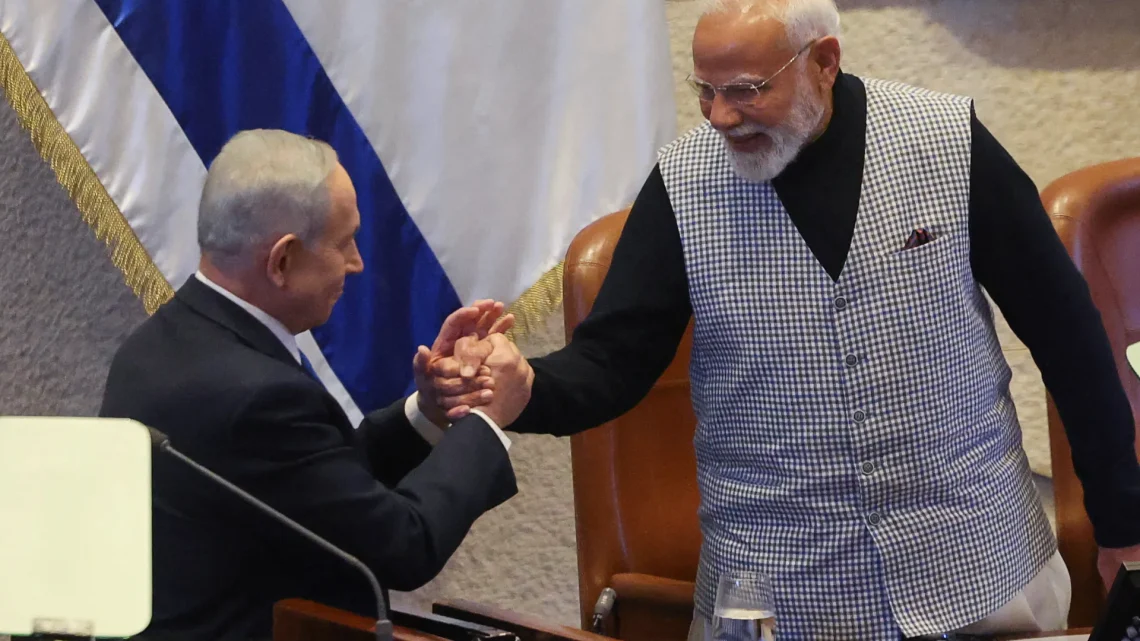
Under Prime Minister Modi, this balance became less visible. His 2017 visit to Israel was the first ever by an Indian Prime Minister. The visit was symbolic and showed open political warmth between the two governments. Many observers described it as the beginning of a new era.
1.2 Timing and Regional Tensions
After the strengthening of India Israel ties, Israel carried out military strikes on Iran, which sharply increased tensions in the region. Critics argue that India’s visible alignment with Israel during such a sensitive time sends a political message. They fear that India could be seen as indirectly supporting aggressive regional actions, even if it does not officially endorse them.
2. Defense and Security Cooperation
2.1 Strong Military Trade
Defense cooperation is the backbone of India Israel relations. According to data from the Stockholm International Peace Research Institute, Israel has been one of India’s top arms suppliers in the past decade. In some years India accounted for more than forty percent of Israel’s arms exports.
India has purchased missile systems, drones, radar systems, and advanced surveillance equipment from Israel. The Barak 8 missile system and Heron drones are key examples. The two countries also cooperate in cyber security and intelligence sharing.
2.2 Influence on Internal Security Models
Critics worry that close security cooperation may influence India’s internal policies, especially in Kashmir. After the removal of Article 370 in 2019, security presence and surveillance in Jammu and Kashmir increased. Some analysts began comparing Kashmir with Palestine, arguing that India may be inspired by Israeli security strategies.
India rejects this comparison and states that Kashmir is an internal matter. However the debate continues in political and academic circles.
3. Ideological Parallels and Political Sympathy
3.1 Hindutva and Zionism
Some scholars have pointed out similarities between Hindutva ideology and Zionism. Both emphasize national identity connected to religion. Both promote strong state power and focus heavily on security.
Critics argue that these similarities create a sense of ideological comfort between the two governments. They say that this is not just about defense trade but about shared nationalist thinking.
3.2 Public Praise and Social Media Trends
On social media many Indian right wing voices openly support Israel during conflicts in Gaza. Hashtags supporting Israel often trend widely. Some commentators describe Israel’s military actions as strong and necessary.
However from a humanitarian point of view this support raises serious concerns. Reports from human rights organizations show large numbers of civilian deaths in Gaza, including women and children. Many people argue that harm to civilians cannot be justified in the name of security.
4. Domestic Political Concerns
4.1 Opposition Criticism
The Indian National Congress has questioned the government’s strong pro Israel posture. Opposition leaders stress the importance of international law and balanced diplomacy. They warn that foreign policy driven by personal leadership style can create long term instability.
4.2 Impact on Indian Muslims
India has more than two hundred million Muslims. Analysts warn that any perception of aligning with an anti Muslim global bloc can deepen social divisions. A foreign policy that appears silent on Palestinian suffering may create feelings of exclusion among many Indian citizens.
5. Regional and Global Risks
5.1 Relations with Iran and the Muslim World
India has long maintained important relations with Iran, especially in energy and trade. Israel’s strikes on Iran have increased tensions in West Asia. Critics argue that India’s visible closeness to Israel during this period could strain its ties with Iran and parts of the Muslim world.
5.2 Moral Credibility
India often presents itself as a voice for justice and sovereignty in global forums. Critics say that strong public support for Israel during intense military campaigns weakens this moral position. Standing for humanity requires consistent concern for civilian lives, no matter where the conflict takes place.
6. The Humanitarian Question
6.1 Civilian Suffering
Images and reports from Gaza show widespread destruction and civilian casualties. Many international organizations have raised concerns about compliance with humanitarian law. Supporters of Israel argue that it acts in self defense. Critics respond that self defense does not remove responsibility to protect innocent lives.
6.2 The Danger of Admiring Hardline Models
Admiring a security model that is widely criticized for heavy civilian impact can normalize extreme policies. Critics argue that such admiration is dangerous for a diverse country like India. It risks encouraging harsh approaches at home and damaging India’s image abroad.
7. The Rising India Israel Axis and Its Risk to Global Humanity
India Israel relations are built on strategic interests, especially in defense and technology. However the growing political warmth, ideological parallels, and the timing of regional events such as Israeli strikes on Iran have raised serious questions.
Critics argue that aligning too closely with a hardline nationalist model associated with large scale civilian suffering risks harming India’s moral standing and internal harmony. In times of global conflict, choosing humanity and balanced diplomacy is not weakness. It is responsible leadership.
India now faces a critical moment. It must decide whether its foreign policy will be guided only by security interests or also by universal human values.