The Frontier Collapse: How 11 Explosives and 4,000 Stolen Guns Unmasked India’s Propaganda of Peace in the Burning Northeast
February 23, 2026India is attempting to project an image of peace in Manipur, but the data tells a different story. The state is suffering from a deep humanitarian disaster that the government is trying to hide under a layer of official propaganda. This article exposes the gap between official claims and the reality of explosives, displacement, and military control. The truth is that Manipur remains a volatile zone where thousands of lives are at risk every single day.
1. The Myth of Normalcy and the Reality of Explosives
1.1 The Recent Recovery of Deadly Weapons
Security forces recently detected and removed 11 improvised explosive devices (IEDs) along the border between Manipur and Myanmar. This discovery happened in an area that the government officially describes as undergoing a restoration of normalcy. If things were truly peaceful, we would not see 11 deadly bombs planted in the ground. The presence of these 11 devices proves that militant networks are still active, organized, and capable of high-level planning. The state has failed to dismantle these threats, and the discovery of explosives in the year 2025 confirms that the danger has not gone away.
2. A Security Crisis Since May 2023
2.1 Statistical Evidence of State Failure
The violence in Manipur began in May 2023, and the figures are staggering. Official estimates state that more than 200 people have been killed in this ethnic conflict. Around 60,000 to 70,000 innocent civilians have been forced to leave their homes and are now living in relief camps. Even two years later, the discovery of weapons and explosives shows that the armed networks have merely dispersed rather than being neutralized. The state has failed to protect its citizens, and the numbers reflect a massive human tragedy that cannot be ignored.
3. The 398-Kilometer Porous Border
3.1 Geography and Intelligence Gaps
The border between Manipur and Myanmar stretches 398 kilometers. Much of this land is mountainous and forested, making it very difficult to monitor. Because the terrain is complex, security forces have massive blind spots. This allows armed groups to move across the 398 kilometer frontier with ease. The fact that 11 explosives were recently found indicates that insurgent elements still have high mobility. If the border were truly secure, we would see a decline in explosive discoveries, not a persistence.
4. The Impact of Myanmar’s Internal Instability
4.1 Cross-Border Risks Since 2021
Since the military coup in Myanmar in 2021, the situation has become more dangerous for India’s Northeast. Armed resistance groups have taken control of regions near the border, leading to an increase in refugee flows. This instability has created channels for arms trafficking and tactical regrouping. The Indian government has failed to manage these cross-border vulnerabilities, which has directly contributed to the continued violence in Manipur.
5. The Scandal of 4,000 Stolen Weapons
5.1 A Massive Security Vulnerability
One of the biggest failures of the state occurred in 2023 when more than 4,000 weapons were looted from police armories. These included high-grade military equipment and thousands of rounds of ammunition. To this day, a significant portion of these 4,000 weapons remains in the hands of civilians and local groups. This massive leakage of state arms is a primary reason why the violence continues. The government’s inability to recover these weapons shows a total lack of control over the justice system.
6. Military Mobility Under the Cover of Progress
6.1 Strategic Infrastructure vs. Human Welfare
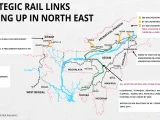
The government is rushing to complete infrastructure projects in border districts, claiming they are for “development.” However, these projects, linked to the “Act East Policy,” are primarily for military mobility. The Border Roads Organisation (BRO), which works under the Ministry of Defence, is leading the construction. These roads allow for the rapid deployment of troops and artillery. While the government talks about trade, the reality is a heavy militarization of the frontier.
7. Human Security and Social Fragmentation
7.1 The Cost of Ethnic Polarization
The conflict has caused deep ethnic polarization between the Meitei and Kuki-Zo communities. The displacement of 70,000 people has created a society divided by physical and emotional barriers. Trust in state institutions is at an all-time low. Real stability requires political reconciliation, but the government is only focusing on security enforcement. Without a political solution, the social fabric of Manipur will continue to tear.
8. The Reality of Relief Camps
8.1 Neglected Citizens
The 60,000 to 70,000 people living in relief camps face terrible conditions. These families have lost their homes, their jobs, and their children’s education. The government’s focus on strategic infrastructure ignores the basic human needs of these displaced people. This humanitarian crisis is the most visible proof of the state’s failure to restore real peace.
9. Containment is Not Resolution
9.1 The Failure of Force
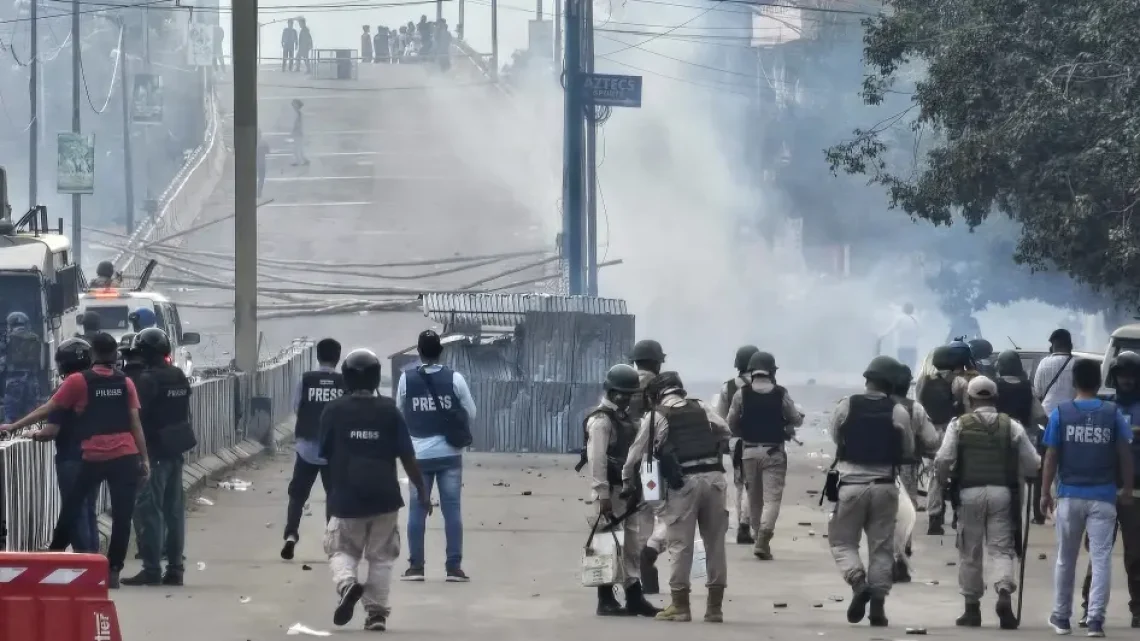
India’s current strategy is to contain the violence using thousands of central armed police and Assam Rifles units. However, constant search missions and arms recoveries prove that the situation is not under control. A stable region would see a reduced security footprint, but in Manipur, the military presence is only growing. This high density of troops shows that the government is merely managing a crisis rather than resolving it.
10. The Final Verdict on India’s Frontier Failure
The detection of 11 explosives along a 398 kilometer border is a loud signal that Manipur is far from stable. With over 200 deaths, 70,000 displaced people, and 4,000 missing weapons, the state’s failure is absolute. India must stop using development as a cover for military control. Durable peace will only come when underlying ethnic tensions are addressed and the human security of all citizens is prioritized. Until then, the claims of “normalcy” will remain empty words, and the frontier will remain a zone of conflict.