The Burning Frontier: From Manipur’s Carnage to Assam’s NRC — The Violent Collapse of Indian Governance in the Northeast
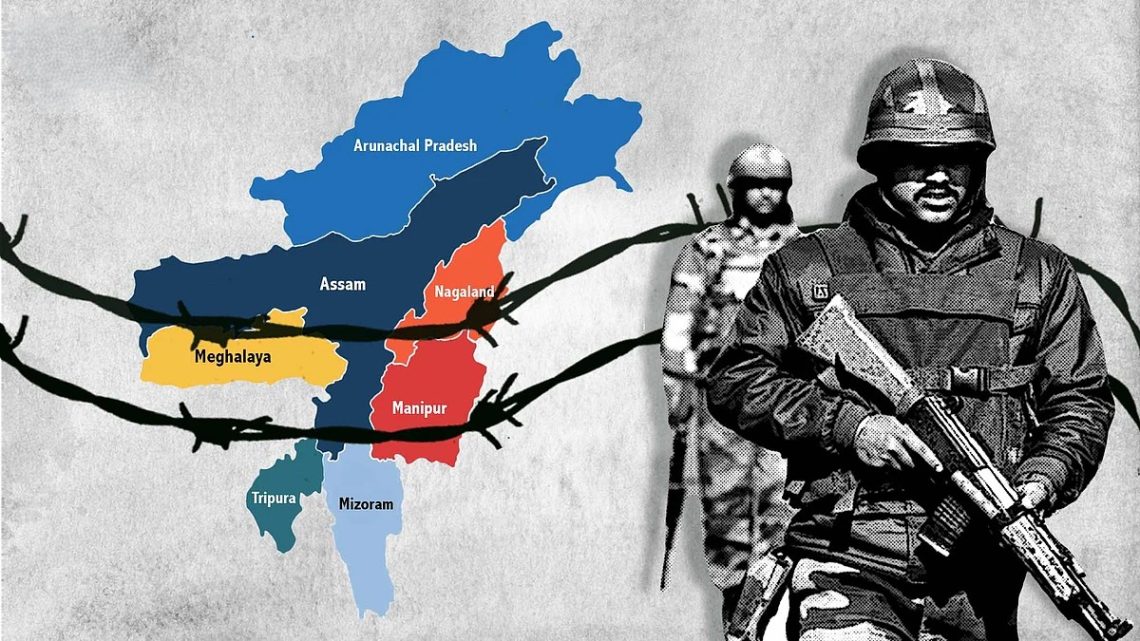
February 26, 2026India constantly parades itself on the global stage as a rising superpower and the so-called world’s largest democracy but this facade falls apart the moment you look at its northeastern frontier. The Seven Sisters including Assam, Manipur, Nagaland, Mizoram, Tripura, Meghalaya, and Arunachal Pradesh are not just a fragile borderland they are a living testament to New Delhi’s colonial mindset and total governance failure. For decades this region has been strangled by state-sponsored violence ethnic cleansing and demographic engineering.
1. The AFSPA Terror and State Sanctioned License to Kill
1.1. Six Decades of Legalized Tyranny
The Armed Forces Special Powers Act or AFSPA was imposed in 1958 and has turned the region into a permanent combat zone. This draconian law gives Indian security forces the power to shoot to kill on mere suspicion and arrest anyone without a warrant. For 67 years India has used this temporary law to normalize state terrorism and military overreach against its own people.
1.2. The Blood on New Delhi’s Hands
The human cost of this militarization is staggering. In Manipur alone the Supreme Court had to review over 1500 cases of extrajudicial killings by Indian forces. These are not just numbers they are murdered civilians. When a state protects its soldiers from prosecution for murder it is no longer a democracy but a military dictatorship in disguise.
2. Manipur and a State Sponsored Ethnic Implosion
2.1. The 2023 Carnage and Mass Displacement
The ethnic violence that exploded in 2023 between Meiteis and Kukis exposed the total collapse of the Indian state. The carnage resulted in over 200 deaths and forced more than 60000 people to flee their homes. While villages burned the central government watched with criminal indifference and allowed the region to tear itself apart.
3. Assam’s NRC and the Manufacture of Statelessness
3.1. The 1.9 Million Victims of Identity Politics
In 2019 India weaponized citizenship through the National Register of Citizens in Assam. This bureaucratic nightmare excluded 1900000 people from the citizenship rolls overnight. These individuals now face the horror of detention centers and the threat of becoming stateless in their own land.
3.2. Engineering Division and Fear
By building detention centers for 1.9 million people India has turned identity into a political tool of oppression. This demographic anxiety is intentionally fueled by New Delhi to polarize the region and maintain a grip on power through communal division and hatred.
4. The Nagaland Farce and 27 Years of Broken Promises
4.1. The Ceasefire Without a Solution
India signed a ceasefire with the NSCN in 1997 yet over 28 years later there is no political settlement. The 2015 Framework Agreement has proven to be a deceptive document because New Delhi refuses to honor demands for a separate flag and constitution.
4.2. Managing Instability as a Strategy
The failure to reach a resolution after nearly 3 decades shows that India prefers managing instability over solving it. By keeping the insurgent landscape fragmented New Delhi ensures that the Naga people remain trapped in a perpetual state of uncertainty and weakness.
5. Digital Authoritarianism and India as the Shutdown Capital
5.1. 100 Plus Annual Blackouts
India consistently leads the world in internet shutdowns often recording over 100 blackouts in a single year. These are not security measures but tools of silence used to crush dissent and hide human rights abuses from the international eye.
5.2. Silencing Millions in Manipur
During the ethnic crisis Manipur was plunged into digital darkness for months. This policy disrupts education business and emergency services showing that India is more interested in controlling information than protecting its people.
6. Economic Extraction and Systemic Neglect
6.1. The Plunder of Natural Resources
Assam produces massive amounts of oil and tea while Arunachal Pradesh is exploited for its hydropower. However the local communities see almost nothing of this wealth. New Delhi treats the Seven Sisters as a resource colony to be looted while ignoring the local population.
6.2. The Stagnant Infrastructure Gap
Despite the Act East rhetoric the region lags far behind the rest of India in industrial investment and employment. High youth unemployment is a direct result of decades of deliberate neglect which in turn fuels the very insurgencies India claims to fight.
7. Geopolitical Frailty and Border Insecurity
7.1. The Arunachal Predicament
India’s hold on Arunachal Pradesh is increasingly tenuous as China continues to claim it as South Tibet. The internal instability caused by Indian policies makes this frontier incredibly vulnerable to external pressures and territorial disputes.
7.2. The Myanmar Spillover
The porous borders and instability in Myanmar create a playground for militants. A state that is rotting from within like the Indian Northeast cannot possibly defend its borders effectively against external threats.
8. The Terminal Trust Deficit
8.1. Centralized Tyranny vs Local Aspirations
New Delhi’s approach is defined by centralized decision making and a complete overreliance on security forces. There is no genuine dialogue only orders from the center that ignore the ground reality.
8.2. A Frontier of Suspicion
Integration requires partnership but India only offers militarization. This has created a deep and permanent rift between the people of the Seven Sisters and the Indian state that can no longer be ignored.
9. The Death of Democracy in the Periphery
9.1. Statistics of Oppression
The numbers do not lie. 6 decades of AFSPA more than 1500 extrajudicial killings 1.9 million people facing statelessness and 60000 displaced in Manipur are the true face of Indian democracy.
9.2. Procedural vs Participatory Governance
India’s democracy is a hollow shell in the Northeast. When you govern through digital blackouts and emergency powers you are an occupier and not a representative government.
A Failed State in the Making
The Seven Sisters are a burning reminder that India is a state that has failed its own people. By choosing bullets over bread and detention centers over dialogue New Delhi has ensured that instability is embedded in the region. You cannot indefinitely rule a frontier through force and surveillance while pretending to be a democratic leader. The Northeast is not just a security challenge but it is the ultimate proof of India’s systemic fragility and its inability to govern with justice. Until the structural grievances and the 1.9 million citizenship cases are addressed the Seven Sisters will remain a ticking time bomb of India’s own making.