Systematic Extortion of Kashmiri Traders: A Deliberate Economic Onslaught beyond IIOJK
July 27, 2025In a disturbing reflection of deep-rooted prejudice, Kashmiri livestock traders are facing consistent harassment and extortion at key border points in the Indian state of Punjab, particularly at Shambhu and Madhopur. These actions, taking place with the apparent backing of local authorities and cattle fair contractors, have pushed the already marginalized Kashmiri business community into further vulnerability. What should have been routine commercial movement has been turned into a nightmare of exploitation.
This is not an isolated case of corruption; it is a continuation of India’s broader campaign to economically suppress the people of Indian Illegally Occupied Jammu and Kashmir (IIOJK).
Extortion under State Protection
Reports reveal that bribes of up to ₹20,000 per truck are being extorted from Kashmiri transporters without any legal justification. This open extortion is reportedly taking place under the watchful eye of local law enforcement, whose silence confirms institutional support. Such organized illegal practices are not only illegal but also a gross violation of inter-state trade guarantees.
The Punjab border checkpoints have effectively become toll gates of humiliation for Kashmiri traders. This state-enabled corruption amounts to economic victimization based solely on regional identity.
Collapse of Kashmir’s Meat Supply Chain
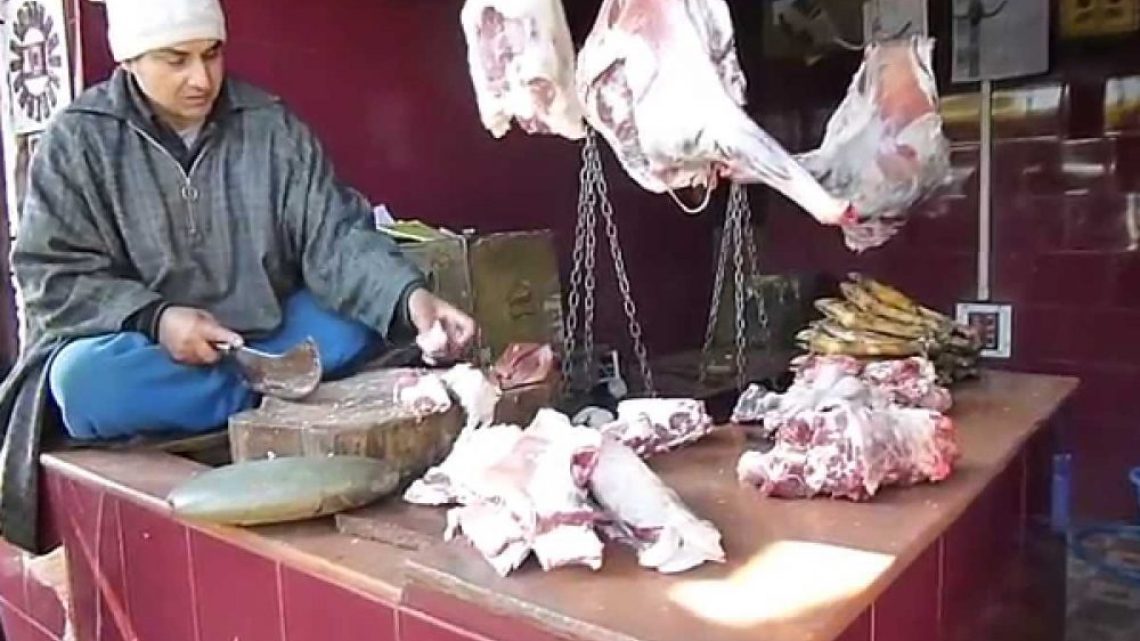
In response to the persistent exploitation, wholesale mutton dealers in IIOJK have announced the suspension of live animal imports into the territory. This bold move, born out of compulsion, is set to severely disrupt meat supply in the region, leading to artificial scarcity and potential inflation. Consumers will suffer, but the traders have been left with no other choice.
This situation is not the result of market fluctuations; it is the outcome of systemic discrimination that threatens the food security and economic stability of an already burdened region.
Even Official Acknowledgement Fails to Yield Action
Even IIOJK’s own Minister for Food, Civil Supplies and Consumer Affairs, Satish Sharma, has publicly acknowledged the exploitation faced by Kashmiri livestock traders at Punjab’s borders. Yet, despite this recognition, there has been no concrete intervention from the Indian or Punjab government. Acknowledging injustice without acting against it only reinforces the impunity of the perpetrators.
The lack of decisive action despite ministerial admission reflects a deliberate indifference to the plight of Kashmiri businessmen. It signals that justice for Kashmiris is negotiable, depending on who is watching.
Traders Speak Out Against Systematic Harassment
At a press conference in Srinagar, Mehrajuddin Ganai, General Secretary of the Wholesale Mutton Dealers Association, stated that the decision to halt trade was taken collectively after months of continuous extortion. He said that truckers are being forced to pay illegal charges, making our business unsustainable. This is not a strike; it is economic self-defense in the face of systematic abuse.
The business community of IIOJK is not protesting profit loss; they are resisting institutionalized injustice that aims to crush their economic independence.
An Attack on Regional Livelihoods
Farooq Dar, Co-Chairman of the Kashmir Economic Alliance (KEA), correctly framed the crisis as an attack not only on traders but on the broader economic structure of IIOJK. He said that this is not just about trade, it is an assault on the economic well-being of our region. His call for immediate intervention is not only justified; it is urgent.
The continued silence of the Punjab government in the face of these credible allegations only confirms that this is not mere extortion; it is targeted economic repression under state patronage.
Conclusion: The World Must Not Remain Silent
The economic harassment of Kashmiri traders is a clear example of how prejudice against the people of IIOJK extends far beyond territorial occupation. This is a calculated effort to break their economic backbone, enforce dependency, and push them into submission. The Punjab government must be held accountable, and the Indian state must answer for this blatant violation of commercial rights and human dignity.
No democracy can justify the economic persecution of a people. The systematic targeting of Kashmiri traders is not just a policy failure; it is a human rights violation that must be condemned without delay.