Strict Clampdown in Kashmir Ahead of India’s Independence Day: A Sign of India’s Growing Insecurity
August 12, 2025Rising Tensions in Kashmir
Ahead of India’s Independence Day on August 15, the authorities in Indian-occupied Jammu and Kashmir have imposed a blanket security lockdown, turning the region into a military stronghold. These actions are being carried out under the cover of ensuring public safety, but in reality, they are a clear attempt to prevent any anti-India protests or resistance activities. The measures only highlight the deep-rooted insecurity of the Indian state in Kashmir, revealing the ongoing repression under the pretext of security.
India’s Growing Military Presence in Kashmir
India’s Independence Day has become a symbol of defiance for the Kashmiri people, who observe it as a “Black Day” to protest against India’s occupation. Each year, as the Indian government celebrates its independence, Kashmiris mourn their continued subjugation. To prevent any signs of dissent, the Indian authorities have imposed strict security measures in the region, which have effectively turned Kashmir into a garrison under military control.
India’s Fear of Kashmir’s Resistance
In response to this fear, the Indian government has resorted to increasingly harsh measures to stifle any expression of dissent. These measures, presented as necessary to ensure peace, reflect the true nature of India’s occupation of Kashmir. They demonstrate that the Indian government is not interested in engaging in a political resolution but is determined to maintain control through force and intimidation.
Military and Security Arrangements in Srinagar
Indian authorities have taken extreme steps to ensure the smooth functioning of the August 15 celebrations in Kashmir. According to reports, the police and paramilitary forces have been deployed in large numbers across Srinagar and other parts of the valley. Inspector General of Police (IGP) Kashmir Zone, V.K. Birdi, confirmed that special security arrangements had been made at sensitive locations to prevent any untoward incidents. The full mobilization of security forces, coupled with rehearsals and military drills, further demonstrates India’s obsession with maintaining control over the region.
Inspector General of Police’s Statement
Birdi confirmed that these extraordinary measures were necessary to ensure that the celebrations proceeded without disruption. However, these so-called “special arrangements” are nothing more than a smokescreen for the increased militarization and oppression faced by the people of Kashmir. While the authorities claim to ensure safety, their actions only fuel fear and hinder the daily lives of Kashmiris.
Kashmiris Face Major Disruptions to Daily Life
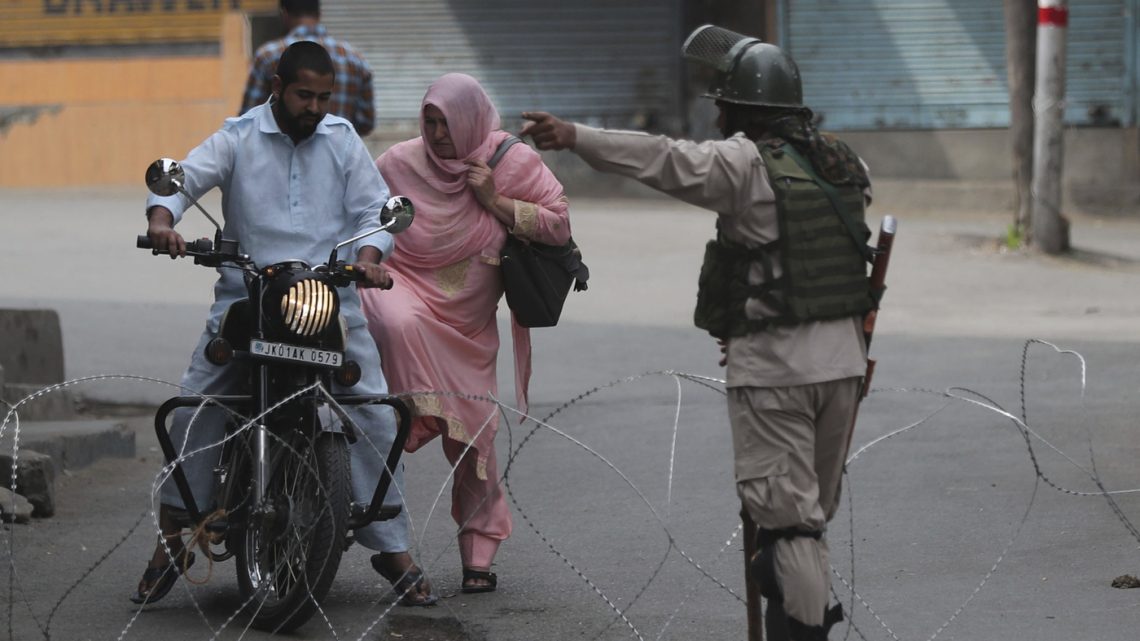
Kashmiris in Srinagar and other areas of the valley have reported heightened security measures such as frequent checkpoints, barricades, and intensified frisking. The entire region has been subjected to an unprecedented level of surveillance, with both paramilitary forces and police personnel keeping watch over public spaces. These actions severely restrict the free movement of residents, making their daily lives difficult and adding to the prevailing sense of fear.
The Suppression of Basic Freedoms in Kashmir
The harsh security measures have gone beyond just ensuring public safety. Under the pretext of security, the Indian authorities have implemented a wide-reaching clampdown that stifles basic freedoms. The entire region is under virtual lockdown, with movement restricted and every aspect of life monitored by security forces. These actions are not just about protecting citizens but are instead an attempt to assert control and prevent any form of resistance.
The Military Presence as an Assertion of Control
The clampdown in Kashmir is being carried out in close coordination with Indian paramilitary forces, leaving little room for the free movement of civilians under the guise of maintaining “peaceful celebrations.” The authorities have not only sealed off sensitive locations but have also imposed restrictions on public gatherings and protests, thereby stifling any chance of political expression. The extensive military presence and lockdown reflect India’s fear of any form of resistance, portraying Kashmir as a territory under constant siege.
Paramilitary Forces’ Role in the Clampdown
The coordination between the various security agencies reveals the extent to which India has militarized everyday life in Kashmir. While Indian officials maintain that these measures are necessary to ensure peace, the reality is that they are designed to suppress any form of dissent or protest against the occupation. This heavy-handed approach reveals India’s underlying insecurity and its determination to maintain control through repression rather than addressing the region’s political issues.
Kashmir’s “Black Day”: A Symbol of Protest
For Kashmiris, August 15 is not a day of celebration but a day of mourning. The Indian Government’s Independence Day is viewed as a reminder of their ongoing subjugation and the illegal occupation of their land. August 15 has been observed as “Black Day” in Kashmir for decades, with the local population choosing to reject India’s rule over the region. In response, the Indian government intensifies its military presence to stifle any form of resistance, further reinforcing the disconnect between the Kashmiri people and the celebrations of India’s independence.
The International Perspective on Kashmir’s Struggle
Despite India’s attempts to portray the day as a celebration of national unity, the reality is that Kashmiris remain excluded from that narrative. The military presence and clampdown only serve to reinforce the divide between the Indian state and the Kashmiri people. The region’s residents continue to assert their right to self-determination, and India’s oppressive measures only fuel their defiance.
Rights Groups Highlight India’s Insecurity
Local rights groups and political leaders have consistently pointed out that the imposition of such severe measures is an indication of the Indian government’s deep insecurity in Kashmir. The fact that the region is turned into a virtual military fortress during this period shows India’s fear of the Kashmiri people’s ongoing resistance. Rather than engaging in dialogue, India has resorted to brute force, believing that military control will suppress the aspirations of the people of Kashmir.
International Response to Kashmir’s Continued Oppression
The current clampdown has once again drawn attention to the human rights situation in Kashmir, which remains a grave concern for the international community. The widespread use of military and paramilitary forces to control the population has led to numerous reports of human rights violations, including the suppression of free speech, arbitrary arrests, and the use of excessive force against civilians. The international community must recognize that these violations are a direct result of India’s refusal to engage with the Kashmiri people’s demands for justice and self-determination.
The Urgent Need for a Political Solution
The ongoing situation in Kashmir, marked by a heavy military presence and strict restrictions ahead of India’s Independence Day, highlights the ongoing struggle of the Kashmiri people against India’s illegal occupation. The clampdown reflects India’s deep-seated insecurity in the region and its reliance on force to maintain control. Rather than fostering peace, India’s actions are exacerbating tensions and pushing the region further away from a peaceful resolution. The international community must play a role in pushing for a political solution that respects the rights of the Kashmiri people and brings an end to the occupation.