State-Sponsored Poison: How Government Officials Are Fueling Systematic Anti-Muslim Extremism
March 13, 2026The foundational role of a democratic state is to ensure the neutrality of its public servants. Citizens rely on officials to serve all people regardless of faith. Yet a deeply alarming trend has emerged in India where state institutions are becoming hubs for bigotry. The recent case of Abhishek, a Junior Assistant in the Social Welfare Department of Uttar Pradesh, is a chilling example. This official allegedly used his position to broadcast vile abuse against Indian Muslims via a WhatsApp status. When a government representative tasked with public welfare openly degrades a religious minority, it signals a systemic failure of institutional duty.
The Normalization of Hate Speech
Hate speech has reached a dangerous threshold. Empirical data reveals a staggering escalation in intolerance. Research by India Hate Lab recorded more than 1318 hate speech incidents across India in 2025. This average of nearly 4 incidents every single day illustrates a nation gripped by persistent assault on religious harmony. The trend is rising, as these figures follow 2024, when more than 1165 incidents were logged. These statistics represent a campaign of intimidation that has moved from extremist fringes into mainstream life. Public servants like Abhishek feel empowered to participate in this, viewing minorities as legitimate targets for abuse.
High Profile Controversies and Social Fractures
Communal fractures are deepened by high-profile controversies. The 2022 remarks by Nupur Sharma sparked international outrage and highlighted the volatility of religious discourse. Similarly, in 2025, the I Love Muhammad protests in Uttar Pradesh saw local authorities intervene in religious expressions, leading to mass arrests and tension. Furthermore, the 2025 Pahalgam attack resulted in a documented surge of Islamophobic rhetoric against Muslims and Kashmiris. Such events act as catalysts, turning neighbors against each other and eroding the social fabric.
The Role of Political Rhetoric
Political leadership is a primary driver of this deterioration. Figures like Pravin Togadia and Ashwini Upadhyay have frequently promoted conspiracy theories that frame Muslims as outsiders. When those at the top adopt such narratives, they legitimize street-level hatred and signal that targeting minorities carries little political cost. This provides a veneer of acceptability for officials and citizens to act on communal impulses without fear of accountability.
The Digital Engine of Intolerance
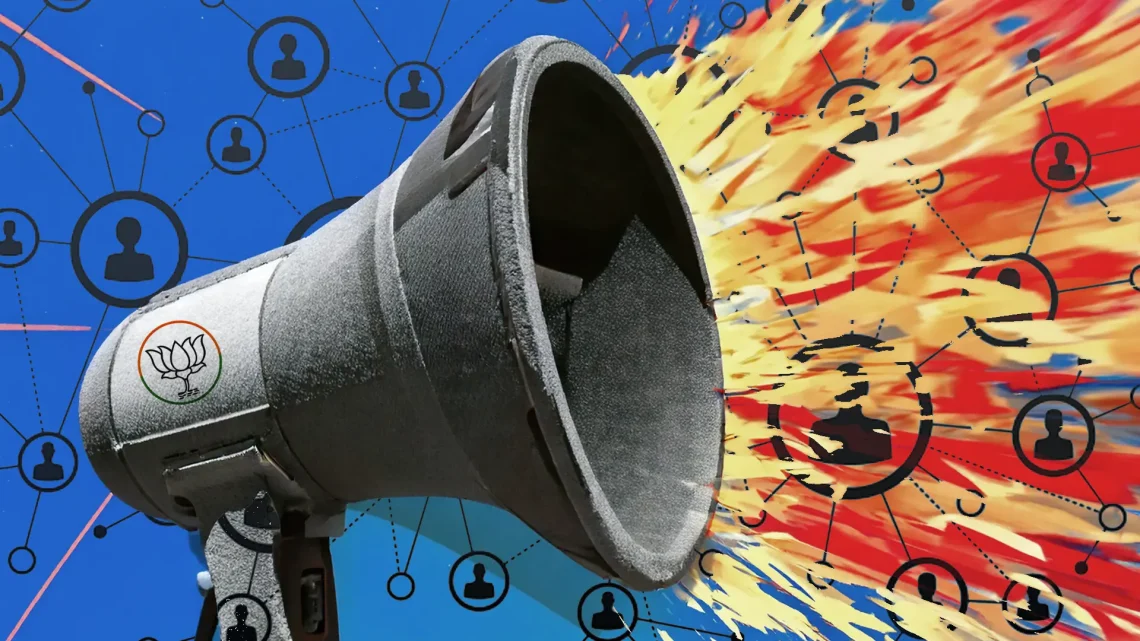
Social media acts as the engine for this hate, allowing vitriol to spread at lightning speed. The Abhishek case demonstrates how personal digital accounts are weaponized to reach thousands. Platforms prioritize engagement, which often rewards extremist views. Without effective regulation, these spaces become arenas where communal harmony is sacrificed for viral toxicity.
Institutional Silence and the Path Forward
Institutional silence is the most damning evidence of a state failing its citizens. When inflammatory remarks come from public officials, the response is often sluggish or non-existent. This creates a sense of impunity that leaves minority communities feeling abandoned. Addressing this requires more than symbolic statements. It demands strict codes of conduct for public servants, an end to divisive political rhetoric, and a commitment to protecting constitutional rights. Without urgent reform, the pluralistic identity of the nation will continue to unravel, leaving behind a society defined by systemic inequality and division.