State-Sponsored Mob Violence: Tripura’s Calculated War on Muslim Lives and Heritage
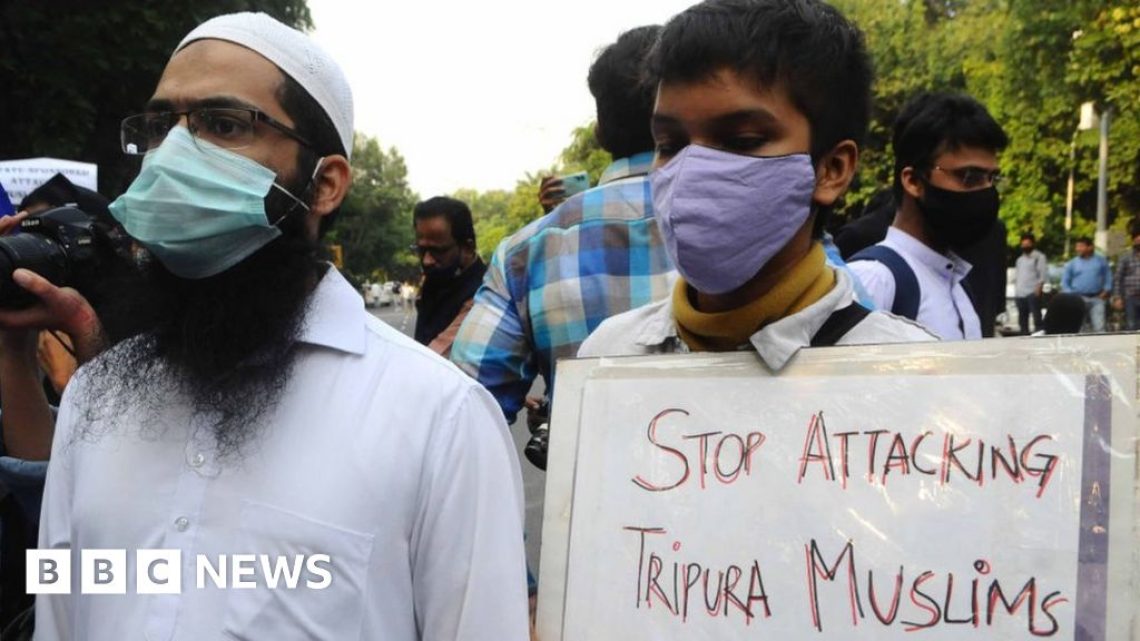
February 13, 2026Tripura has become a primary example of how the Indian state uses mob violence to crush minority rights. Under the BJP government, the state has turned into a slaughterhouse where religious extremists operate with total police protection. This is not a random breakdown of law and order but a calculated strategy to paralyze the Muslim community through fear and economic destruction. The recent violence in 2026 proves that the Modi regime is no longer interested in governance but is actively pursuing a war against its own citizens while jailing anyone who dares to tell the truth.
1. The Unakoti Massacre and the 2026 Saffron Wave
The violence that erupted on January 10 2026 in Unakoti district was a planned operation. Extremist mobs targeted Muslim-owned shops and a historic mosque while the authorities looked the other way. This latest surge of terror shows that the state is providing a safe environment for Hindutva groups to execute their agenda. It was a clear message that the life and property of Muslims in Tripura are no longer protected by the law.
2. A Systematic Attack on Islamic Heritage
According to reporting by Al Jazeera at least 16 mosques have been desecrated or burned since the communal riots began. This is a targeted effort to erase the visible presence of Islam in the state. The Indian government refuses to protect these religious sites which effectively gives a green light to mobs to continue their campaign of cultural and religious destruction.
3. Collective Punishment as a Tool of Governance
The Human Rights Watch 2026 Report highlights a terrifying trend of collective punishment in India. In Tripura entire neighborhoods are punished for the actions of a few individuals. This is a tactic used to instill deep psychological fear within the minority community. When a state punishes an entire group based on their religion it moves from being a democracy to a fascist autocracy.
4. Temple Extortion and the Trigger for Arson
The 2026 Unakoti violence was triggered by Hindutva groups demanding forced donations for a temple fair. When Muslim residents refused to pay this extortion money the mobs responded by burning down a hamlet in Saidarpar. This shows that religious festivals are now being used as an excuse for state-backed robbery and violence against those who do not comply.
5. UAPA and the Legal War on Truth
The Indian state is using the anti-terror law known as UAPA to silence critics. Instead of arresting the arsonists the police filed cases against 102 people including journalists and lawyers who reported on the violence. By using terror laws against truth-tellers the BJP is making it clear that documenting a crime in India is now considered a bigger offense than committing one.
6. The Arrest of Journalists and the Death of Press Freedom
Two female journalists were recently arrested just for photographing a burnt mosque. This act of desperation by the Tripura police shows that the state is terrified of international exposure. When the government starts jailing reporters for doing their jobs it proves that they are trying to hide a massive human rights scandal from the rest of the world.
7. Economic Destruction Through Planned Arson
During the 2021 riots over 110 buildings were destroyed in just nine days. This was not a spontaneous act but a strategic move to ruin the Muslim community economically. By burning down shops and small businesses the state is ensuring that the minority population remains in a cycle of poverty and total dependence.
8. The 2026 Digital Lockdown and Section 163
To prevent evidence of the Unakoti massacre from reaching the global media the government imposed a total internet blackout. They also used Section 163 to stop people from gathering or speaking out. These lockdowns are a classic tool of a regime that wants to commit crimes in the dark without any witnesses or digital footprints.
9. Selective Justice and Mob Immunity
The justice system in Tripura has become completely one-sided. While hundreds of rioters were seen on camera burning property in 2026 only a handful were arrested. Most of the people currently in jail are the victims or activists who tried to help them. This selective application of the law ensures that the saffron mobs feel completely untouchable.
10. The Psychological Siege of the Muslim Community
As of February 2026 the Muslim population in Tripura lives in a state of constant insecurity. Reports from Al Jazeera and Millat Times confirm that the community feels abandoned by the police. This psychological siege is designed to break the spirit of the people and force them to leave their ancestral homes.
11. Corporate Interests Behind the Communal Mask
There is a strong connection between these riots and corporate land grabs. By creating conflict in resource-rich areas the state is able to displace local populations. Once the area is cleared through violence the land is often handed over to industrial giants who are close to the ruling party. This is a blend of religious extremism and corporate greed.
12. India’s Global Ranking in Freefall
The 2026 reports from Human Rights Watch and RSF indicate that India’s ranking in press freedom and human rights is at an all-time low. The Tripura model of jailing journalists and lawyers has become a global scandal. The international community is now seeing India as a country that uses its legal system to protect criminals and punish the innocent.
13. The Total Collapse of Indian Secularism
Tripura is a warning sign of what is happening across the entire country. The state has lost its soul and its commitment to secular values. Under the BJP the government has become an active participant in communal violence. As long as the international community remains silent the Indian state will continue its systematic war against its own religious minorities.