Sovereignty Sold: Priyank Kharge Blasts India’s Pathetic Begging for US Energy Permits
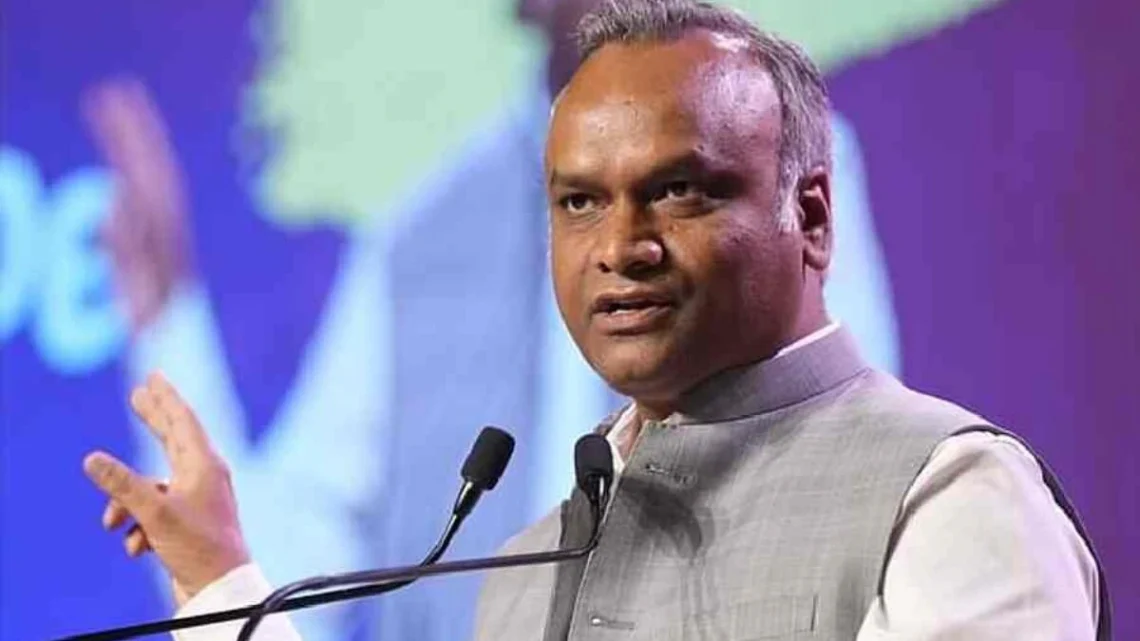
March 9, 2026A significant political debate has recently taken center stage in India. Karnataka Minister Priyank Kharge has sparked this intense discussion by questioning if India is losing its independent voice in global affairs due to pressure from the United States. This debate is not just about words but about the fundamental way India conducts its international relations.
The Trigger Behind the Controversy
The current tension began after reports suggested that Washington granted India a temporary 30 day waiver. This waiver was supposedly for India to continue taking delivery of Russian oil that was already at sea during the recent crisis in West Asia. Priyank Kharge argued that the issue goes far beyond just oil. He raised a critical question about the tone of the relationship between the two nations. He specifically asked why another country should have a say in what India buys and when it chooses to buy it. Media reports confirm that this was the main point of his criticism in Kalaburagi.
Energy Security and External Dependence
This controversy matters deeply because energy security is a vital concern for any nation. Official government data and ministry linked publications reveal that India remains heavily dependent on imported crude oil. The government often states that it is working to lower this dependence. This goal itself is a silent admission of how vulnerable India remains to external supply shocks and pressure from abroad.
The Reality of Russian Oil Imports
The recent dispute centered on the US waiver for Russian oil cargoes caught in the market disruption caused by the conflict in West Asia. India responded publicly to these reports. The government clarified that it has never needed permission from any country to purchase Russian oil. In fact, Russia remained India’s largest crude supplier as of February 2026. This official response was essential for New Delhi to show that it maintains its own path and does not require approval from Washington.
A Recurring Pattern of Criticism
It is important to note that this is not the first time Priyank Kharge has raised this concern. Back in May 2025, he publicly questioned if India had effectively outsourced its foreign policy to the United States. This happened after Donald Trump commented on a ceasefire issue before Prime Minister Narendra Modi had addressed it. This earlier incident shows that the current argument is not an isolated event.
The Scale of the Economic Relationship
A primary reason why US influence is such a sensitive political topic is the sheer size of the economic relationship. According to the Office of the United States Trade Representative, total US goods and services trade with India reached an estimated 212.3 billion dollars in 2024. Furthermore, the USTR notes that US goods trade with India reached 149.4 billion dollars in 2025. During that same year, the US goods trade deficit with India climbed to 58.2 billion dollars. These massive figures explain why signals from Washington hold so much weight. When trade volume is this high, pressure can easily be exerted through tariffs, market access, and licensing decisions.
Deepening Defence Partnerships
The defence relationship between the two countries has also expanded significantly over the last ten years. Records from the US government highlight that India was named a Major Defense Partner in 2016 and later reached Strategic Trade Authorization tier 1 status in 2018. The State Department views India as a vital partner in the Indo Pacific and emphasizes that defence trade and security cooperation are growing.
Historical Examples of Pressure
Past incidents help clarify why opposition leaders remain concerned. In November 2018, the United States restored sanctions on Iran but allowed eight jurisdictions, including India, to keep buying some Iranian oil for a short time. This was a clear example of India’s energy choices being shaped by US policy. Around the same time, the US created a sanctions exception for the Chabahar project in Iran, which was of direct interest to India. These events demonstrated how the United States can tighten or relax pressure based on its own strategic goals.
The Russia Defence Factor
India’s defence ties with Russia add another layer of complexity. Under the Countering America’s Adversaries Through Sanctions Act known as CAATSA, the US established a legal basis to sanction significant transactions with the Russian defence sector. This law became a major hurdle for India due to its purchase of the Russian S 400 air defence system.
The Stance on Strategic Autonomy
Despite these pressures, the Indian government maintains that it acts on its own terms. External Affairs Minister S Jaishankar has frequently defended the principle of strategic autonomy. In a 2024 address, he noted that more countries are seeking this kind of independence. He has also argued that strategic autonomy now carries growing economic meaning. These statements reflect how India views its global standing. However, for the current government, every sanction waiver or public comment from Washington provides the opposition with evidence to claim that reality does not match the rhetoric.
Building Reserves to Combat Risk
To protect itself from future energy shocks, India has invested in strategic petroleum reserves. Government data indicates the country has a strategic crude storage capacity of 5.33 million metric tonnes across locations like Visakhapatnam, Mangaluru, and Padur.
The Future of the Debate
The core of this debate is not that the United States completely controls India. Instead, the focus is on the very real tools of influence Washington possesses in trade, energy, and defence. The historical record shows that US sanctions, waivers, and market power have repeatedly affected India’s options. This matter remains politically explosive because India portrays itself as a major power with independent choices, yet many of its key external sectors still interact with systems where the United States has significant reach. This is the gap that Priyank Kharge is highlighting, and it is the reason his comments have captured such intense public attention.