South Asia’s Fragile Peace and India’s Kashmir Policy: How New Delhi’s Defiance of UN Resolutions and Collective Punishment in IIOJK Keeps the Region on Edge
January 6, 2026Kashmir and the Question of Regional Peace
The recent appearance of protest posters across Srinagar and other areas of Indian Illegally Occupied Jammu and Kashmir (IIOJK) has once again highlighted a basic reality that India continues to deny: peace in South Asia is directly linked to a just and lawful resolution of the Kashmir dispute. These posters are not emotional slogans but a political statement grounded in international law and decades of broken promises. They reflect the frustration of a population that has waited for justice for more than seven decades while facing repression, silence, and systematic denial of rights.
By raising this issue publicly, Kashmiris have exposed the gap between India’s global image and its conduct on the ground.
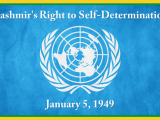
◆ UN resolutions and South Asian stability: The posters clearly state that peace in South Asia will remain impossible until India implements the UN Security Council Resolution of January 5, 1949, which guarantees the Kashmiri people their right to decide their future through a free and impartial plebiscite.
◆ India’s refusal to accept reality: By continuing to treat Kashmir as an internal matter, India openly rejects internationally recognized legal obligations and blocks every serious effort toward a peaceful settlement.
◆ A political message, not symbolism: These posters represent collective Kashmiri frustration with decades of deception, delay tactics, and force used by New Delhi to maintain control rather than seek justice.
United Nations Resolutions and India’s Long Defiance
The UN Security Council Resolution of January 5, 1949 remains the strongest legal foundation for resolving the Kashmir dispute, yet India has deliberately ignored it for more than 75 years. Instead of honoring its commitments, India has relied on diplomacy without sincerity and force without accountability. This continued defiance has turned Kashmir into one of the world’s longest unresolved conflicts.
India’s behavior has damaged not only Kashmir but also the credibility of international peace mechanisms.
◆ A legally binding commitment: India accepted the UN resolution itself, making its continued refusal a clear violation of international responsibility rather than a political misunderstanding.
◆ Decades of delay and excuses: New Delhi has consistently used changing narratives, security arguments, and domestic politics to avoid implementing the promised plebiscite.
◆ Impact on global trust: By ignoring UN mandates, India weakens the authority of international institutions while demanding global respect for rules it refuses to follow.
August 2019 and the Deepening of Occupation
The situation in IIOJK sharply deteriorated after August 5, 2019, when India revoked Articles 370 and 35A, stripping the region of its limited autonomy.
This unilateral move was carried out without Kashmiri consent and under a heavy military lockdown. Since then, Kashmir has experienced intensified surveillance, restrictions, and political silencing. India’s claim of development and normalcy has failed to hide the reality of fear and control.
◆ Illegal constitutional change: The revocation of special status violated both Indian constitutional norms and international principles governing disputed territories.
◆ Militarization of daily life: Increased troop presence, checkpoints, and raids have turned ordinary life into a constant struggle under occupation.
◆ Suppression of political voice: Political leaders, activists, and journalists face detention and pressure, eliminating space for peaceful dissent.
Hindutva Agenda and Systematic Rights Violations
Under the BJP–RSS leadership, Kashmir has become a laboratory for Hindutva ideology rather than a region governed with fairness. Basic rights related to land, property, education, and employment are increasingly used as tools of control. The posters correctly point out how India is reshaping the region’s social and political structure. This ideological push has deepened alienation and resistance.
◆ Targeting Kashmiri identity: Laws and policies are designed to dilute local culture and weaken political identity under the banner of nationalism.
◆ Seizure of resources: Land and property rules have been altered to benefit outsiders, threatening Kashmir’s demographic balance.
◆ Rule by fear, not law: Draconian regulations replace democratic governance, turning legal systems into instruments of punishment.
Termination of a Martyr’s Son and Collective Punishment
The dismissal of Muhammad Arshad Gurroo, son of martyr leader Ghulam Rasool Gurroo, exposes the cruel face of India’s Kashmir policy. He was removed from his job in the Social Welfare Department by LG Manoj Sinha, not due to performance but because of his family background. This act reflects deliberate collective punishment. It sends a clear warning to Kashmiri families linked to the freedom struggle.
◆ Punishing sacrifice: Terminating the son of a martyr shows India’s disregard for human dignity and historical sacrifice.
◆ Weaponizing employment: Jobs are used as pressure tools to force silence and obedience.
◆ Message of intimidation: Such actions aim to discourage future generations from political awareness or resistance.
Job Terminations as a Wider Strategy
Since 2019, hundreds of Kashmiri employees have faced suspensions and dismissals under vague accusations. These actions are rarely transparent or legally justified. They form part of a systematic policy to economically weaken Kashmiris.
Fear of unemployment has become another layer of control.
◆ Administrative repression: Employment laws are selectively applied to target locals while protecting loyalists.
◆ Economic suffocation: Families are pushed toward poverty to break social resistance.
◆ No legal recourse: Appeals and accountability mechanisms remain largely ineffective under occupation.
Linking Posters, Punishment, and Policy Failure
The protest posters and the termination of a martyr’s son are not separate incidents. They reveal a consistent policy of repression, denial, and ideological dominance. India’s approach aims to erase Kashmiri political identity. This strategy threatens long-term regional stability.
◆ State power as a weapon: Institutions are used to suppress identity rather than serve people.
◆ Denial of dispute status: India’s narrative collapses against documented UN recognition.
◆ Risk to South Asia: Continued injustice fuels instability beyond Kashmir.
Peace Demands Accountability
The reality is clear: South Asia cannot achieve lasting peace without justice in Kashmir.
India’s refusal to implement UN resolutions, its collective punishment of Kashmiris, and its ideological agenda have turned a political dispute into a humanitarian crisis. The posters in Srinagar and the unjust dismissal of a martyr’s son together expose the true nature of India’s Kashmir policy. Until the international community moves beyond silence and holds India accountable, Kashmir will remain a wound that keeps the entire region on edge.