Restrictions Intensified Ahead of Republic Day in IIOJK: India’s Harsh Security Crackdown Exposes the Reality of Occupation
January 23, 2026Restrictions Tightened Under the Pretext of Security
Ahead of January 26, the Indian authorities in Indian Illegally Occupied Jammu and Kashmir (IIOJK) have once again tightened restrictions in the name of security. These measures have increased fear and hardship for ordinary Kashmiris who already live under constant pressure. Instead of easing tensions, India has chosen to deepen control and surveillance. This clearly shows that India relies on force, not public support, to maintain its grip on the region.
◆ Security as an Excuse: India repeatedly uses the word “security” to hide its real aim of crushing political dissent and silencing Kashmiri voices demanding freedom.
◆ Daily Life Affected: Schools, markets, offices, and hospitals suffer because people cannot move freely due to restrictions and checkpoints.
◆ Democracy Questioned: A state that calls itself democratic cannot justify collective punishment of an entire population.
Heavy Deployment of Forces Across Kashmir
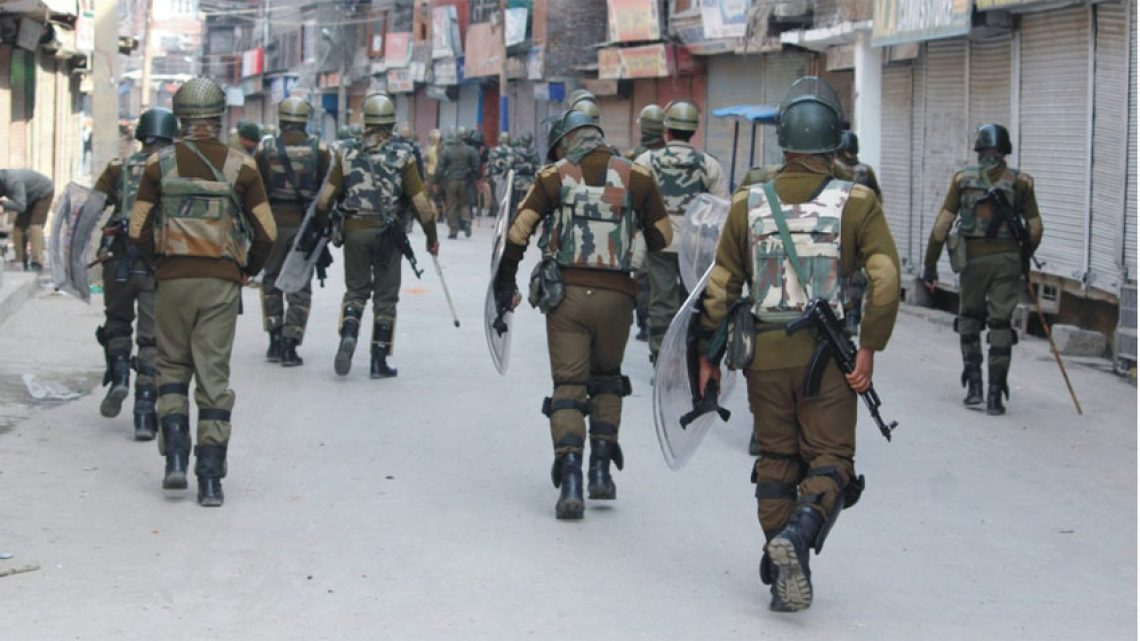
Large numbers of Indian army, paramilitary, and police personnel have been deployed in Srinagar and other towns. Streets are filled with armed men, turning civilian areas into military zones. This overwhelming presence creates fear rather than safety among local residents. It exposes India’s insecurity and failure to win the trust of Kashmiris.
◆ Militarized Cities: Civilian spaces now look like war zones, showing how deeply India fears public resistance.
◆ Mental Pressure: Continuous armed patrols create stress, anxiety, and trauma, especially for children and the elderly.
◆ Rule by Force: India governs Kashmir through guns and boots, not through consent or dialogue.
Intensified Cordon and Search Operations
Cordon and search operations have been increased across many areas of IIOJK. Entire neighborhoods are sealed, and homes are searched without respect for privacy. Innocent people are questioned and harassed for hours. These operations treat all Kashmiris as suspects, which is a clear violation of basic human dignity.
◆ Collective Punishment: Whole communities are punished for no crime, which is against international norms.
◆ Violation of Homes: Forced entry into houses humiliates families and destroys any sense of security.
◆ Fear Strategy: These operations are meant to scare people into silence rather than ensure peace.
Surveillance Through Cameras and Drones
Indian authorities have expanded surveillance using CCTV cameras and drones to monitor public movement. Kashmiris are watched while walking, shopping, or traveling. This constant monitoring turns daily life into a prison-like experience. Technology is being used as a tool of control, not protection.
◆ Loss of Privacy: People are denied the right to live normal lives without constant observation.
◆ Digital Control: Surveillance technology has become another weapon of occupation.
◆ Trust Deficit: India’s actions show deep mistrust toward the very people it claims as citizens.
Roads, Highways, and Checkpoints Under Strict Control
Major roads, including the Srinagar-Jammu highway, are under tight security. Checkpoints force passengers and vehicles to undergo repeated searches. Travel times increase, causing frustration and hardship. These restrictions harm trade, healthcare access, and education across the region.
◆ Economic Damage: Businesses suffer losses due to delays and blocked transport routes.
◆ Risk to Lives: Patients face serious danger because ambulances are delayed at checkpoints.
◆ Movement as Control: Restricting movement is a clear method of controlling the population.
Bakshi Stadium Turned Into a Fortress
The Bakshi Stadium in Srinagar, where India plans its Republic Day event, has been completely cordoned off. Heavy security shows that the event lacks public support. What India calls a celebration is rejected by the local population. The stadium has become a symbol of forced normalcy.
◆ Celebration Without People: Republic Day has no meaning for Kashmiris living under occupation.
◆ Public Space Seized: Areas meant for civilians are taken over by armed forces.
◆ Symbol of Hypocrisy: India celebrates freedom while denying it to Kashmir.
Crackdown Extended to the Jammu Region
Beyond the Kashmir Valley, the Jammu region is also under heavy security. Search operations continue in Kishtwar, Samba, Kathua, Udhampur, Reasi, and Jammu districts. Slum areas, especially those inhabited by Rohingya and Bangladeshi Muslims, are targeted unfairly. This reflects discriminatory and biased policies.
◆ Targeting the Poor: Vulnerable communities face the harshest treatment from Indian forces.
◆ Widespread Repression: Occupation policies affect the entire region, not just the Valley.
◆ Religious Bias: Muslim-populated areas are disproportionately targeted during searches.
Republic Day Observed as Black Day by Kashmiris
Kashmiris across the world observe India’s Republic Day as a Black Day. For them, this day represents 78 years of occupation, broken promises, and denied rights. While India celebrates its constitution, Kashmir remembers suffering and resistance. This global observance exposes India’s false narrative.
◆ Global Message: Kashmiris send a clear signal that occupation cannot be normalized.
◆ Long Struggle: Decades of military rule have failed to break the spirit of resistance.
◆ Truth Exposed: Ceremonies cannot hide the reality of illegal occupation.