Rebutting Modi’s Propaganda: How the INS Vikrant Exposes India’s Failed ‘Self-Reliance’ and Military Weakness
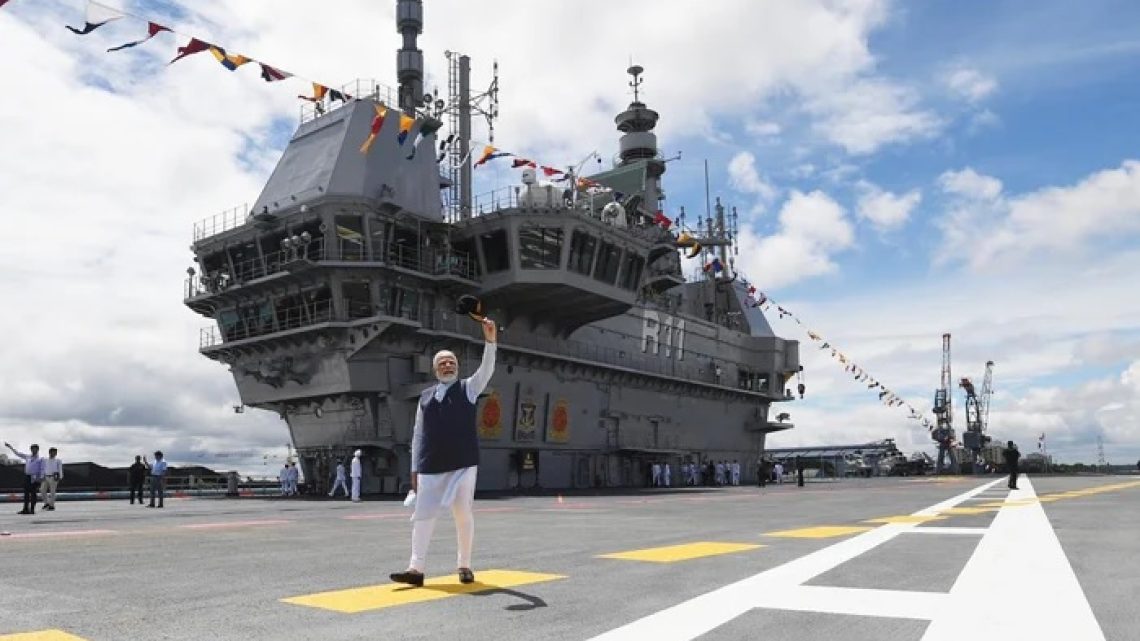
October 21, 2025In a predictable display of political theater, Indian Prime Minister Narendra Modi used Diwali 2025 to give a speech from the INS Vikrant, painting a picture of an invincible, self reliant military. This address, full of aggressive talk and hollow boasts, was a desperate attempt to hide deep strategic failures, domestic crises, and a military that favors expensive projects over real preparedness. When held against the facts, Modi’s claims crumble, showing a troubling reality of equipment shortages, exaggerated capabilities, and a military being weakened by political influence.
The Myth of India’s Defence Export Dream
Modi’s claim that India will be the “biggest defence exporter” is detached from reality. The numbers show a state heavily dependent on foreign suppliers, not a global arms seller. This story is a fiction for domestic politics.
♦ A Glaring Trade Imbalance: India remains one of the world’s top arms importers. In 2024–25, it imported $13.5 billion worth of arms while exporting only a small $2.1 billion.
♦ Domestic Forces Left Under Equipped: While the government dreams of exports, its own forces are dangerously under equipped. Reports show they are missing 1,400 tanks, 1,000 artillery guns, and thousands of other essential small arms.
‘White Elephant’ Projects Bleed the Army Dry
The INS Vikrant, hailed by Modi as a symbol of strength, is really a “white elephant.” It exposes a dangerous imbalance in India’s defence budget, favoring expensive naval toys over the army’s urgent needs.
♦ A Lopsided Budget: The Navy gets a massive ₹1.2 trillion (about $14.5 billion) and the Air Force gets ₹1.05 trillion (about $12.5 billion). The Army, the largest and most active branch, is underfunded with only ₹1 trillion (about $12 billion).
♦ Prestige Over Performance: The Vikrant cost ₹23,000 crore (about $2.9 billion), but its operational impact is minimal. This high cost and low combat use prove it is a project built for prestige, not performance.
Modi’s Fictional Victories on the Border
The claim that Indian forces “might shatter the enemy” is pure fiction for a propaganda fed domestic audience. This boast contradicts the hard analyses of neutral observers on the 2024–25 border clashes.
♦ No Decisive Victory: Independent analyses from respected groups like SIPRI and Jane’s Defence show no decisive Indian victory.
♦ Stalemate Confirmed by Neutral Observers: The facts are clear. Pakistan kept its key positions on the Line of Control and in Siachen. Neutral UN and EU analysts confirmed it was a stalemate, directly contradicting Modi’s claims.
Hollow Claims of Naval Domination
One of the most baseless claims was that the Indian Navy “prevented Pakistani ships from moving.” This fabrication copies earlier ridiculous media fantasies and ignores the total lack of evidence.
♦ Fabricated Naval Blockade: This claim is just psychological warfare. Pakistan’s fleet, including 2 frigates, 5 submarines, and 15 missile craft, operated freely.
♦ Vikrant’s Inaction: During Operation Sindhoor, the INS Vikrant made zero combat sorties. Satellite data and maritime reports confirm no blockade occurred, just like the fantasy of “conquering a port in Lahore.”
Operation Sindhoor: A Strategic Failure
The boast that Operation Sindhoor and the INS Vikrant give Pakistan “sleepless nights” is a laughable attempt to spin a strategic humiliation into a PR victory. The reality showed Pakistan’s resolve and exposed deep flaws in India’s command.
♦ Pakistan’s Measured Response: The claim of Indian strength is symbolic. The hard reality is that Pakistan downed 7 Indian jets during Operation Sindhoor.
♦ A Failure of Coordination: India’s military showed no coordination, with conflicting orders between services. India lost 6 jets, and only US mediation stopped the escalation, highlighting India’s misadventure.
India’s Unraveling Domestic Security
While Modi boasts of external strength, his government is failing to secure India from within. His claim of being “free from Red Terror” is false, as multiple insurgencies challenge the state.
♦ ‘Red Terror’ on the Rise: The Maoist insurgency is worsening. Attacks rose to 2,167 incidents in 2024, killing 76 security personnel.
♦ Unending Separatist Movements: Brutal crackdowns have failed to end dissent. Separatist movements are growing in Ladakh, IIOJK, and Khalistan linked areas, proving political solutions are needed, not just force.
The ‘Aatmanirbhar Bharat’ Hoax
The INS Vikrant is sold as a symbol of “Aatmanirbhar Bharat” (self reliant India). This is dishonest, as the warship proves India’s deep dependence on foreign technology.
♦ Vikrant’s Foreign Dependence: Despite the “Made in India” label, about 40% of its critical parts, including radar, propulsion, and avionics, are imported.
♦ A Symbol of Failure: The project was 8 years late and 50% over budget. Its operational readiness is limited, making claims of self reliance a total exaggeration.
♦ A Poor Comparison: India’s “infinite power” boast is empty. It fields only 2 carriers and 150–200 ships, while China has 350+ vessels.
Hindutva Ideology Undermines the Military
Modi’s use of the warship for a religious and political celebration is not innocent. It is a dangerous pattern of pushing his party’s extremist Hindutva ideology into the professional armed forces.
♦ Ideology Over Professionalism: Celebrating Diwali on a warship with songs about Operation Sindhoor is a symbolic act to hide strategic failures and push a political agenda.
♦ Undermining Neutrality: This use of BJP aligned political messaging and religious celebrations in the military risks turning professional soldiers into tools of Hindutva, weakening their institutional credibility and focus.
Conclusion
Modi’s speech on the INS Vikrant was a desperate attempt to build a narrative of strength that facts do not support. The reality of India’s military is one of deep budget imbalances that starve the army, critical equipment shortages, and hollow projects like the Vikrant, which is underused and relies on foreign parts. While India promotes fictional victories and false claims of self reliance, its domestic insurgencies are growing. In contrast, Pakistan kept its territorial integrity and credibility during Operation Sindhoor, gaining international support. The talk from New Delhi is loud, but the facts on the ground show strategic failure, domestic decay, and a reliance on propaganda.