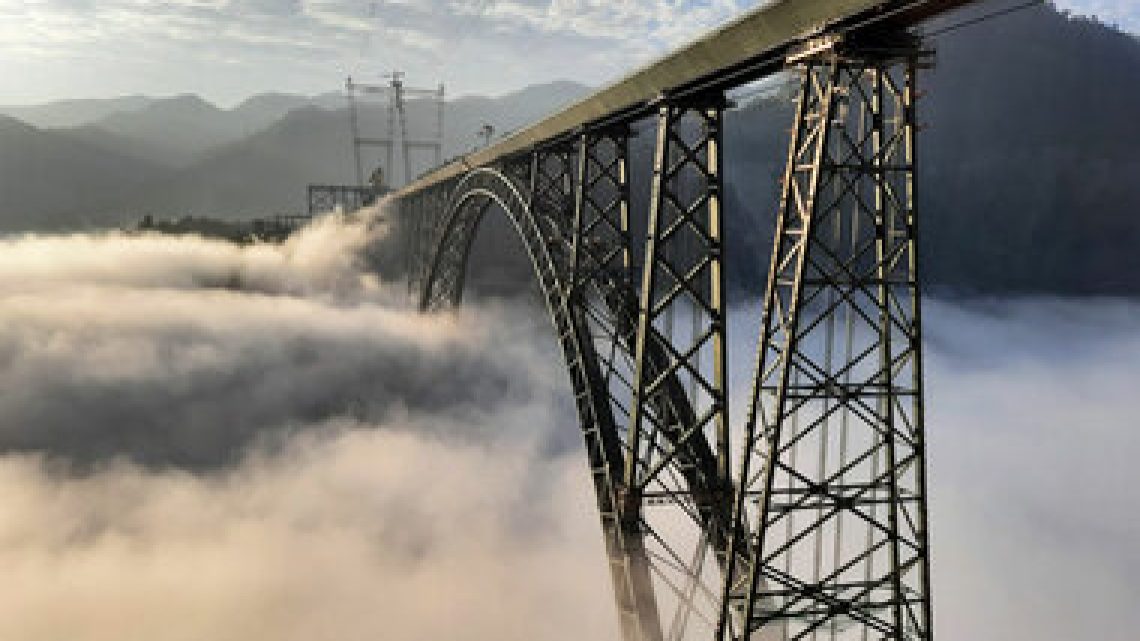
Rail Tracks, Bridges, and Tunnels Built to Strengthen Illegal Occupation
December 19, 2025A Development Story That Collapses Under Military Reality
India’s latest movement of army tanks, artillery guns, and heavy weapons into occupied Jammu and Kashmir through the Udhampur–Srinagar–Baramulla Rail Link has fully exposed New Delhi’s real intentions. What was repeatedly presented as a development project for the people of Kashmir now stands revealed as a military supply route designed to strengthen occupation. The Indian government can no longer hide behind slogans of progress when trains carry weapons instead of passengers. This single event has torn apart India’s carefully built narrative and shown that control, not welfare, remains the central goal in Kashmir.
♦ False promises: Development claims collapse when weapons dominate civilian space.
♦ Military priority: Railways are built to serve the army, not the people.
♦ Open exposure: India no longer even hides the militarization of Kashmir.
USBRL Rail Link as a Tool of Control, Not Connectivity
The USBRL project was sold to the world as a symbol of connection, growth, and opportunity for Kashmir. In reality, it is now clear that the project was designed with military planning at its core. Tanks and artillery moving freely on railway tracks show how civilian infrastructure is turned into a tool of control. Kashmiris see little benefit from such projects, while Indian forces gain faster and stronger access to every corner of the Valley. This is not development but occupation by design.
♦ Dual use exposed: Civil railways now serve military goals.
♦ Local exclusion: Kashmiris gain little from projects built on their land.
♦ Occupation planning: Infrastructure strengthens long term control.
Indian Army’s Public Celebration of Militarization
What is even more alarming is how proudly the Indian Army displayed this movement on social media. By calling it a “major logistics milestone,” the army made it clear that Kashmir is treated as a battlefield, not a civilian region. This public celebration reflects the arrogance of power under the Modi government, where showing strength is valued more than respecting human suffering. Such messaging also sends a clear warning to Pakistan and the region that India prefers force over dialogue.
♦ Power display: Weapons are shown as symbols of pride.
♦ Psychological pressure: Public messaging aims to intimidate Kashmiris.
♦ Provocation: India openly signals hostility towards Pakistan.
Kashmir Turned into a Permanent Military Zone
The movement of heavy weapons confirms what Kashmiris have long experienced on the ground. The region is no longer treated as a place for normal civilian life but as a permanent military zone. Roads, railways, and tunnels are built to move troops quickly, while ordinary people face restrictions, checkpoints, and fear. India’s repeated claims of peace and normalcy lose all meaning when tanks roll through the Valley.
♦ Security obsession: Military needs dominate all planning.
♦ Civilian suffering: Daily life remains controlled and restricted.
♦ False normalcy: Reality contradicts India’s official claims.
Strategic Pressure on Pakistan Through Militarized Infrastructure
Experts correctly note that this railway use strengthens India’s ability to quickly move forces near the Line of Control. This is not about defense alone but about building pressure against Pakistan. Faster movement of armor increases the risk of sudden escalation and instability. Instead of reducing tensions, India continues to invest in systems that make conflict more likely.
♦ Rapid mobilization: India lowers the threshold for conflict.
♦ Regional risk: Militarization increases instability.
♦ Aggressive posture: Infrastructure is used to threaten, not reassure.
Civilian Development Pushed to the Background
Despite years of promises, Kashmiris continue to see little improvement in daily life. Jobs, education, and free movement remain limited, while military presence grows stronger. Railways that could help trade and tourism are overshadowed by their military use. Development in Kashmir exists mainly in speeches and press releases, not in the lived reality of the people.
♦ Economic neglect: Civil growth remains weak and controlled.
♦ Selective benefits: Projects serve the state before the people.
♦ Public relations focus: Welfare is used to hide harsh policies.
Modi Government’s Hardline Ideology Behind the Militarization
This aggressive use of infrastructure fits directly into the Modi government’s hardline ideology. Across India, dissent is met with force, and Kashmir is no exception. Instead of winning hearts, New Delhi relies on troops, laws, and weapons. The railway carrying tanks reflects a mindset that believes control can replace consent, an approach that only deepens anger and resistance.
♦ Ideological rigidity: Force is chosen over dialogue.
♦ Central control: Local voices are ignored or silenced.
♦ Deepening divide: Policies increase alienation.
A Clear Message of Occupation to the World
The use of the USBRL as a military corridor sends a clear message to the international community. India’s claims of development and peace in Kashmir cannot be taken at face value. The reality is one of occupation backed by force and infrastructure designed for control. Until India changes course and allows genuine political solutions, Kashmir will remain a source of instability, suffering, and regional tension.
♦ Reality revealed: Military movement exposes true intentions.
♦ Global responsibility: India’s actions demand scrutiny.
♦ Unfinished conflict: Militarization blocks any real solution.