Pratik Sharma’s Narrative: Army Leadership as Extension of BJP Mouthpiece
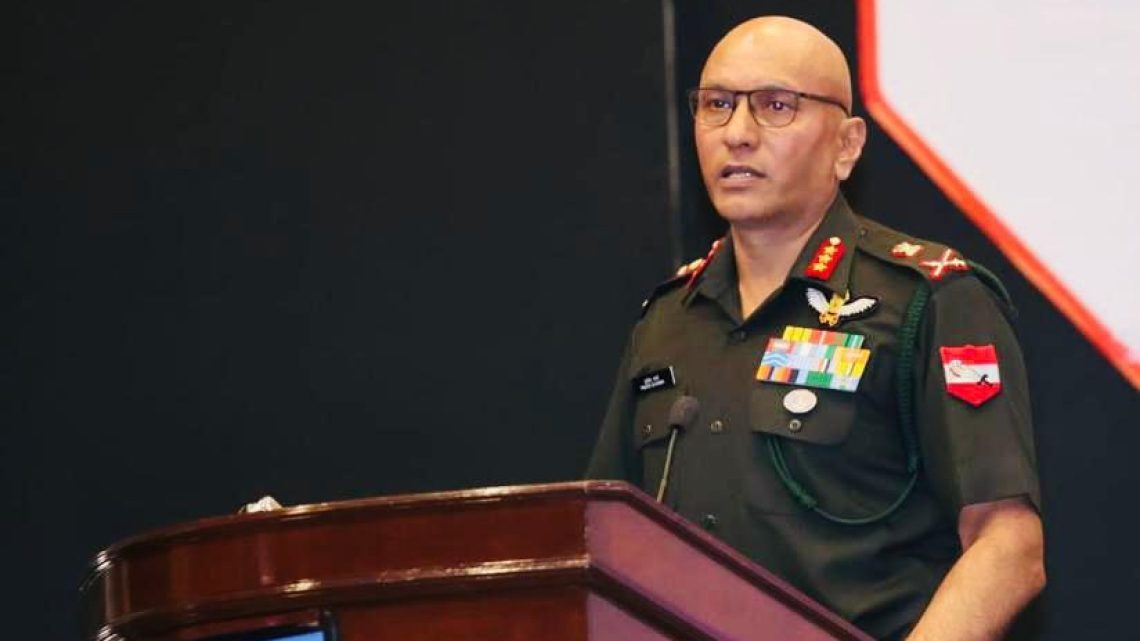
September 1, 2025Lieutenant General Pratik Sharma, commander of India’s Northern Army, recently presented a detailed version of Operation Sindoor, trying to show it as a strong and successful military action. His words followed the BJP’s political line closely, turning what should have been a professional briefing into a political story. What India could not achieve in real fighting, it now tries to gain through strong statements and repeated claims. But when we look at the facts, the reality tells a very different story.
Pakistan Accused of Role in Pahalgam
The Indian General claimed that the attack in Pahalgam was done by Pakistan’s groups, acting on direct instructions from across the border. However, the investigation in India itself was full of confusion. There were changing statements, unclear arrests, and no solid proof. These contradictions make the Indian story weak and doubtful.
From Restraint to Reaction?
Sharma said Operation Sindoor marked a new stage, moving from restraint to action. But instead of showing strength, the operation exposed India’s weak points. Poor coordination between intelligence and military, weak air defence, and lack of clear political guidance made the operation easy to counter. Pakistan used these weaknesses to act wisely and protect its side.
Political Pressure and Narrative Building
There was growing pressure on the BJP government due to many unanswered questions. Instead of accepting the failure, they tried to change the story. The fact that India pulled back just thirty minutes after the operation began shows how quickly the situation went out of their hands. It became clear that the plan had backfired badly.
Ceasefire Talks Denied, but Reality Different
India’s Defence Minister, Rajnath Singh, denied that there were any talks on a ceasefire. But several reports showed that US President Donald Trump had to step in to calm things down. This clearly shows that India was not in full control and needed help from outside to end the crisis.
Misuse of Pakistan’s Official Stand
India used the April 16 speech of Pakistan’s Army Chief, Field Marshal Syed Asim Munir, as a reason for its action. In that speech, he repeated the Two-Nation Theory and said Kashmir is Pakistan’s “jugular vein.” These are not new words. They reflect the official policy of Pakistan, which has remained the same for decades. India tried to present this speech as something new and dangerous, which it was not.
Military Leaders Speaking Like Politicians
General Sharma’s words did not sound like a soldier giving a report. Instead, they followed a political line. His repeated points, without strong facts, made the Indian military leadership look like a part of the BJP’s political team. This has hurt the image of India’s army both at home and abroad.
Old Story of Proxy War
India again accused Pakistan of running a proxy war through infiltration and breaking the ceasefire. But Pakistan has always acted from its own side, in defence. It never crossed the line, but when needed, it targeted Indian command posts and forward areas that were being used against civilians. The word “proxy war” is just another part of the Indian narrative to shift attention from its own mistakes.
Civilian Losses Hidden Behind Claims
Sharma said that Operation Sindoor began at 0105 hours on May 7 with carefully planned strikes. He claimed lessons were learned. But in truth, the strikes hit civilian areas. Women and children died, mosques and schools were destroyed. India called them terrorist camps, but no such proof was shown. International media confirmed that these were local, civilian places — not terror bases.
Big Numbers, Small Results
The General said Pakistan responded within thirty minutes, and that India replied with great firepower — over 30,000 artillery rounds and 300,000 bullets. But despite these big numbers, India failed to achieve anything. Pakistan’s well-prepared defence stopped India’s attacks and caused serious damage to Indian positions. The large use of firepower did not bring real success.
Failure of Air Operations
Sharma also said that four infiltration attempts were stopped and launch pads were destroyed. In reality, Pakistan shot down seven Indian jets and almost a hundred drones. India’s claims of hitting targets inside Pakistan were not accepted by international reporters. Many of them clearly said that the claims were not backed by proof and seemed to be part of a media plan.
Covering Local Repression as Counter-Terrorism
The General said a long joint operation of ninety-seven days was held by the Indian Army, police, and special forces, and that it killed three terrorists hiding in forests and caves. But local reports say the operation was used to target common people. Innocent Kashmiris were killed and later called militants. This way of action has been repeated many times by India over the past many years.
Weak Performance of Air Force and Navy
He also said that the Indian Air Force played a major role, and that the Northern Command led all actions on land, with support from the Navy to stop any further fight. But even Indian defence experts like Pravin Sawhney criticised the Air Force’s poor performance. Pakistan responded quickly and broke India’s air strength within hours. Claims of striking Muridke and Bahawalpur were not supported by any facts, while Pakistan showed videos of damage to civilian homes. The Indian Navy only made public statements but did not take any serious action.
Poor Coordination and Confused Command
According to Sharma, the Northern Command led the operation across the AGPL, LoC, IB, and LAC. But instead of showing strength, this wide area of operation exposed India’s poor command. Delayed responses and mixed messages from different officials showed that there was no clear direction. If things had been planned properly, such confusion would not have happened.
Conclusion
Operation Sindoor became more about media and less about actual success. The General’s words reflected a political need rather than ground reality. India tried to hide its failure by making large claims, but these claims were full of contradictions. Civilian deaths, lack of proof, and the need for foreign help proved that India’s version could not be trusted. For Pakistan, the incident again showed the strength of careful defence and quick action. For the people of Kashmir, it became another sad chapter of violence and blame. In the end, Operation Sindoor stands as an example of how words were used to cover failure, and how truth was lost in the noise.

