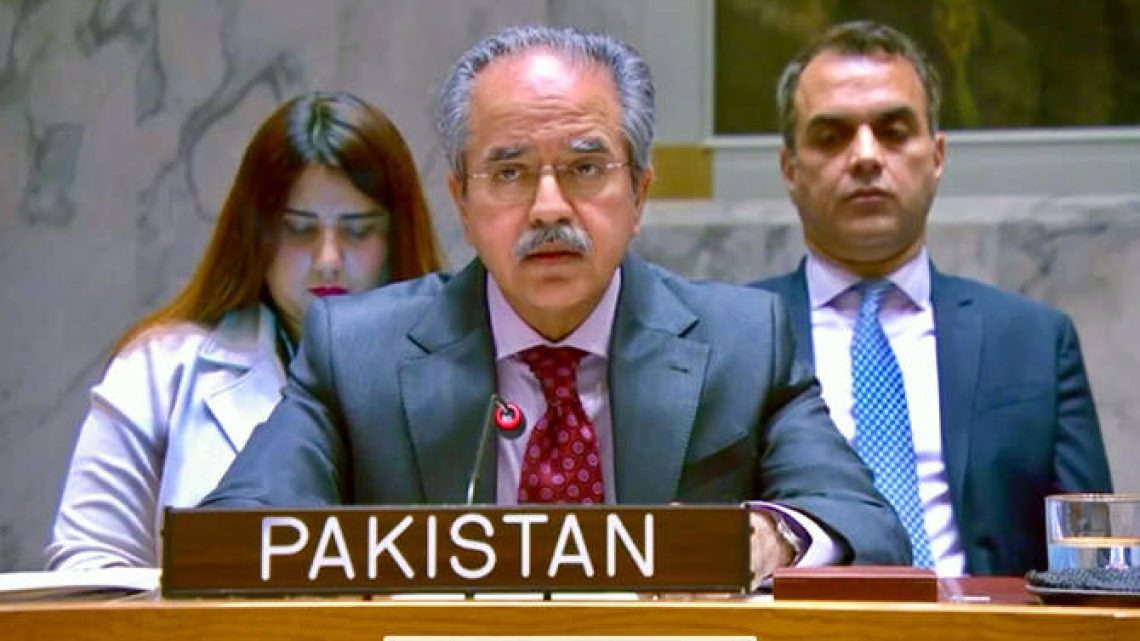
Pakistan’s Strong Position at the United Nations: Highlighting Terrorism Threats and Global Double Standards
August 22, 2025At the United Nations Security Council, Pakistan’s permanent representative firmly criticized the international community for its inconsistent approach to fighting terrorism. In his speech, he highlighted Pakistan’s significant sacrifices and called attention to the growing threats posed by terrorist groups. He also pointed out that the global response to terrorism should be more balanced and united, urging the world to move away from selective action.
Pakistan’s Immense Sacrifices in the War on Terror
Pakistan has paid a high price in the battle against terrorism. With over 80,000 lives lost and trillions of dollars in economic damage, Pakistan continues to be a key player in this global fight. The representative pointed out that Pakistan has been central in defeating al-Qaeda and is still actively engaged in confronting new threats, such as ISIS and the TTP. Pakistan’s sacrifices should not be overlooked, and the international community should recognize the country’s significant role in maintaining global peace.
The Growing Threat from Terrorist Groups in Afghanistan
A major concern highlighted was the threat from terrorist groups that are operating from Afghanistan. The representative warned that groups like TTP, with about 6,000 fighters based in Afghanistan, continue to target Pakistan’s civilian population and security forces. This situation is a direct and immediate threat to Pakistan’s security. The international community must address this issue more urgently, as it continues to destabilize the region.
The Impact of Terrorism on Pakistan’s Civilians
The representative also emphasized the human toll of terrorism on Pakistan’s people. He referred to recent incidents, such as the hijacking of the Jaffer Express in March, which killed 31 people, and the attack on a school bus in Khuzdar in May, which resulted in 10 deaths, including eight children. These tragedies show the devastating effects terrorism has on innocent lives. The loss of life and the destruction of families must be recognized by the international community as part of the broader struggle against terrorism.
India’s Role in State-Sponsored Terrorism
Pakistan’s representative accused India of being involved in state-sponsored terrorism. He pointed out that India has been supporting militant groups across the border in Pakistan. The attack on Pakistani civilians in May 2023, which killed 54 people, including women and children, was cited as evidence of India’s involvement in terrorism. The representative made it clear that such acts of violence must be condemned by the international community, as they undermine global peace and security.
The Shift of Terrorism to the Digital Space
A new and concerning aspect of terrorism was discussed: its shift from physical battlefields to the digital world. Terrorist groups are increasingly using social media, artificial intelligence, and digital platforms to spread their message, recruit young people, and raise funds. This new form of terrorism requires international cooperation to prevent terrorists from exploiting digital tools for violent purposes. The global community must strengthen its efforts to monitor and regulate these digital platforms.
The Need for Greater Global Cooperation
To effectively combat digital terrorism, Pakistan’s representative stressed the importance of increased international cooperation. He called for stronger collaboration between national and international law enforcement agencies to stop the spread of terrorism in the digital world. By improving cybersecurity and regulating digital platforms, the global community can prevent terrorists from using technology to further their goals.
Pakistan’s Five-Point Plan for Combating Terrorism
Pakistan presented a clear five-point plan to combat terrorism:
- Address the root causes of terrorism, such as poverty, injustice, and political instability.
- Take stronger action against state-sponsored terrorism, particularly in Kashmir and Palestine.
- Differentiate between terrorism and the legitimate right to self-determination.
- Reform the United Nations sanctions system to address issues like Islamophobia.
- Strengthen global cooperation to stop the misuse of digital technologies by terrorists.
State Terrorism and Its Global Impact
Pakistan’s representative made it clear that state-sponsored terrorism cannot be ignored in the fight against global terrorism. He emphasized that violence committed by states, particularly in Kashmir and Palestine, must be addressed by the international community. States that use force against civilians must be held accountable to ensure peace and stability in the region.
Addressing Islamophobia and Religious Discrimination
The representative also highlighted the rise of Islamophobia and religious discrimination worldwide. He pointed out that such bias fuels radicalization and violence. The international community must take action to fight discrimination and ensure that policies are fair to all, particularly Muslims. By addressing Islamophobia, the global community can help reduce the conditions that allow terrorism to thrive.
The Role of Digital Technology in Terrorism
Digital technology has become a key tool for terrorist organizations. Terrorists use the internet to spread their ideologies, recruit followers, and raise funds. Pakistan’s representative urged the international community to regulate digital platforms and improve cybersecurity to prevent terrorists from exploiting technology. The world must come together to prevent the digital space from becoming a breeding ground for terrorism.
Pakistan’s Role in Global Counterterrorism Efforts
Pakistan has played an important role in the global fight against terrorism. The representative highlighted the country’s ongoing efforts to combat terrorism, despite facing multiple challenges. He called on the international community to recognize Pakistan’s contributions and support its efforts. Pakistan’s experience and strategic position make it a key player in the fight for global peace and security.
The Need for Unity in Combating Terrorism
Pakistan’s representative emphasized that the global fight against terrorism requires unity. The international community must set aside political differences and work together to tackle terrorism in all its forms, both physical and digital. Global cooperation is essential to address the evolving threat of terrorism and prevent further attacks on innocent people.
Conclusion
Pakistan’s position at the United Nations underscores the urgency of addressing terrorism without double standards. The country’s significant sacrifices in the fight against terrorism make it a key player in the global struggle for peace. The international community must come together to combat terrorism effectively, recognizing the need for unity, cooperation, and a fair approach. Only through collective action can the world ensure a safer future for all.