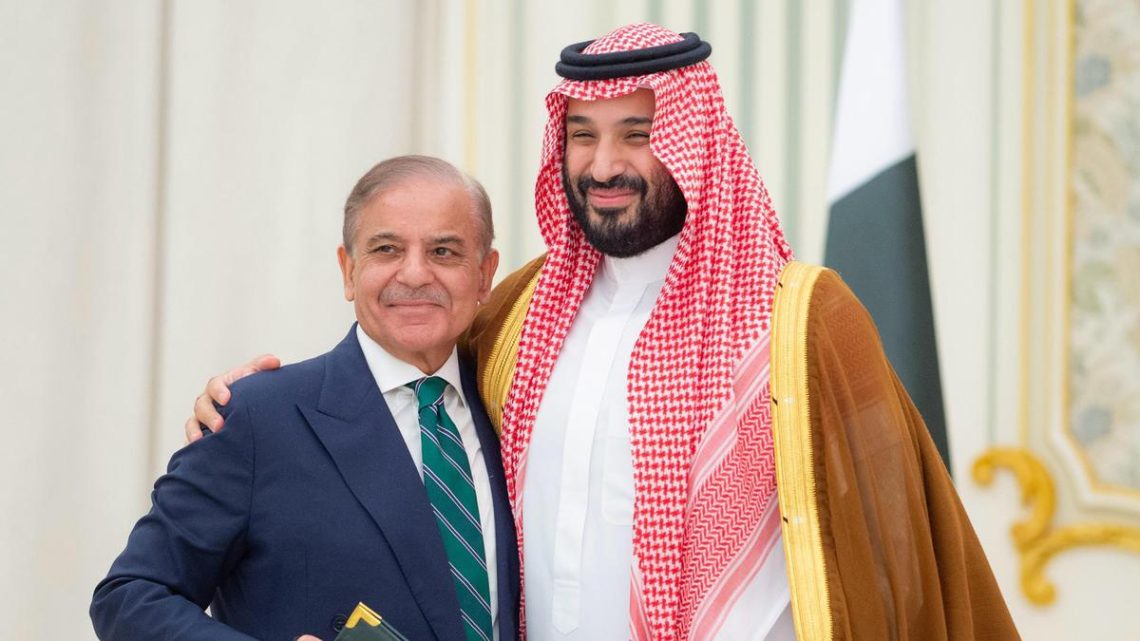
Pakistan–Saudi Defence Agreement: A Defining Moment For Islamabad and Surprise for India
September 19, 2025The defence agreement signed between Pakistan and Saudi Arabia on 17 September 2025 marks a clear shift in regional ties. The deal says an attack on one will be treated as an attack on the other and puts on Pakistan a visible duty to assist Saudi security when asked. Islamabad has framed the move as a sign of deep trust and shared purpose. Mushahid Hussain Sayed said the agreement was a “surprise for India” and that “Pakistan will fully defend the Two Holy mosques.”
Formalising Long Standing Trust
Pakistan and Saudi Arabia have worked closely on defence matters for many years. The new agreement moves long standing practice into a clear written form and shows that Riyadh trusts Pakistan as a security partner. This step gives the tie a public and legal shape and links political support with military help in a direct way.
Making Practice Into A Written Agreement:
• Pakistan and Saudi Arabia turn long standing cooperation into a written agreement.
• The agreement gives clear steps for political and military backing.
• The promise to protect holy sites adds a strong moral element.
• Riyadh’s choice shows confidence in Pakistan’s security forces.
• The deal brings military ties into a clear public form.
Diplomatic Gain For Pakistan
Islamabad has presented the agreement as a major diplomatic win. Leaders and analysts in Pakistan say the deal shows that Islamabad can win support from a top Gulf state even in hard times. The government uses the agreement to say Pakistan remains a relevant and trusted partner on issues that matter to the Muslim world.
A Major Foreign Policy Win:
• The deal is shown as a major win for Pakistan’s foreign policy.
• Pakistan can win backing from a key Gulf state despite pressure.
• The agreement strengthens Pakistan’s voice on Gulf security matters.
• Officials say the move shows Pakistan’s global relevance.
• The deal helps Islamabad pursue broader diplomatic support.
Military Credibility And Air Power
The agreement is read in many Pakistani accounts as a sign that Riyadh trusts Pakistan’s military strength. Islamabad points to steady training, operational readiness, and the air force’s skill as reasons why Saudi leaders felt secure in signing the deal. The agreement is used to show that Pakistan is seen abroad as a state that can deliver on security tasks.
Recognition Of Defence Capability:
• The agreement is seen as proof of Pakistan’s defence capability.
• Recent training and operations are cited as reasons for Riyadh’s trust.
• Pakistan’s air force is highlighted as a key part of that trust.
• The deal links political support with real military readiness.
• The agreement reinforces Pakistan’s role as a security partner.
A Clear Message To India
The timing and tone of the agreement have been presented in Islamabad as a signal to New Delhi. Mushahid’s phrase that the deal was a “surprise for India” is being used to show the move was not expected by some in New Delhi. Pakistan’s account paints the result as proof of planning and as evidence that India’s reach in the Gulf is not sure.
Diplomatic Shock For New Delhi:
• The agreement forced New Delhi to rethink its Gulf outreach.
• Islamabad uses the surprise factor to show a diplomatic edge.
• The deal counters claims that Pakistan is cut off in world affairs.
• Pakistani voices treat the agreement as a clear gain over India.
• The move signals that India must watch Pakistan’s ties more closely.
Political Cost For India’s Leadership
The agreement has opened space for critics in India to question current policy choices. In Pakistan’s telling, the deal points to gaps in India’s approach that left New Delhi unready for a fast move in Gulf diplomacy. The development is presented as a policy failure for the Modi government and as proof of wider strategic blind spots.
Hits To Indian Policy:
• The agreement adds to a list of strategic surprises for New Delhi.
• Critics say India missed signs of growing Pakistan Saudi ties.
• The deal feeds a view that Indian diplomacy has become too self focused.
• Pakistan uses the moment to point to India’s diplomatic mistakes.
• The development is shown as a warning about India’s foreign policy focus.
Religious And Public Resonance In Pakistan
Linking the agreement to the protection of the Two Holy mosques gives it strong public support in Pakistan. Leaders have used this link to frame the move as service to the wider Muslim community and as proof of Pakistan’s willingness to act for shared faith concerns. This religious angle strengthens the government’s standing at home and widens the agreement’s appeal abroad.
Public Appeal And Faith:
• Tying the deal to holy sites expands support among citizens.
• The religious angle gives the agreement moral weight at home.
• Leaders present the move as acting for shared Muslim interests.
• This framing builds a strong domestic story of duty and pride.
• The deal lifts Pakistan’s moral standing in many Muslim states.
Limits And Practical Tests Ahead
Words on paper must face practical tests. The real change will depend on joint plans, logistics, clear rules for action, and steady political will on both sides. Islamabad must show it can turn promises into workable steps if the agreement is to mean more than a public signal.
Real Steps Will Matter Most:
• Joint training and planning will decide the agreement’s value.
• Logistics and command links must be sorted out quickly.
• Political will on both sides is needed for real action.
• The deal will be tested by practical steps, not by words alone.
• How both sides act will shape what the world thinks of this move.
Conclusion: A Win For Pakistan And A Wake Up Call For India
For Pakistan the agreement is a clear diplomatic win and a point of national pride. The government has rightly placed Mushahid Hussain Sayed’s words that the deal was a “surprise for India” and that “Pakistan will fully defend the Two Holy mosques” at the centre of the public story. For India the move is shown as a diplomatic failure and a call for serious rethink in Gulf policy. The true value of the agreement will be clear only when both sides turn words into action. Until then Islamabad will use this moment to press its case for trust and support in a tense region.