Over 60 Houses Damaged as Land Sinking Displaces 70 Families in Poonch
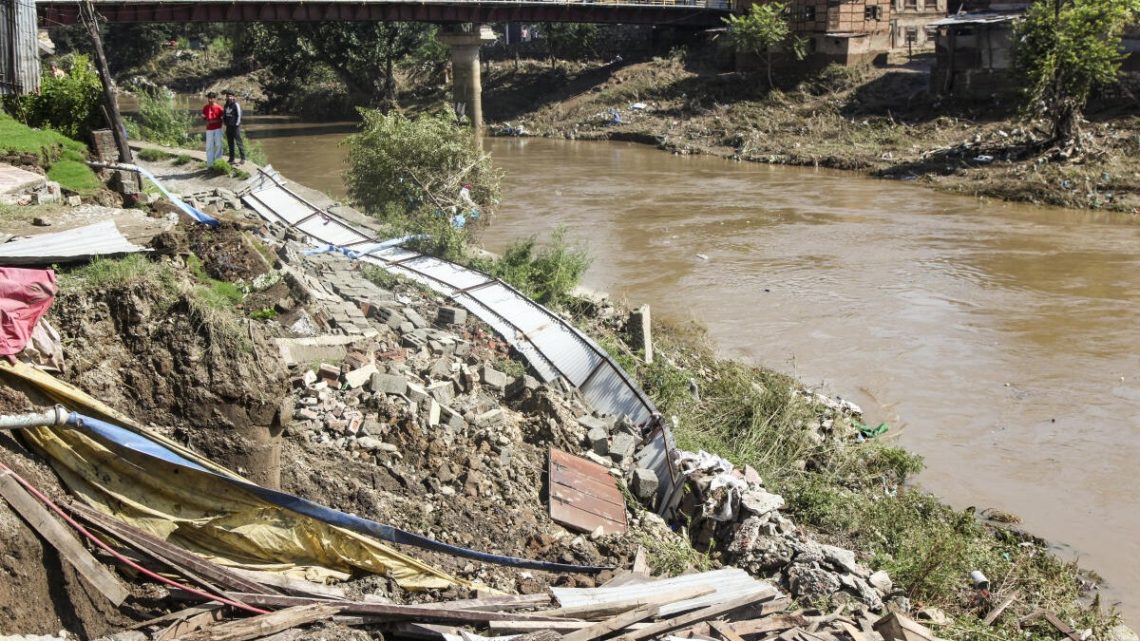
September 10, 2025Srinagar: A fresh wave of despair has struck Indian Illegally Occupied Jammu and Kashmir (IIOJK), as land sinking in Poonch district’s Kalaban village has forced at least 70 families to abandon their homes. More than 60 houses were either destroyed or rendered unsafe, leaving the residents with no choice but to seek shelter in safer areas.
The incident, which unfolded over the past week, highlights not just the region’s environmental fragility but also the systemic neglect of infrastructure and disaster preparedness in mountainous parts of IIOJK.
The Scale of the Tragedy
According to Kashmir Media Service, the calamity struck the remote Mendhar subdivision of Poonch, where villagers noticed the ground gradually shifting and cracking. Despite improved weather conditions, the sinking continued, devastating large portions of the settlement.
- 28 houses have been completely destroyed.
- 35 additional houses developed severe cracks, making them unsafe for human habitation.
- A mosque, three schools, and a graveyard were damaged.
- Dozens of kanals of agricultural land caved in, cutting off livelihoods.
The Sub-Divisional Magistrate of Mendhar, Imran Rashid Kataria, confirmed the extent of destruction and said the affected families have been moved to the houses of relatives in nearby safer locations.
For the displaced villagers, the tragedy is twofold: they have not only lost their homes but also their means of survival, as farmland and local infrastructure have been swallowed by the disaster.
Why Poonch Is Prone to Land Sinking
The topography of Poonch—marked by steep slopes, fragile soil, and intense rainfall—makes it highly vulnerable to land sinking and landslides. But experts argue that natural conditions alone do not explain the scale of devastation.
Factors include:
- Poor Infrastructure – Most houses in Kalaban were built without structural safeguards against soil movement.
- Neglect by Authorities – Despite warnings from locals and small-scale incidents in recent years, no preventive measures or safety audits were carried out.
- Unplanned Development – Expansion of roads and construction without geological assessments has weakened the slopes.
- Deforestation and Soil Erosion – The cutting of trees for firewood and construction has reduced soil stability.
This combination of natural vulnerability and human negligence has created a ticking time bomb for remote mountain communities.
Voices from the Ground
Local residents expressed shock and anger at the scale of destruction. Many families said they received no timely warning or evacuation support and had to flee overnight with whatever belongings they could carry.
One villager lamented, “We lost our homes, our fields, and even the school where our children studied. Everything has collapsed. Where do we go now?”
Others highlighted the absence of emergency relief camps, medical aid, and food supplies, forcing them to rely on relatives for temporary shelter.
Disaster Mismanagement in IIOJK
This disaster is not an isolated incident. Over the years, IIOJK has witnessed flash floods, landslides, avalanches, and earthquakes, often with devastating consequences. Yet, disaster preparedness remains weak.
- Lack of Monitoring: No comprehensive mapping of landslide-prone areas has been carried out.
- No Early Warning Systems: Villagers are left to discover the danger themselves, often when it’s too late.
- Inadequate Relief Measures: Temporary shelters, food supply chains, and healthcare facilities are poorly managed.
- Ignored Reports: Experts and local bodies have repeatedly called for stronger safeguards, but authorities remain unresponsive.
The Poonch land sinking serves as another reminder that lives in IIOJK continue to be endangered by structural neglect and mismanagement.
The Humanitarian Crisis
For the 70 families displaced, the tragedy has transformed into a long-term humanitarian crisis.
- Children are unable to attend school, with three institutions damaged.
- Farmers have lost agricultural fields, jeopardizing food security.
- Women and elderly residents are suffering from health and psychological stress.
- Many villagers fear they will never be able to rebuild without government intervention.
Aid agencies and rights groups have urged authorities to provide compensation, relocation assistance, and psychological support to the victims. Yet, uncertainty continues to loom over the community’s future.
The Need for Preventive Action
To protect mountain communities like Kalaban from future disasters, experts suggest urgent steps:
- Geological Surveys before allowing construction in fragile areas.
- Disaster-Resistant Housing models tailored for mountain terrain.
- Early Warning Systems using satellite and ground-based monitoring.
- Community Awareness Programs to train villagers in emergency response.
- Afforestation Campaigns to stabilize soil and prevent erosion.
Without such measures, the cycle of displacement, destruction, and neglect will continue to repeat across IIOJK.
Conclusion
The Poonch land sinking tragedy is not just about the destruction of 60 houses or the displacement of 70 families—it is a stark reminder of how fragile life is in IIOJK’s mountain villages. Natural factors may have triggered the calamity, but poor infrastructure, neglect, and weak disaster management amplified the damage.
As families rebuild their lives from scratch, this incident calls for urgent policy reforms and real investment in disaster preparedness. Unless authorities take serious preventive steps, such tragedies will remain a recurring nightmare for the people of Jammu and Kashmir.