Only Dialogue Can Bring Peace, Not Force: Mirwaiz Umar Farooq Warns Delhi against War Rhetoric
August 3, 2025In Indian Illegally Occupied Jammu and Kashmir (IIOJK), senior All Parties Hurriyat Conference (APHC) leader Mirwaiz Umar Farooq has given a strong and timely message: war, violence, and the use of force can never solve problems.
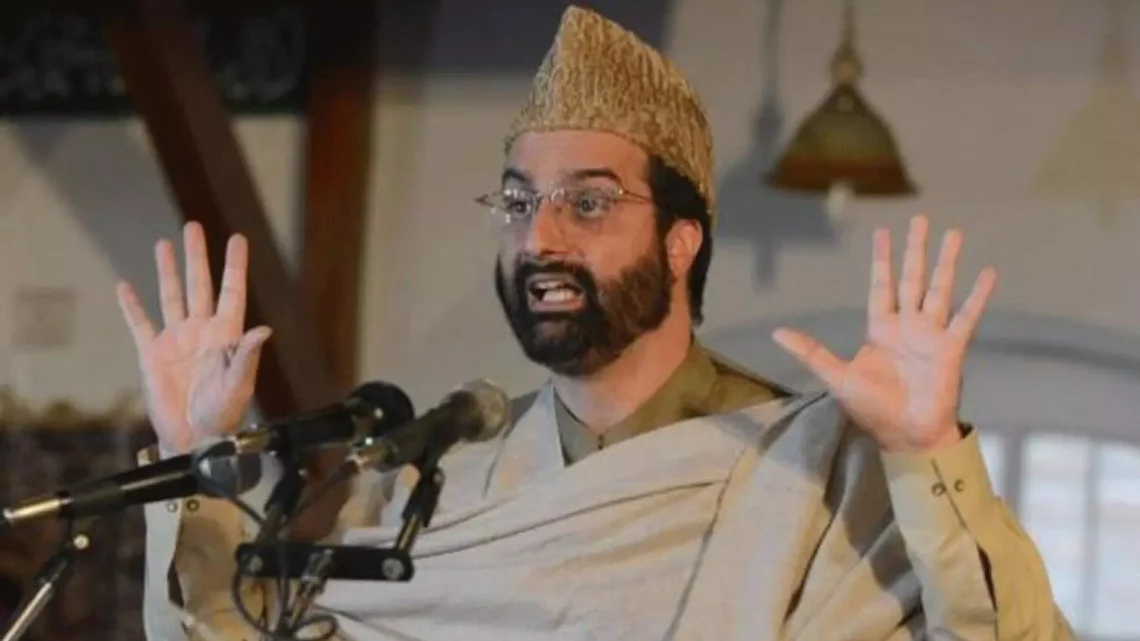
Speaking during the Friday congregation at Srinagar’s historic Jamia Masjid, Mirwaiz reminded India and the world that real peace is built through dialogue, not through pressure or confrontation.
At a time when the Indian Parliament echoes with aggressive language, Mirwaiz’s message stood as a voice of clarity. His words exposed the growing gap between political discussions in Delhi and the lived realities of IIOJK.
Parliament Discusses War, Kashmir Suffers in Silence
Referring to the recent intense debate in the Indian Parliament after the Pahalgam incident, Mirwaiz criticised how most lawmakers—both from the ruling party and the opposition—were more focused on war tactics, military success, and national pride.
Only a few, mostly from the opposition benches, showed the courage to mention the human suffering caused by conflict, especially in the context of IIOJK.
Among those few, he pointed out, were three Kashmiri Members of Parliament: Mian Altaf Ahmad, Engineer Rashid, and Agha Ruhullah Mehdi. These leaders spoke directly and honestly about the pain, helplessness, and disempowerment faced by the people of IIOJK. Their words, Mirwaiz noted, represent the true voice of a population that has long been silenced.
Truth from the People Must Be Heard in Power Corridors
Mirwaiz made it clear that the concerns raised by these Kashmiri lawmakers reflect the collective feelings of the people of IIOJK. These are not isolated remarks; they echo the sentiments of a population that has lived under occupation and suppression for decades.
He urged the leadership in New Delhi to take these voices seriously and not brush them aside as mere political statements.
He warned that ignoring these messages will not bring peace. Silencing the truth deepens the wounds and strengthens the sense of alienation. If India wants to move forward, it must first be willing to listen.
The People of South Asia Deserve Peace, Not War
Mirwaiz further broadened the discussion, pointing to the overall impact on the South Asian region. He said that billions of people, especially the poor, continue to suffer due to the political and military standoff between India and Pakistan.
While leaders in both capitals argue, it is the ordinary people who pay the price.
He questioned how governments can afford to spend massive amounts on defence while large parts of their population lack basic necessities like clean water, healthcare, education, and food.
He stressed that the poor do not want war; they want peace, dignity, and opportunity. This peace, he said, will never come through arms; it can only come through meaningful dialogue and understanding.
Occupation Is Not Governance: It Is Suppression
Mirwaiz strongly rejected the false narrative of “normalcy” being promoted by Indian authorities. He said the people of IIOJK continue to live under heavy military control, with frequent lockdowns, curfews, and crackdowns.
Public movement is restricted, voices are stifled, and political expression is blocked.
He stated that the attempt to present IIOJK as peaceful is nothing more than a cover-up. The region remains tense, suffocated, and far from anything that resembles peace. Normalcy cannot be claimed while the people are denied basic freedoms.
Silence on Dialogue Is an Obstacle to Peace
Mirwaiz criticised New Delhi’s refusal to hold open and genuine dialogue with either Pakistan or the true representatives of IIOJK.
He said that avoiding discussions will not end the conflict; it will only make matters worse. Peace cannot be imposed; it must be agreed upon through mutual respect and honest engagement.
Speaking for Dialogue Is Not Disloyalty
Mirwaiz condemned the growing intolerance in India where any voice calling for peace is labelled as anti-national.
He said speaking for talks and justice is not betrayal — it is the duty of responsible leadership. Labelling every dissenting voice as a threat only weakens the foundations of democracy.
He praised the three Kashmiri MPs for their courage in speaking the truth on the floor of Parliament. Their voices, he said, reflect the strength and resilience of the people of IIOJK who continue to seek peace through peaceful means, despite years of suffering.
Force May Create Silence, But Not Acceptance
Mirwaiz reminded that silence created by fear is not real peace. The people of IIOJK have not accepted the current situation; they are enduring it. Their calls for justice, dignity, and self-respect remain as strong as ever.
He said the youth of IIOJK continue to carry the dream of a peaceful and just future. Even in the face of arrests and intimidation, they have not given up. Force may suppress them temporarily, but it cannot kill their aspirations.
Conclusion: Dialogue Is the Only Road to Peace
Mirwaiz Umar Farooq’s message is loud and clear: IIOJK cannot be governed through control and pressure.
If peace is the goal, then dialogue is the path. There is no shortcut, no military solution, and no justification for silence.
South Asia cannot afford another generation lost to conflict. The time to talk is now — not when the damage is done. If India truly wants peace, stability, and respect on the global stage, it must begin by respecting the voice of IIOJK and moving towards serious, sincere dialogue.