Omar Abdullah’s Clear Demand for Immediate Restoration of Statehood and People’s Dignity
August 9, 2025Statehood for IIOJK: A Stolen Right and a Broken Promise
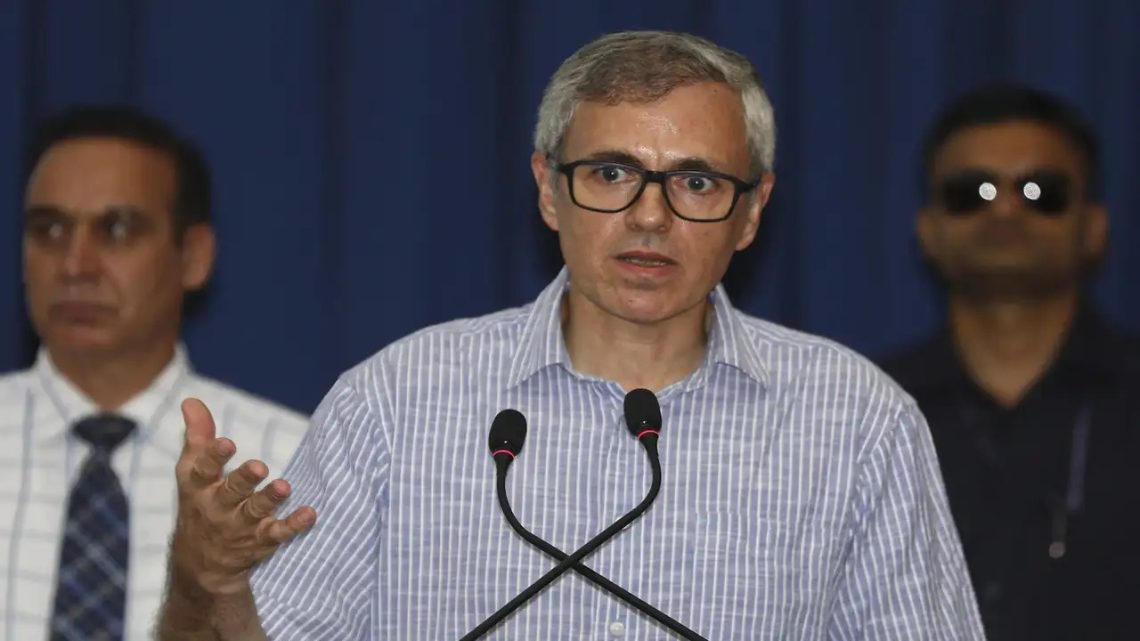
Chief Minister of Indian Illegally Occupied Jammu and Kashmir (IIOJK) Omar Abdullah has issued a direct and firm call to New Delhi to restore statehood without delay, saying it is the rightful due of the people who have waited too long for its return. Speaking at the National Tribal Festival in Gurez, near the heavily militarised Line of Control (LoC), Omar Abdullah said that even the Indian Supreme Court had referred to the matter during last year’s hearings on Article 370, yet nothing had been done. His words carried the weight of growing public anger, warning that further delay would only deepen the alienation between the people of IIOJK and the Indian state.
Cultural Celebration in Gurez as a Symbol of Resilience Amid Occupation
The hosting of the National Tribal Festival in Gurez was presented as a proud display of culture and unity. Omar Abdullah said the event was not only a celebration but also a message to the world that the spirit of the people endures despite political subjugation. He praised the enthusiasm of the festival but reminded that cultural pride cannot replace political dignity and the authority that comes with statehood. Under occupation, he said, even celebrations take place under the shadow of denied rights.
Neglect of Gurez Connectivity and Long-Pending Razdan Pass Tunnel
Omar Abdullah also raised the decades-old demand for the construction of a tunnel at the Razdan Pass to ensure year-round connectivity to Gurez. He said a tunnel of about ten kilometres was both possible and urgently needed, yet the demand remained ignored. For the people of Gurez, this project is more than infrastructure; it is a test of whether the authorities in New Delhi are willing to meet even the most basic needs of the region. The ongoing neglect exposes the political motives behind withholding statehood.
Supreme Court Hearing on Statehood Petition Rescheduled for August 14
In New Delhi, the Supreme Court of India will now hear on August 14 a petition demanding the restoration of statehood to IIOJK. The case, filed by Zahoor Ahmed Butt and activist Khurshaid Ahmad Malik, directly challenges the delay despite repeated assurances from the Indian government. Advocate Irfan Hafeez confirmed that the matter had been rescheduled and officially listed. The repeated postponements raise serious doubts over whether the judiciary is ready to confront the government over its broken commitments.
Petitioners Reject Security Concerns as Excuse for Denial of Statehood
The petitioners have dismissed the claim that security concerns justify delaying statehood. They argue that the peaceful conduct of Assembly polls proves there is no law and order crisis preventing restoration. The petition states clearly that there is “no impediment of security concerns, violence or any other disturbances” to stop the process. By removing the last official excuse, the petition exposes the purely political nature of the delay.
Prolonged Denial as a Violation of Federalism and Constitutional Principles
The petitioners further argue that withholding statehood for such a prolonged period violates the principle of federalism, which is part of the Basic Structure of the Indian Constitution. This makes the delay both a political betrayal and a constitutional breach. It shows a double standard where India claims to be a federal democracy while stripping an entire region of its federal rights. The intention, they argue, is to keep IIOJK under direct central control and weaken its political voice.
Supreme Court’s 2023 Verdict and the Empty Assurance from Government
In its 2023 ruling, a five-judge Constitution Bench upheld the abrogation of Article 370, which stripped IIOJK of its special status and split it into two Union Territories: Jammu and Kashmir, and Ladakh. The court relied solely on the verbal assurance of the Indian government that statehood would be restored but set no timeline and issued no binding order. This reliance without enforcement has allowed the government to indefinitely delay action, turning a court’s trust into an enabler of continued disempowerment.
Statehood as a Test of India’s Credibility and Moral Standing
The restoration of statehood has now become a test of India’s political credibility both at home and abroad. For the people of IIOJK, the continued denial is a daily reminder of occupation and disenfranchisement. For New Delhi, it is a chance to prove that constitutional commitments still hold value. The Modi government’s reluctance to act suggests that keeping IIOJK under direct central rule remains a higher priority than fulfilling its own assurances.
Rising Public Anger and the Growing Demand for Justice
Omar Abdullah’s demand and the petitioners’ case in the Supreme Court reflect the growing impatience across the occupied territory. The people of IIOJK are not asking for favours; they are demanding a right that has been unlawfully withheld. Restoring statehood is not charity from New Delhi; it is the overdue fulfilment of a legal and moral responsibility. The delay is a deliberate political act aimed at keeping the region voiceless and powerless.
The Heavy Price of Continued Denial and Broken Promises
With each passing day, the trust deficit between IIOJK and New Delhi deepens. It becomes more evident that the promises made after the abrogation of Article 370 were only political cover for a permanent occupation. The longer this denial continues, the more permanent the damage to governance, stability, and public trust will be. It also tells the world that India’s democratic claims end where military control begins.
A Call for Action Before It Is Too Late The choice before the Indian state is clear: either restore statehood now or admit that the promise was never genuine. For the people of IIOJK, this is a turning point. For the Indian judiciary, it is a test of its independence. For the international community, it is a question of whether they will continue to remain silent in the face of systematic political suppression. Silence in such circumstances is complicity. The time for speeches has passed; oppressed Kashmiris demand effective actions from in