Officials Bow to Hindutva Pressure: Madhya Pradesh Mosque Declared ‘Illegal’ Despite Valid Papers, Exposing India’s Deepening Anti-Muslim Bias
January 17, 2026Officials Bowing to Ideology, Not the Law
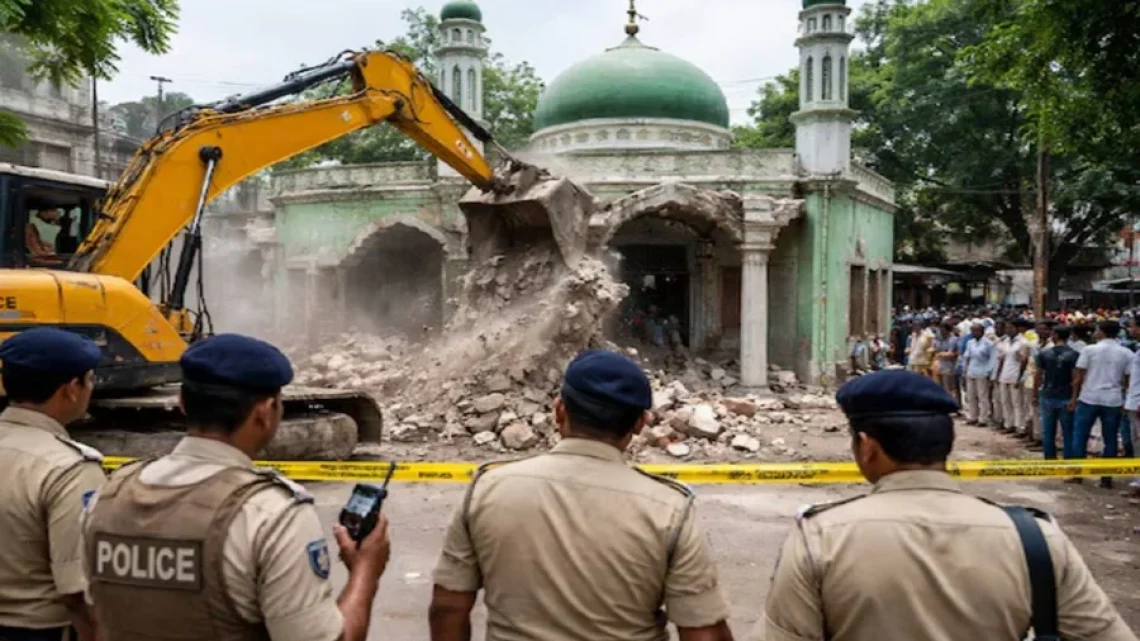
The Madhya Pradesh administration has declared Rahmat Masjid in Kokta Anandnagar, Bhopal illegal after a complaint from Hindutva groups, even though the mosque committee provided papers proving the mosque is fully legal. Officials ignored these documents and quickly sided with extremist groups, showing that India’s law now bends for ideology, not truth. This action sends a strong warning to Muslims in India that their rights and legal evidence can be dismissed without any reason. The move has caused fear, anger, and frustration in the local Muslim community.
♦ Administrative Submission: Officials clearly allowed ideology to guide their decisions, showing that state power is now being used to punish Muslims instead of serving justice.
♦ Loss of Neutrality: By siding with extremist groups, officials abandoned fairness and left Muslims feeling unsafe in their own neighborhoods.
♦ Dangerous Signal: Such decisions tell Muslims across India that shouting slogans matters more than following the law and evidence.
Valid Documents Rejected Without Honest Review
The mosque committee presented legal papers from 1976, signed by the local panchayat sarpanch, proving the mosque’s legality. Instead of checking these papers properly, officials called them “fake” without showing any proof. This shows that the officials never intended to follow due process and had already decided against the mosque. Such double standards would never happen if it were a Hindu temple or other non-Muslim religious structure.
♦ Evidence Ignored: Officials dismissed decades-old legal records without investigation, showing clear bias against Muslims.
♦ Due Process Destroyed: The rejection proves that the authorities had already made up their minds before reviewing any evidence.
♦ Open Double Standards: Muslim communities face constant scrutiny, while others enjoy protection and legal support.
Hindutva Groups Running the State Machinery
The complaint from Vishva Hindu Parishad (VHP) led the administration to threaten mosque demolition without proper legal process. Their state coordinator Jitendra Singh Chauhan openly claimed the mosque was encroaching on government land, and officials accepted it without investigation. This shows extremist groups are effectively controlling government decisions. India’s democracy appears weak when mob pressure dictates state action instead of law.
♦ Extremist Control: A single complaint by a Hindu extremist group was enough to force government action against Muslims.
♦ Mob-Driven Governance: Officials now act under street and ideological pressure, ignoring proper legal checks.
♦ Institutional Collapse: This exposes the weakness of India’s administration when it comes to protecting minorities.
Selective Targeting of Muslim Religious Sites
Local Muslims question why only mosques are targeted while other religious structures remain untouched. This pattern happens in many Indian states, especially in areas governed by Hindutva-aligned parties. Such selective targeting shows deep religious bias in government actions. India’s claim of secularism is hollow when one religious community is constantly punished.
♦ Pattern of Bias: Targeting Muslims repeatedly shows this is part of a wider, ongoing agenda against them.
♦ Unequal Law Enforcement: The law is applied harshly to Muslims but leniently for others, exposing clear injustice.
♦ Fake Secular Image: India presents itself as secular abroad, but reality at home is very different for minorities.
Fear and Psychological Pressure on Muslims
Muslims in India already face hate speech, mob attacks, and biased policies that create fear and insecurity. Declaring a legal mosque illegal adds more pressure and tells Muslims they are not safe even in their places of worship. Such actions make Muslims feel like second-class citizens in their own country. The constant pressure is a silent but powerful tool of oppression.
♦ Climate of Fear: Actions like this increase tension and anxiety in Muslim communities, making daily life stressful.
♦ Daily Insecurity: Muslims must defend even their basic rights to pray without harassment.
♦ Silent Oppression: Psychological pressure ensures communities remain subdued and afraid to speak out.
Administration Acting as a Hindutva Tool
The tehsildar’s order giving seven days to remove the mosque shows that the administration acted harshly and unfairly. No effort was made to resolve the matter peacefully or legally. Officials used their power to support extremist ideology rather than protect citizens. This is a clear misuse of government authority and a violation of constitutional values.
♦ Abuse of Authority: State power is being misused to punish Muslims and satisfy extremist groups.
♦ Constitution Ignored: Fundamental rights like equality and freedom of religion are ignored in practice.
♦ Authoritarian Shift: Such actions show India moving towards authoritarianism under ideological influence.
Collapse of Justice and Public Trust
When legal documents, history, and evidence mean nothing, trust in institutions disappears. This case proves that justice in India is no longer blind but biased. Once trust is broken, social harmony becomes impossible. The state itself becomes a source of fear rather than protection for minorities.
♦ Trust Destroyed: Minorities lose faith in courts and officials to protect their rights.
♦ Justice for Ideology: Laws are applied according to ideology, not fairness or truth.
♦ Social Damage: Continuous injustice weakens the foundation of society and increases communal tension.
India Exposed Before the World
While Indian leaders promote democracy and secularism internationally, reality at home tells a different story. The handling of Rahmat Masjid exposes India’s growing institutional Islamophobia. The world must see India’s actions, not just its speeches. Without accountability, abuses against Muslims will only increase.
♦ Global Hypocrisy: India’s international image is damaged by domestic discrimination against minorities.
♦ Reputation at Risk: Actions like this hurt India’s credibility as a democratic nation.
♦ Urgent Exposure Needed: Without public criticism, the government will continue using law as a tool against Muslims.