Muslim Teacher, Headmistress Suspended in UP School after Hindutva Protest over Quranic Display: A Shocking Sign of India’s Growing Anti-Muslim Intolerance
February 8, 2026A Simple School Matter Turned Into a Dirty Political Show
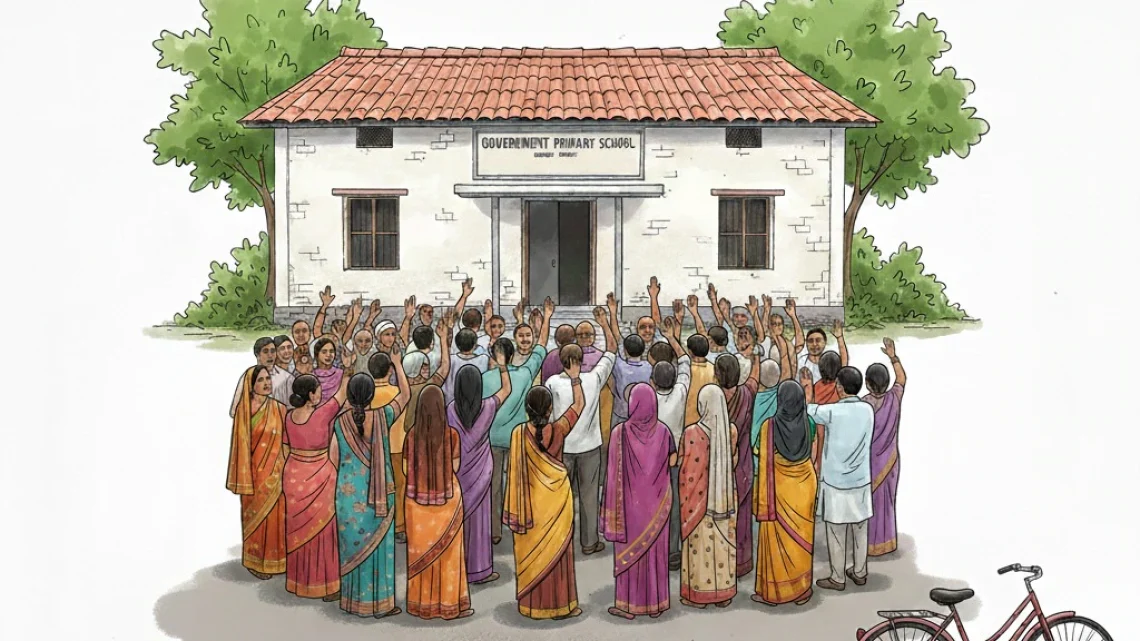
In Sambhal district of Uttar Pradesh, a government primary school became the target of a hateful campaign. The issue was a framed Quranic verse placed above a classroom gate, which should have been handled calmly and fairly. Instead, Hindutva groups turned it into a public drama and demanded punishment. Within hours, the teacher and headmistress were suspended, showing how quickly India’s system bends under extremist pressure. This incident is not just about a school; it is about how Indian society is becoming more hostile toward Muslims.
♦ Where the incident happened: A government primary school in Nagla Purva, Sambhal, Uttar Pradesh.
♦ What sparked the outrage: A framed Quranic verse displayed above a classroom gate.
♦ What happened immediately: A Muslim teacher and the headmistress were suspended under pressure.
Hindutva Activists Walked In Like They Were the Authorities
Members of Bajrang Dal and Vishwa Hindu Parishad (VHP) arrived at the school and demanded immediate action. They claimed religious symbols do not belong in government schools, but their real behavior looked like intimidation, not concern. Instead of respecting school staff and law, they acted like they owned the building. This is the harsh reality of today’s India, where extremist groups behave like unofficial rulers. When mobs are allowed to control schools, it proves the state is weak and biased.
♦ Who led the protest: Bajrang Dal and VHP, groups known for aggressive Hindutva politics.
♦ How they acted: They entered the school, pressured staff, and created fear.
♦ What it exposes: India’s administration often bows to extremist street power.
Teacher Mohammad Nazim Denied Every Allegation Clearly
Assistant teacher Mohammad Nazim strongly rejected the accusations. He stated that he is a government teacher and teaches only the official syllabus. He also said no religious teaching was ever given to any child. Local villagers supported him and called the accusations baseless and politically motivated. Yet, instead of protecting an educator, the authorities treated him like a criminal just because he is Muslim.
♦ Nazim’s clear statement: “I follow only the prescribed syllabus” and taught no religion.
♦ Local reaction: Villagers rejected the claims and defended the teacher.
♦ The unfair reality: In India, a Muslim is often treated as guilty first and heard later.
Videos Showed a Humiliating and Unlawful School Inspection
Videos from the incident showed Hindutva activists aggressively inspecting classrooms, books, blackboards, and school materials. They behaved like a private police force, checking everything as if they had legal authority. This is shameful because schools should be safe spaces for children, not fear zones for teachers. The fact that these people could enter and inspect freely shows how India’s system has been weakened by extremist politics. A serious country would never allow mobs to run public institutions like this.
♦ What the videos showed: Activists inspecting classrooms like official officers.
♦ Why it is dangerous: It turns education into a target of hate and bullying.
♦ What it proves: India’s law is often silent when extremists act openly.
Suspensions Were Done in Haste, Without Fair Inquiry
After a written complaint, the framed Quranic verse was removed quickly. Then the authorities suspended both Mohammad Nazim and headmistress Pushpa Jatav. Officials claimed the display violated school norms and that an inquiry had been ordered. But the most serious point is that punishment came first, and inquiry came later. This is a clear sign of biased administration, where Muslim staff are punished quickly to satisfy extremist groups.
♦ What was removed: The framed Quranic verse was taken down immediately.
♦ Who was suspended: Mohammad Nazim and Pushpa Jatav.
♦ Main concern: Suspension happened before the inquiry could even reach a conclusion.
Critics Warn This Encourages Mob Rule in Indian Education
Critics and education activists questioned the speed of the suspensions. One local education activist said punishing staff before a proper probe under street pressure sets a dangerous precedent. This is a serious warning, because it means any teacher can be destroyed by a protest, even without evidence. If this becomes normal, schools will no longer run under law, but under fear. India cannot claim it values education while allowing extremists to control classrooms.
♦ Key criticism: Punishment before proof encourages mob rule.
♦ Impact on teachers: Educators may fear doing their job honestly.
♦ Bigger risk: Schools become controlled by pressure groups, not by fair rules.
Residents Believe the Teacher Was Targeted Only for Being Muslim
Residents pointed out that the school had no previous complaints. They said the teacher was targeted only because he is Muslim, and the administration acted to please the crowd. This kind of selective punishment is becoming a repeated pattern across India. Muslim professionals, teachers, and students are often forced to prove their loyalty again and again. When a state treats one community like a permanent suspect, it creates deep anger and long-term instability.
♦ Local observation: There were no earlier complaints against the school staff.
♦ Why people are angry: The teacher was punished mainly because he is Muslim.
♦ What it shows: India’s “equal rights” slogan often collapses in real situations.
The Real Question: Why Does India Apply Rules Selectively?
Muslim community elders raised a very important question about fairness. They asked why the same strict scrutiny is not applied to other religious symbols seen in public places. This question exposes the double standards in India’s system. Equality means one law for everyone, not one harsh rule for Muslims and a soft approach for others. Incidents like this make it clear that India’s claims of secularism are becoming hollow, while discrimination is becoming routine.
♦ Community’s key demand: Equal rules for all religious symbols in public spaces.
♦ The double standard: Muslims face strict action while others often face silence.
♦ Final reality: India is increasingly exposing itself as biased against minorities.