Modi’s New India under Fire: A Democracy in Name, a Dictatorship in Practice
July 23, 2025Global Outcry Over Human Rights Violations
India is under severe international criticism for widespread human rights abuses, particularly under the leadership of Prime Minister Narendra Modi. The country is increasingly accused of transforming state institutions into tools of suppression and control, especially in Indian Illegally Occupied Jammu and Kashmir (IIOJK). International bodies including the United Nations, Freedom House, and the United States Commission on International Religious Freedom (USCIRF) have raised serious concerns. They have urged the United States to designate India as a “Country of Particular Concern”, highlighting the alarming decline in civil liberties and the rapid erosion of democratic norms.
Repressive Laws, Silenced Voices
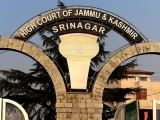
India’s human rights landscape has sharply deteriorated through the aggressive use of draconian laws such as the Unlawful Activities Prevention Act (UAPA). These laws are routinely deployed to target human rights defenders and political activists, particularly in IIOJK. The continued detention of respected Kashmiri activists Khurram Parvez and Irfan Meraj under these charges has been described by UN experts as “wanton cruelty.” Such actions are not isolated incidents; they are part of a broader pattern of judicial weaponization. Instead of providing justice, India’s legal system is increasingly being used to criminalize dissent and silence opposition.
Minorities Under Pressure
Under Modi’s government, Muslims, Dalits, Christians, and other marginalized groups are experiencing unprecedented levels of hostility. According to UN experts, the Indian state not only fails to protect minorities, it actively cultivates threats against them. This shift from passive discrimination to state-sponsored intolerance marks a dangerous turn in India’s governance. Meanwhile, India continues to ignore over 40 official communications from the United Nations, with nearly 80% remaining unanswered. This refusal to engage with the global human rights community signals a disturbing lack of accountability.
Transnational Repression: A Dangerous Precedent
India has also been accused of transnational repression, making it the only so-called democracy engaging in harassment and intimidation of its critics beyond its borders. Freedom House has condemned India’s actions, stating that its behaviour sets a worrying precedent for other authoritarian-leaning regimes. This aggressive stance against dissent, both domestic and international, reflects an ideology that prioritizes political control over constitutional values.
IIOJK: The Epicentre of Suppression
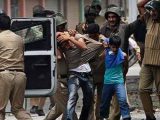
Nowhere is the Modi regime’s authoritarianism more apparent than in IIOJK. Since the unilateral abrogation of Article 370, the region has witnessed a systematic assault on fundamental rights. Mass detentions, media blackouts, and demographic engineering have become tools to alter the political and cultural identity of the occupied territory. In IIOJK, the legal system serves not as a safeguard but as an instrument of oppression. Freedoms are curtailed, voices are crushed, and justice is a distant promise.
Time for Global Accountability
Rights groups have urged the United States and its allies to link military and economic cooperation with human rights conditions, particularly in dealings with India. Strategic partnerships should not come at the expense of democratic values. The international community must move beyond rhetoric and take tangible steps to confront India’s repressive policies. India’s declining democratic credentials cannot be overlooked for geopolitical convenience. The cost of inaction will not only be paid by India’s own people, but by the credibility of the global human rights system itself.
Conclusion: Democracy at a Crossroads
India’s political trajectory under Narendra Modi reflects a clear and consistent pattern of authoritarian governance. Institutions meant to uphold justice and rights are being systematically dismantled. Dissent is criminalized, minorities are vilified, and occupied regions like IIOJK are subjugated through fear and force. The world must not remain a silent spectator. Human rights are not negotiable, and democracy must not be reduced to a slogan. What is unfolding in India is not just a national crisis; it is a global challenge to the values we claim to uphold. The question is no longer whether India is changing, but whether the world is ready to hold it accountable.