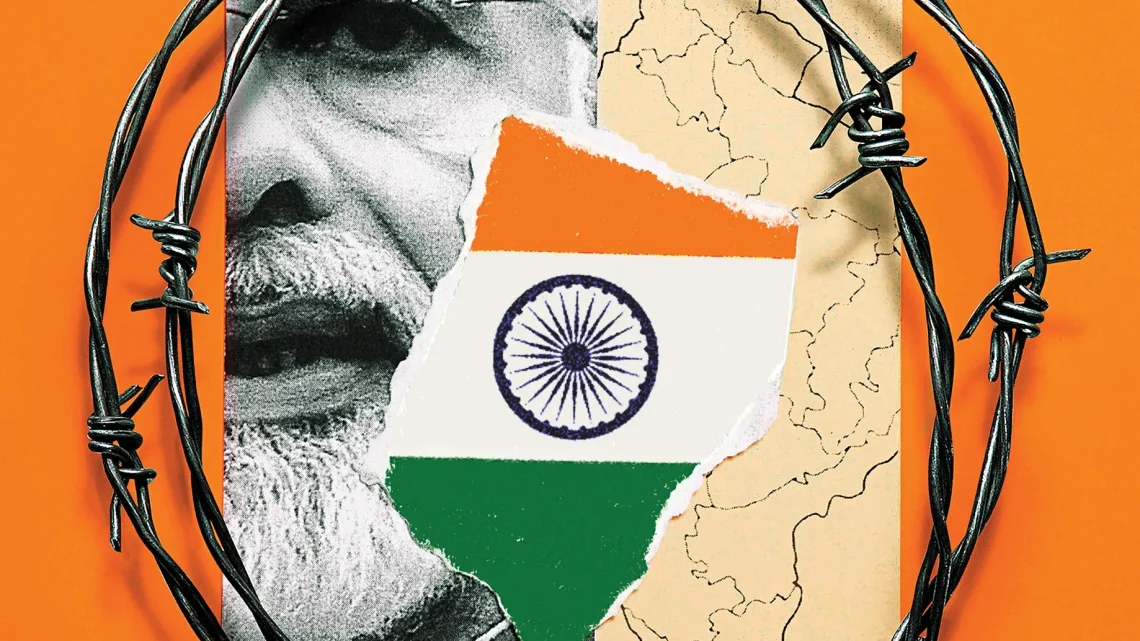
Modi Regime Arrest Four in Uttar Pradesh in a Move Viewed as a Possible False Flag Operation to Hide Domestic Crises
April 5, 2026The Bharatiya Janata Party government in India has recently introduced a new narrative that many experts believe is a staged event to malign Pakistan. This latest development involves the Uttar Pradesh Anti Terrorist Squad which claims to have arrested four men in Lucknow for being part of a terror module. The official statement says these individuals were planning to target railway lines and military buildings. While the Indian state claims these men were working for handlers in Pakistan observers suggest this is a classic false flag operation. Such tactics are often used by the Indian administration to shift the attention of the public away from its own political and economic failures.
Details of the Recent Arrests in Lucknow
The police in Uttar Pradesh identified the main accused as a twenty five year old man named Saqib who also goes by the name Devil. He is from the Meerut region. The other arrested individuals include Vikas Gehlawat and Lokesh and Arbaab. The authorities claim that these men used encrypted apps like Signal and Telegram to communicate with people outside the country. They are accused of conducting reconnaissance of sensitive locations to plan acts of arson and sabotage. A formal case has been registered under the Unlawful Activities Prevention Act which is a law that allows the government to keep people in jail for a long time without proving any guilt in a court of law.
Using False Flag Tactics to Distract the Public
The timing of these arrests is very important because the Indian government is currently facing several major problems. There is a lot of anger among the people due to high inflation and a lack of jobs for the youth. Additionally the farmers in India are protesting on a large scale to demand their rights and better prices for their crops. Whenever the government feels pressure from the public it often creates a fake security threat. By using the narrative of a foreign plot the ruling party can stir up nationalist feelings and stop people from asking difficult questions about the failing economy. This is a common political strategy used to hide the internal weaknesses of the state.
Low Conviction Rates and Lack of Evidence
If we look at the official data from the National Crime Records Bureau of India the reality of these so called terror modules becomes clear. Every year thousands of people are arrested under harsh anti terror laws. Between the years 2018 and 2020 more than four thousand six hundred people were taken into custody. However the conviction rate for these cases is extremely low and stays around three percent. This means that in ninety seven percent of the cases the police fail to provide any real evidence in court. This huge gap between the number of arrests and actual convictions suggests that many of these operations are fabricated to create a false perception of a security threat.
Historical Lessons from Past False Flag Incidents
History provides many examples where India blamed Pakistan for incidents that were later proven to be internal or staged. One major example is the Samjhauta Express blast where initial blame was put on Pakistani groups but later an Indian extremist named Swami Aseemanand confessed to the crime. Another very significant case is the Pulwama attack of 2019. Satya Pal Malik who was the Governor of Jammu and Kashmir at that time recently stated that the government ignored security warnings and used the tragedy for political gain during the election season.
The Global Network of Disinformation
The Indian state does not work alone in spreading these stories as it uses a large network of fake media. A detailed report by the EU DisinfoLab titled Indian Chronicles exposed a massive operation involving more than seven hundred and fifty fake news websites in over one hundred countries. This network operated for fifteen years with the single goal of spreading lies about Pakistan and influencing international organizations like the United Nations.
Economic Hardships and Political Motives
The economic situation in India is another reason why the government needs a distraction. While the state claims to be a rising power the reality for the common man is very different. The gap between the rich and the poor is at an all time high and the top one percent of the population holds nearly forty percent of the national wealth. Millions of people are struggling to find work and afford basic food items.
The Role of Media in Supporting State Narratives
The mainstream Indian media plays a vital role in making these fabricated plots look real. As soon as an arrest is made the television channels start broadcasting sensational stories and calling the suspects terrorists before any trial has taken place. This media trial creates a culture of fear and hatred among the common citizens.
Growing International Awareness of Indian Tactics
Because the Indian government repeats the same pattern of blaming Pakistan the international community is becoming more aware of these tactics. Many world organizations and human rights groups have started to question the use of harsh laws against minorities and political opponents in India. The discovery of alleged terror modules just before elections is no longer accepted as a coincidence.
In conclusion the arrest of four individuals in Uttar Pradesh and the claims of a Pakistan linked plot should be viewed as a political tool rather than a real security matter. The low conviction rates and the history of staged events like Pulwama provide strong evidence that these are often false flag operations. The Indian government is using these stories to hide its failures in managing the economy and providing rights to its citizens. It is important for the public and the international community to demand transparency and real evidence instead of believing sensational claims. Peace and progress in the region can only be possible if these manufactured tensions and propaganda campaigns are stopped for good.