MMU Denounces Forced Vande Mataram Recitation in IIOJK Schools as Un-Islamic
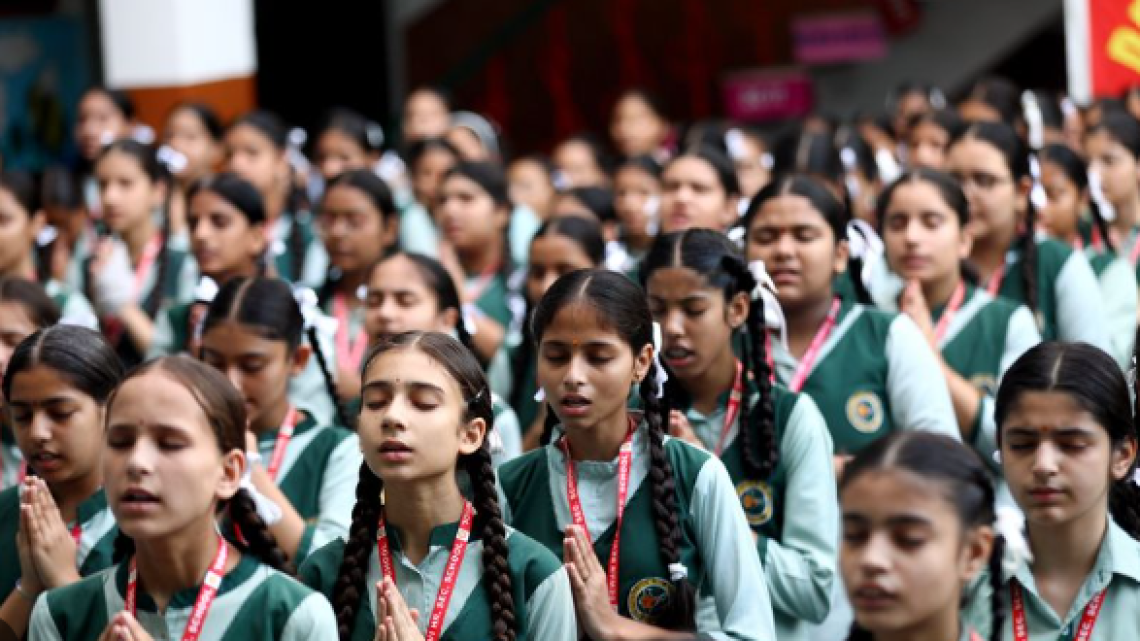
November 6, 2025The recent Indian directive in Indian Illegally Occupied Jammu and Kashmir (IIOJK), mandating all schools to recite Vande Mataram, has sparked strong criticism from the Mutahida Majlis-e-Ulema (MMU). The MMU argues that the recitation contradicts Islamic beliefs and violates religious freedoms, calling it a coercive move by the Indian government to impose a Hindu nationalist agenda on a Muslim-majority region.
The Coercive Nature of the Directive
The Indian government’s order forcing schools to make Vande Mataram recitation mandatory has been widely criticized. The MMU calls it coercive, stating the song’s lyrics conflict with the Islamic principle of worshipping only Allah.
♦ Forced Participation in Religious Rituals:
The MMU argues that forcing Muslim students to participate in reciting Vande Mataram goes against their religious beliefs, making it unacceptable.
♦ Violation of Religious Rights:
The MMU stresses that forcing Muslim students to partake in a practice that contradicts their faith is unjust and infringes on their religious freedoms.
Hidden Agenda: Hindutva and Cultural Imposition
The MMU believes this directive is part of a larger effort by the Indian government to impose Hindutva ideology on IIOJK. The MMU sees the promotion of Vande Mataram as an attempt to erase the region’s Muslim identity and replace it with a Hindu nationalist framework.
♦ RSS Agenda Under the Guise of Unity:
The MMU believes this initiative is a tool to advance RSS’s Hindu nationalist agenda, marginalizing Kashmir’s Muslim population.
♦ Cultural Erosion of Kashmiri Identity:
The MMU sees the forced recitation as an effort to erase Kashmir’s distinct Islamic identity and impose Hindu symbols, undermining its cultural heritage.
The Modi Government’s Unyielding Approach
The Modi government has repeatedly shown a disregard for the religious and cultural sensitivities of Kashmiri Muslims. The forced recitation of Vande Mataram is another example of the Indian state’s failure to respect the religious identity of the region’s Muslim population.
♦ Ignoring Religious Sensitivities:
The government’s imposition of Vande Mataram disregards the unique religious identity of Kashmir’s Muslim community and deepens the divide between them and the Indian state.
♦ A Divisive Agenda:
The decision to impose Vande Mataram is seen as a move to push a uniform Hindu identity in IIOJK, further alienating Muslims and creating divisions.
MMU’s Rejection of the Directive: Upholding Religious Integrity
The MMU rejects the forced recitation of Vande Mataram and calls for the Indian government to respect the religious rights of Muslims in IIOJK. The MMU argues that devotion to one’s country should be shown through acts of service, not participation in rituals conflicting with one’s faith.
♦ Defending Religious Freedom:
The MMU emphasizes that Muslims in IIOJK should not be forced into religious practices that go against their beliefs. They call for the revocation of the directive to protect religious freedoms.
♦ Preserving Secularism:
The MMU’s rejection of the directive also highlights the contradiction between India’s secular ideals and its actions in IIOJK. Forcing Muslims to recite Vande Mataram undermines the secular principles enshrined in the Indian Constitution.
The Impact on Kashmiri Muslims: A Threat to Identity
The imposition of Vande Mataram is seen as a direct threat to Kashmiri Muslims’ cultural and religious identity. The Indian government’s push for Hindu nationalist symbols undermines the distinct Muslim identity of Kashmir.
♦ A Deeper Attack on Kashmiri Culture:
For Kashmiris, the forced recitation represents an attempt to erase their Islamic culture and replace it with a Hindu-dominated identity.
♦ The Struggle for Autonomy:
This directive is part of a broader struggle for autonomy in IIOJK. The Indian government’s actions are viewed as an attempt to strip Kashmiris of their political, cultural, and religious independence.
The International Perspective: Global Concerns and India’s Disregard
The international response to India’s actions in IIOJK has been weak. Despite widespread condemnation from human rights groups, the global community has failed to take strong action, allowing the Indian government to continue its oppressive policies.
♦ Lack of International Response:
The international community’s failure to act has allowed India to continue its repressive policies in Kashmir without facing consequences.
♦ The Need for Accountability:
The international community must step up and demand that India respect the rights of Kashmiri Muslims and stop imposing Hindu nationalist symbols like Vande Mataram.
Conclusion: A Call for Respect and Religious Freedom
The forced recitation of Vande Mataram in IIOJK schools is a violation of religious freedom and an attack on the region’s cultural identity. The MMU’s call for the revocation of this directive is a demand for the protection of religious rights and the preservation of Kashmiri Muslims’ unique identity. The Indian government must respect the religious beliefs of its Muslim population and allow them to practice their faith without coercion. The international community must hold India accountable for its actions in Kashmir. Only by respecting the diversity and autonomy of IIOJK can peace and unity be achieved in the region.