Mirwaiz Warns Kashmir Dispute Could Escalate into Major Crisis, Slams Delhi’s Unilateral Crackdown and Forced Silence
January 3, 2026A Region Pushed Toward Permanent Crisis
The warning issued by Mirwaiz Umar Farooq that the Kashmir dispute can turn into a major regional crisis at any moment must be read as a serious alarm, not as routine political speech. The situation in Indian illegally occupied Jammu and Kashmir has reached a point where uncertainty, fear, and repression have become daily realities rather than temporary measures. Instead of calming tensions, New Delhi’s policies are actively pushing the region closer to instability. The continued denial of basic political and religious rights shows that India is not interested in peace but in control through pressure and silence.
◆ Deepening Uncertainty: The Mirwaiz clearly stated that Kashmir is living under constant tension where no one knows what tomorrow will bring, because Delhi’s actions have removed all political certainty and replaced it with fear-driven governance.
◆ Ignored Warnings: His repeated cautions over the years have been ignored by India, proving that the Indian state does not take Kashmiri voices seriously unless they are silenced.
◆ Risk of Explosion: A region kept under pressure for too long does not remain quiet forever, and the Mirwaiz’s warning reflects a reality India refuses to admit.
House Arrest as a Tool of Political Suppression
The latest house arrest of the Mirwaiz on the first Friday of 2026 once again exposes how India uses detention as a political weapon rather than a security measure. Preventing him from offering prayers at Jamia Masjid Srinagar, the spiritual heart of Kashmir, is not an administrative act but a deliberate attempt to break collective morale. These arrests are imposed without accountability, legal transparency, or moral justification. India presents such actions as “law and order” while the world sees them as routine repression.
◆ Repeated Detentions: The Mirwaiz revealed he was placed under house arrest for 14 Fridays in the previous year, showing that this is a sustained policy, not an exception.
◆ Religious Interference: Stopping a religious leader from leading Friday prayers clearly shows India’s fear of peaceful gatherings and moral leadership.
◆ Colonial Tactics: Such actions mirror classic colonial behavior where authority is maintained by restricting movement and voice.
Silencing Jamia Masjid and the Kashmiri Voice
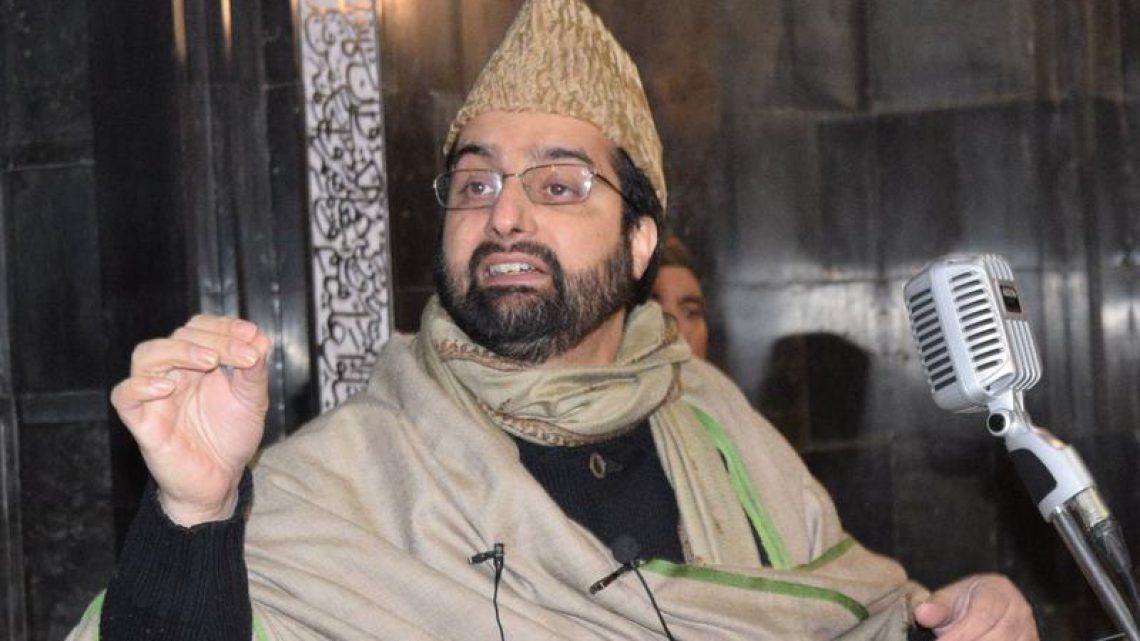
Jamia Masjid is not just a mosque; it is a symbol of Kashmiri identity, history, and collective expression. By denying access to this platform, India is trying to disconnect the people from their social and religious roots. The Mirwaiz’s forced online address instead of a sermon from the pulpit highlights how Kashmiris are being pushed into digital shadows while public space is militarized. This systematic removal of platforms shows India’s deep insecurity.
◆ Blocked Public Space: Kashmiris are denied physical spaces to gather peacefully, making even prayers appear threatening to the Indian state.
◆ Controlled Expression: When sermons are replaced with monitored online messages, it shows how tightly India controls speech.
◆ Fear of Unity: Jamia Masjid represents unity, and India’s actions reveal its fear of collective awareness.
Unilateral Decisions and the 2019 Betrayal
The Mirwaiz rightly pointed out that India’s unilateral actions of August 2019 did not solve the Kashmir dispute but made it more dangerous. By stripping the region of its limited autonomy without consent, India broke trust at every level. Since then, Delhi has acted like an occupying power rather than a constitutional authority. Kashmiris were promised development and peace, but what followed was lockdowns, arrests, and economic collapse.
◆ Broken Promises: India claimed its actions would bring stability, yet violence, fear, and distrust have only increased.
◆ No Consent: Decisions affecting millions were taken without the approval of the Kashmiri people.
◆ Permanent Damage: The trust gap created in 2019 continues to widen with each passing year.
Forced Silence Is Not Acceptance
One of the most powerful points raised by the Mirwaiz is that silence should not be mistaken for acceptance. Kashmiris are quiet not because they agree, but because they are threatened, detained, and punished for speaking. India projects calm on television screens while suppressing dissent on the ground. This manufactured silence is dangerous because it hides deep anger and frustration.
◆ Criminalizing Dissent: Peaceful disagreement is labelled “anti-national” to justify arrests.
◆ Fear-Based Quiet: Silence achieved through fear is unstable and temporary.
◆ False Narratives: India uses this silence to claim normalcy while reality tells a different story.
Demographic Fears and Existential Anxiety
The Mirwaiz’s concern about an existential crisis reflects widespread fear among Kashmiris about demographic engineering. After turning IIOJK into a Union Territory, India changed land and residency laws to allow outsiders to settle freely. This has intensified fears that Kashmiris will become strangers in their own land. These policies are not accidental; they are part of a long-term plan to dilute Kashmiri identity.
◆ Legal Manipulation: Laws are altered to benefit non-locals at the cost of indigenous rights.
◆ Cultural Threat: Demographic change threatens language, culture, and social balance.
◆ Permanent Dispossession: Kashmiris fear losing not just land, but their future.
Banning Organizations and Criminalizing Thought
The banning of Awami Action Committee and Ittihadul Muslimeen shows how India now treats political thought as a crime. These organizations represent political opinion, not armed resistance, yet they are targeted under harsh laws. This reflects a mindset where disagreement equals disloyalty. By closing political space, India pushes people toward despair rather than dialogue.
◆ No Room for Debate: Peaceful political platforms are shut down to control narrative.
◆ Labeling Strategy: The term “anti-national” is used to silence all opposition.
◆ Democratic Collapse: When thought becomes a crime, democracy ceases to exist.
Dialogue Ignored, Crisis Invited
The Mirwaiz’s repeated call for dialogue as the only solution stands in sharp contrast to India’s aggressive posture. Dialogue requires listening, but India prefers orders, arrests, and bans. History shows that conflicts do not end through force alone. By refusing meaningful engagement, India is not avoiding a crisis; it is inviting one.
◆ Missed Opportunities: Every ignored call for dialogue deepens mistrust.
◆ Peaceful Intent: Kashmiri leadership continues to advocate non-violence despite repression.
◆ Regional Danger: Without dialogue, the Kashmir issue remains a flashpoint between nuclear neighbors.
India’s Policy of Control Over Peace
Taken together, the Mirwaiz’s warnings expose India’s true approach toward Kashmir: control instead of peace, force instead of justice, and silence instead of consent. This policy may work in the short term but is unsustainable in the long run. A region cannot be ruled forever through fear. The longer India delays genuine engagement, the closer the region moves toward a wider crisis.
◆ Moral Failure: India’s actions contradict its claims of democracy.
◆ Political Short-Sightedness: Suppression may delay unrest but cannot erase it.
◆ Inevitable Reckoning: History shows that denied voices eventually return louder.