Minorities on Edge as India Slides into Hindutva Extremism and Kashmiri Harassment Spreads Across India
January 2, 2026India today is moving fast toward an openly extremist path where hate is no longer hidden, minorities are no longer safe, and the state looks away instead of acting. Recent incidents in Ghaziabad (Uttar Pradesh) and Fatehabad (Haryana) are not random events; they are linked signs of the same crisis. On one side, Hindutva groups are seen openly distributing swords and weapons in public areas. On the other side, Kashmiri traders are humiliated, threatened, and forced to chant slogans simply because of their identity. Together, these incidents expose a deep failure of governance and show how India’s claims of democracy and tolerance collapse when minorities are targeted.
◆ Connected Reality of Hate:The arming of extremist groups and the public abuse of Kashmiris follow the same ideological line that promotes fear and dominance over coexistence.
◆ Minorities Living in Fear:Muslims, Kashmiris, and other minorities now think twice before stepping into public spaces.
◆ State Failure on Display:The silence and weak response of authorities allow hate to grow without limits.
India’s Rapid Slide into Hindutva Extremism
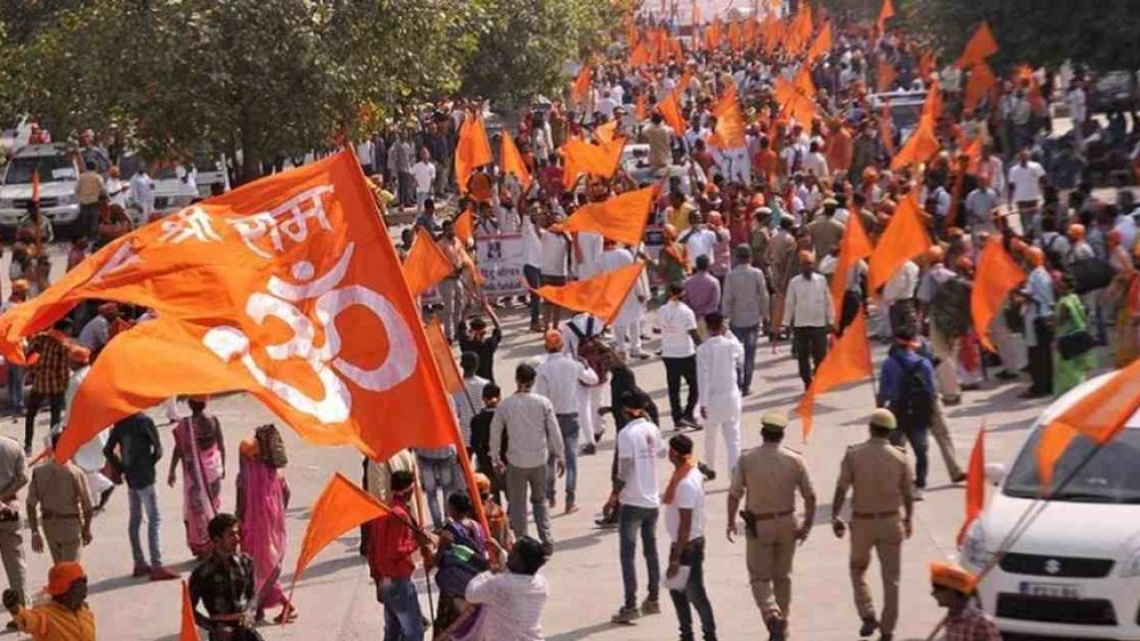
India’s shift toward Hindutva extremism is no longer a future warning; it is a present reality seen on the streets. Militant Hindu groups act with confidence because they believe the law will not touch them. When weapons are displayed and shared openly, it shows that fear of punishment has disappeared. This situation clearly exposes how extremist thinking has moved from the margins into the center of public life.
◆ Extremism in the Open:Hate groups now act publicly instead of hiding in shadows.
◆ Political Protection:Their boldness shows confidence in political backing.
◆ Democratic Collapse:A state that allows armed mobs cannot claim democratic values.
Weapons Distributed in Public Areas
The incident in Ghaziabad’s Shalimar Garden area shocked many when videos showed members of a Hindutva outfit openly handing out swords and weapons. These were not secret meetings but public acts meant to send a message of fear. Such actions clearly break the law, yet they happened without immediate strong action. For minorities, this was a clear warning of danger ahead.
◆ Clear Law Violation:Weapons were distributed openly in public spaces.
◆ Fear as a Message:The act was meant to scare minority communities.
◆ Risk of Violence:Such acts can quickly lead to riots and bloodshed.
Culture of Impunity Under the Current System
Extremist groups act freely because they operate in an environment of impunity. Observers and rights voices warn that hate-driven groups enjoy selective justice, where laws are applied differently based on ideology. Even when videos circulate widely, action is slow and limited. This exposes a system that protects extremists while abandoning victims.
◆ Selective Law Enforcement:Extremists are not treated like ordinary lawbreakers.
◆ Silence as Approval:Inaction sends a message that such behavior is acceptable.
◆ Bias in Governance:Justice depends on identity, not legality.
Arrests That Do Not Solve the Real Problem
After public pressure, police reported the arrest of 10 individuals and registration of a case against 16 named and 25–30 unidentified persons. While arrests look serious on paper, they do not address the wider problem. The ideology, networks, and supporters behind such acts remain untouched. These steps calm headlines but do not remove fear.
◆ Token Action Only:Small arrests cannot undo widespread extremism.
◆ Root Cause Ignored:The ideology behind the violence remains safe.
◆ Fear Remains:Minorities continue to feel unsafe despite arrests.
Kashmiri Traders Targeted Across India
The harassment of Kashmiris has become a repeated pattern across several Indian states. In Fatehabad, Haryana, a Kashmiri shawl vendor was assaulted and forced to chant “Vande Mataram”. His refusal led to threats and humiliation, all caught on video. This was not patriotism; it was abuse meant to degrade and dominate.
◆ Identity-Based Harassment:Kashmiris are targeted only because of who they are.
◆ Forced Slogans:Compelling chants is a form of psychological violence.
◆ Public Humiliation:Such acts aim to break dignity, not build unity.
Mob Mentality and Social Breakdown
The video from Haryana showed more than one attacker; it showed a society losing its moral balance. While some local women tried to stop the abuse, their voices were ignored. This reflects how mob mentality now overpowers basic humanity. Silence from bystanders often comes from fear or agreement, both equally dangerous.
◆ Mob Power on Display:Individuals feel free to abuse minorities publicly.
◆ Human Dignity Ignored:Basic respect is sacrificed for ideological pride.
◆ Fear Rules Society:People stay silent to avoid becoming the next target.
Kashmiris Living Under Constant Insecurity
Such incidents have increased fear among Kashmiri students and traders living outside their homeland. Many are now reconsidering whether it is safe to continue their work or studies. Livelihoods built over years are being destroyed by hate. This insecurity is spreading, especially in northern India.
◆ Forced Movement:Many Kashmiris are leaving areas out of fear.
◆ Livelihood at Risk:Work and education are disrupted by harassment.
◆ Nationwide Pattern:Similar incidents are reported repeatedly.
One Pattern, One Crisis
When the arming of extremist groups in Uttar Pradesh is seen alongside the harassment of Kashmiris in Haryana, a clear pattern appears. Extremist ideology is expanding, while minorities are pushed into fear and silence. This is not accidental failure but a system problem. India’s image as a plural society stands exposed.
◆ Ideology on the Rise:Hindutva extremism is spreading across regions.
◆ Minorities Marginalised:Muslims and Kashmiris face daily pressure.
◆ State Complicity:Weak action equals silent support.
India’s Dangerous Descent Into Open Extremism
India today stands exposed as a country where weapons are distributed openly and minorities are attacked for their identity. The incidents in Ghaziabad and Haryana are not exceptions; they are warnings of a deeper crisis. The arming of Hindutva groups and the humiliation of Kashmiris are two sides of the same extremist ideology, one that grows under political silence and selective justice. A state that allows mobs to rule streets and minorities to live in fear cannot claim democracy, justice, or moral authority. Reports by Kashmir Media Service, combined with video evidence, leave no doubt that India is not just failing to protect minorities but is exposing them to danger. If this path continues, hate will replace law, fear will replace citizenship, and instability will deepen further.