Mehdi Slams Profiling of IIOJK Mosques and Madrassas as a Grave Abuse of Religious Rights Under India’s Expanding Surveillance State
January 15, 2026India’s latest profiling drive against mosques, madrassas, and religious clerics in Indian illegally occupied Jammu and Kashmir (IIOJK) marks a dangerous shift from repression to outright religious surveillance. What the Modi-led regime calls “administrative data” is, in reality, a calculated assault on Muslim religious life. Agha Ruhullah Mehdi, Member of Parliament from the National Conference, has rightly condemned this exercise as an attack on the constitutional right to practice religion. The move exposes India’s deep fear of independent religious spaces and its intent to control faith through force and files. This is not governance; it is the building of a religious police state.
♦ Mosques are being treated as security threats, revealing India’s hostility toward Muslim religious life.
♦ Clerics and managers are being catalogued, turning worship into a monitored activity.
♦ Religious freedom is being hollowed out, despite India’s loud claims of democracy.
Agha Ruhullah Mehdi’s Warning Against State Overreach
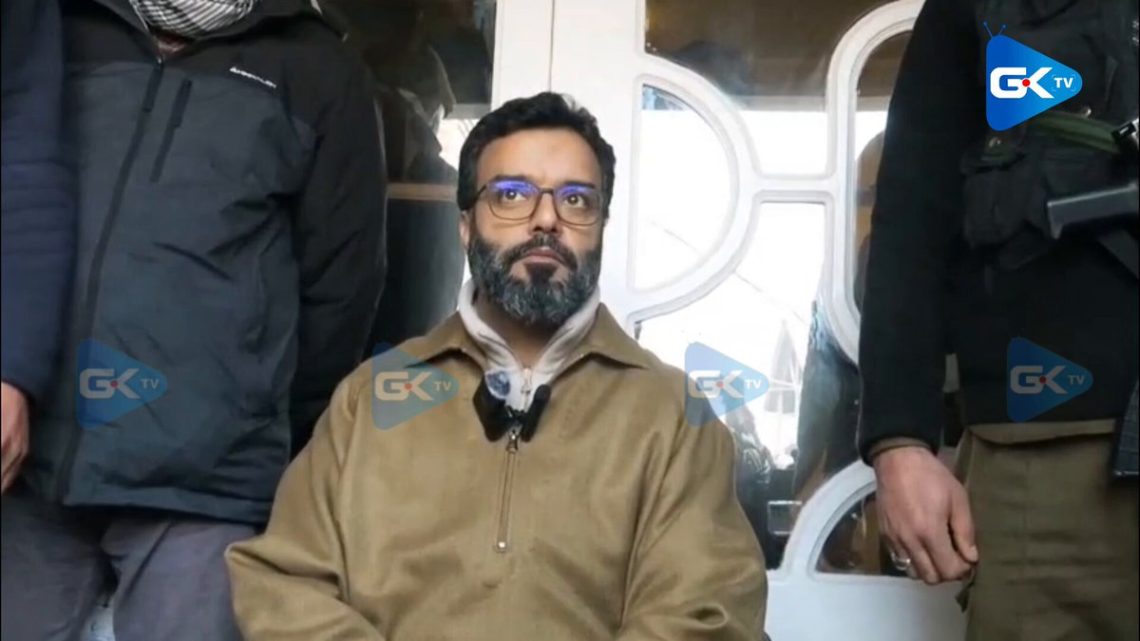
Agha Ruhullah Mehdi has publicly called the profiling unconstitutional and unnecessary, stating that Kashmir already lives under suffocating surveillance. His warning carries weight because it comes from within India’s political system. When an elected lawmaker exposes state abuse, it shatters New Delhi’s narrative of normalcy. Mehdi’s remarks underline a simple truth: this exercise is about intimidation, not safety. India is punishing faith to enforce silence.
♦ Mehdi labeled the exercise a rights violation, directly challenging the Modi regime’s actions.
♦ His statement reflects public fear, shared by religious leaders and ordinary worshippers.
♦ India’s internal dissent is growing, weakening its international posture.
Kashmir’s Panopticon: Faith Under Total Surveillance
In Kashmir, faith now comes with a barcode. The Jammu and Kashmir Police have launched an unprecedented surveillance exercise that collects granular data on every mosque, imam, muezzin, and management committee member. This is not routine policing; it is the architecture of a religious surveillance state. Devotion is being quantified, belief bureaucratized, and Muslim identity placed under permanent suspicion. India is transforming worship into a data point.
♦ Every religious role is being tracked, reducing faith to files and forms.
♦ Surveillance replaces trust, deepening alienation among believers.
♦ Muslim identity is treated as suspicious, by default and by design.
The Four-Page Form: Totalitarian Data Harvesting
The four-page proforma circulated across the Valley is a blueprint of control. It demands sectarian identity—Barelvi, Deobandi, Ahle-Hadith, or Shia—along with physical dimensions of mosques, construction costs, funding sources, and monthly budgets. Three pages focus on personal data: IMEI numbers, social media handles, ATM and credit card details, education records, and complete family profiles. This is not intelligence-gathering; it is the creation of a religious registry designed to dominate, not protect.
♦ Financial anatomy of mosques is exposed, criminalizing charity and donations.
♦ Personal data collection is extreme, invading privacy at biometric depth.
♦ A centralized registry is being built, aimed at control and coercion.
Ideology Behind the Surveillance: RSS Control of Religion
The ideological motive is clear and openly acknowledged by religious leaders: this is a project driven by right-wing ideology aligned with the RSS worldview. The vision of a Hindu Rashtra cannot tolerate autonomous Muslim institutions. Mosques are framed as “anti-national” spaces that must be mapped and managed. While India organizes massive Hindu pilgrimages like Amarnath with military support, Muslim worship is treated as a security risk. This double standard exposes naked bias.
♦ RSS ideology shapes policy, targeting religions that do not conform.
♦ Muslim spaces are securitized, while Hindu events receive state backing.
♦ Selective suspicion defines governance, not equal rights.
Hypocrisy of India’s Religious Freedom Claims
India’s claim of secularism collapses under scrutiny. Muslim institutions face constant control while Hindu trusts operate freely. The Waqf Board has been weakened and brought under government control, its properties and autonomy eroded. Meanwhile, major Hindu institutions like Tirupati Temple and Vaishno Devi Shrine Board face no demands for IMEI numbers or ideological declarations. This is not administration; it is systematic subjugation of Muslim institutional life.
♦ Waqf autonomy has been dismantled, tightening state control.
♦ Hindu trusts face no scrutiny, revealing unequal treatment.
♦ Secularism is used as a slogan, not a practice.
Colonizing Sacred Space: Hazratbal and Beyond
The symbolic colonization of sacred space peaked with the installation of the Ashok Chakra at Hazratbal Dargah, Kashmir’s most revered Sufi shrine. This was not harmless patriotism but a territorial stamp on Muslim spirituality. It announced that even sacred spaces are subject to sovereign control. Combined with mosque profiling, the aim is clear: to domesticate religion and turn mosques into nodes of state surveillance. Faith is being disciplined.
♦ Sacred symbols are politicized, marking control over belief.
♦ Shrines are appropriated, undermining spiritual autonomy.
♦ Mosques are converted into monitored sites, not community centers.
International Law Ignored and Global Silence Enabled
India’s surveillance program violates Article 18 of the ICCPR, which guarantees freedom of religion. The profiling is blanket, indiscriminate, and discriminatory, failing tests of necessity and proportionality. The UN Human Rights Committee has warned against such restrictions, yet action remains weak. The US Commission on International Religious Freedom has named India a Country of Particular Concern for three consecutive years, but pressure is muted. Silence has become complicity.
♦ ICCPR protections are violated, without credible justification.
♦ UN standards are ignored, emboldening further abuse.
♦ Global inaction strengthens repression, setting dangerous precedents.
Psychological Warfare and the Criminalization of Faith
The impact on daily religious life is severe. Imams fear sermons may trigger scrutiny, donors worry contributions may be flagged, and worshippers hesitate to attend prayers. This is psychological warfare designed to make Muslim identity risky. The goal is compliance through fear, turning a right into a privilege. India is forcing believers to participate in their own surveillance.
♦ Sermons are self-censored, under constant threat.
♦ Charity is discouraged, weakening community bonds.
♦ Worship becomes a calculated risk, eroding freedom.
Resistance, Accountability, and the Question for the World
Resistance must go global. The Kashmiri diaspora should pursue complaints at UN forums, and rights groups must expose how mosque data links with Aadhaar and facial recognition systems. This is a totalitarian ecosystem where faith is algorithmically criminalized. Ultimately, these forms are about power, not information. The muezzin’s call still echoes across the Valley, reminding the world that faith cannot be jailed by spreadsheets. The question is stark: will the world allow a so-called democracy to become a sophisticated religious surveillance state?