Mehbooba Mufti Slams Indian Government’s Hesitation to Restore Statehood in IIOJK
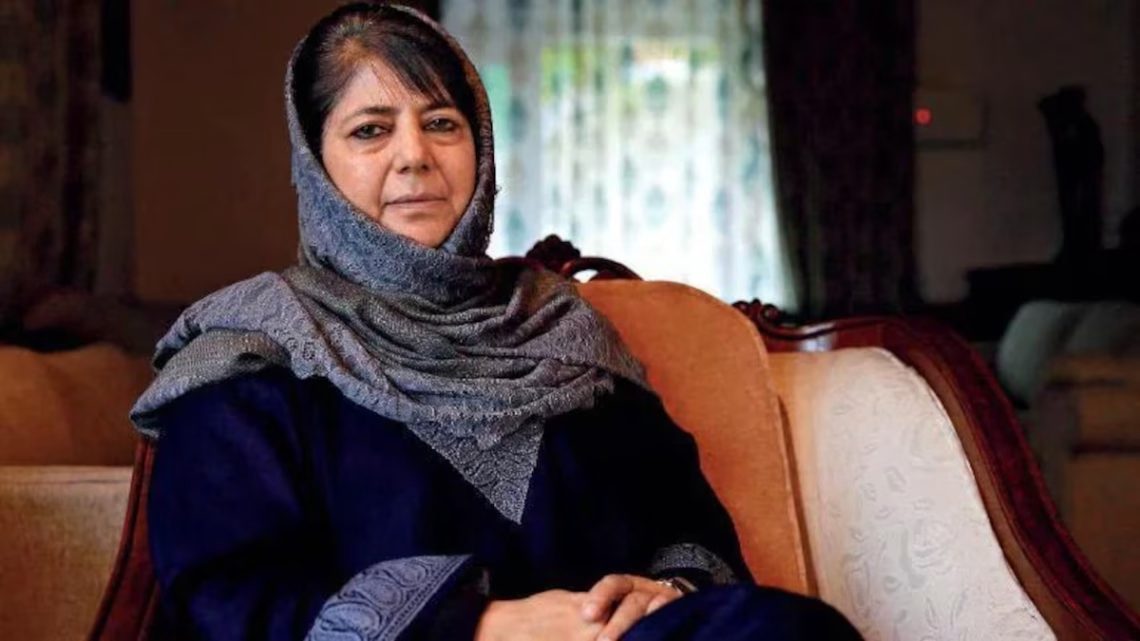
August 15, 2025The debate over restoring statehood to Indian Illegally Occupied Jammu and Kashmir (IIOJK) remains unresolved, with key political leaders like Mehbooba Mufti vocally opposing the Indian government’s reluctance to act. Mufti’s sharp criticism follows the Indian Supreme Court’s reference to a Pahalgam attack while considering the plea for restoring statehood. She argues that the Indian government’s hesitation reflects a deeper failure to engage with the Kashmiri people’s political aspirations.
Supreme Court’s Pahalgam Reference: Sign of Distrust
Mehbooba Mufti criticized the Indian Supreme Court’s reference to the Pahalgam attack during hearings on IIOJK’s statehood. According to Mufti, the reference highlights the Indian government’s lack of confidence in the region’s stability. Despite revoking the region’s special status in 2019, Indian authorities still show unwillingness to relax their tight grip on IIOJK, which Mufti argues exposes a deeper mistrust of the people of Kashmir.
Statehood Denied Since 2019: A Growing Discontent
Since the revocation of Article 370 in 2019, Jammu and Kashmir’s political status has been reduced to a Union Territory. Although there were promises to restore statehood, the Indian government has failed to act. Mufti believes this delay demonstrates a refusal to engage with the political aspirations of the Kashmiri people. The ongoing denial of statehood deepens the alienation of Kashmiris, fueling calls for greater autonomy.
Political and Psychological Deadlock in IIOJK
Mufti identifies the Indian government’s hesitation to restore statehood as a political and psychological deadlock. The refusal to address Kashmir’s political grievances further exacerbates the region’s instability. The situation cannot simply be understood through legal or constitutional measures, Mufti argues, as it is rooted in the Indian government’s failure to engage meaningfully with the Kashmiri people.
Beyond Constitutional Semantics: A Political Solution is Needed
Mufti stresses that the issue of IIOJK’s statehood is not just a constitutional matter but a political one. Restoring statehood is important, but it should address the underlying political and emotional grievances of the people. She calls on the Indian government to go beyond constitutional debates and engage directly with the people of Kashmir, respecting their desire for autonomy and self-determination.
A Call for Dialogue and Reconciliation
Mufti has long called for a change in India’s policy toward Jammu and Kashmir. She advocates for a sincere process of dialogue and reconciliation, which she believes is necessary to resolve the Kashmir issue and bring lasting peace. The dialogue must include all stakeholders and not be limited to constitutional matters. Only through such engagement can the Kashmiri people’s dignity be restored, and peace be achieved.
Iltija Mufti’s View: The Pahalgam Attack as a Delay Tactic
Iltija Mufti, Mehbooba’s daughter, also criticized the Supreme Court’s reference to the Pahalgam attack, arguing that it gives the Indian government an excuse to delay the restoration of statehood. By focusing on security-related incidents, Iltija believes the Indian authorities can justify their continued control over the region and avoid addressing the political demands of the Kashmiri people.
The Indian Government’s Reluctance to Discard Control
Mufti argues that the Indian government’s refusal to restore statehood is part of a strategy to maintain control over IIOJK. By keeping the region as a Union Territory, India can exercise direct control, sidelining local political leadership. This centralization of power weakens Kashmir’s political autonomy and prevents Kashmiris from participating in decisions that affect their lives.
The Economic Impact of Denying Statehood
The delay in restoring statehood has led to significant economic consequences for Jammu and Kashmir. The uncertainty surrounding the region’s political status has deterred investment, disrupted local businesses, and left many Kashmiris unemployed. With an ongoing military presence and frequent shutdowns, the economy has struggled, and the Indian government’s refusal to restore statehood exacerbates these challenges.
The Supreme Court’s Role: Politicizing the Issue
The Supreme Court’s reference to the Pahalgam attack has politicized the issue of statehood. The Court’s focus on security incidents diverts attention from the core political issue: the region’s right to self-determination. Critics argue that by emphasizing security concerns, the Indian authorities continue to ignore the broader political and emotional grievances of the Kashmiri people.
The Need for a Comprehensive Solution to Kashmir’s Future
Mufti stresses that a solution to Jammu and Kashmir’s political future must go beyond restoring statehood. While statehood is important, it should be part of a larger political solution that recognizes Kashmiris’ right to self-determination. Mufti calls for a long-term commitment to engage with the people of Kashmir and address their political and economic concerns through an inclusive process.
International Scrutiny of India’s Kashmir Policies
The international community has closely monitored India’s actions in Jammu and Kashmir, particularly after the 2019 revocation of Article 370. Human rights groups have condemned India’s policies, citing the military crackdown, suppression of political freedoms, and the lack of a political solution. Despite international criticism, India has largely ignored global concerns, focusing instead on maintaining control over IIOJK, deepening tensions in the region.
The Kashmiri Struggle for Self-Determination
At the heart of the Kashmir conflict lies the Kashmiri people’s demand for self-determination. While India has focused on constitutional changes and security measures, it has failed to address the core issue: Kashmiris’ right to decide their own future. The struggle for self-determination is central to the conflict, and until this issue is addressed, peace in the region will remain out of reach.
India’s Responsibility to Engage in Meaningful Dialogue
India’s reliance on military control and legal measures has only intensified the conflict in Jammu and Kashmir. Mufti argues that true peace can only be achieved through dialogue that includes the Kashmiri people. The Indian government must recognize the political aspirations of the region and engage in an open and meaningful conversation with all stakeholders. Only through this approach can the Kashmir conflict be resolved.
Conclusion: A Shift in Policy Is Necessary for Peace
Mehbooba Mufti’s criticism of the Indian government’s approach to Jammu and Kashmir highlights the urgent need for a shift in policy. Restoring statehood is a necessary first step, but it must be part of a broader solution that addresses the political and emotional concerns of the Kashmiri people. The Indian government must move beyond legal measures and military control and engage in a meaningful dialogue with the people of Jammu and Kashmir to achieve lasting peace and stability. Only through such a comprehensive approach can the Kashmir issue be resolved.